Thomas Wagensommerer
- T01sedimentSound
- T02sediment · liveSound
- T03sediment · fxSound
- T04sediment · podSound
- T05ligaturePicture-bound sound
- T06sortcutPicture-bound sound
- T07scorecutPicture-bound sound
- T08datamosh stationMoving image
- T09scanlineMoving image
- T10framegrabMoving image
- T11AVjoinMoving image
- T12dubtransVoice and language
- T13subtransVoice and language
- T14voiceboxVoice and language
- T15TerraForgeSpace, terrain and body
- T16meanlandSpace, terrain and body
- T17GNM head pipelineSpace, terrain and body
- T18AutoRagdollSpace, terrain and body
- T19ResonodePerformance control
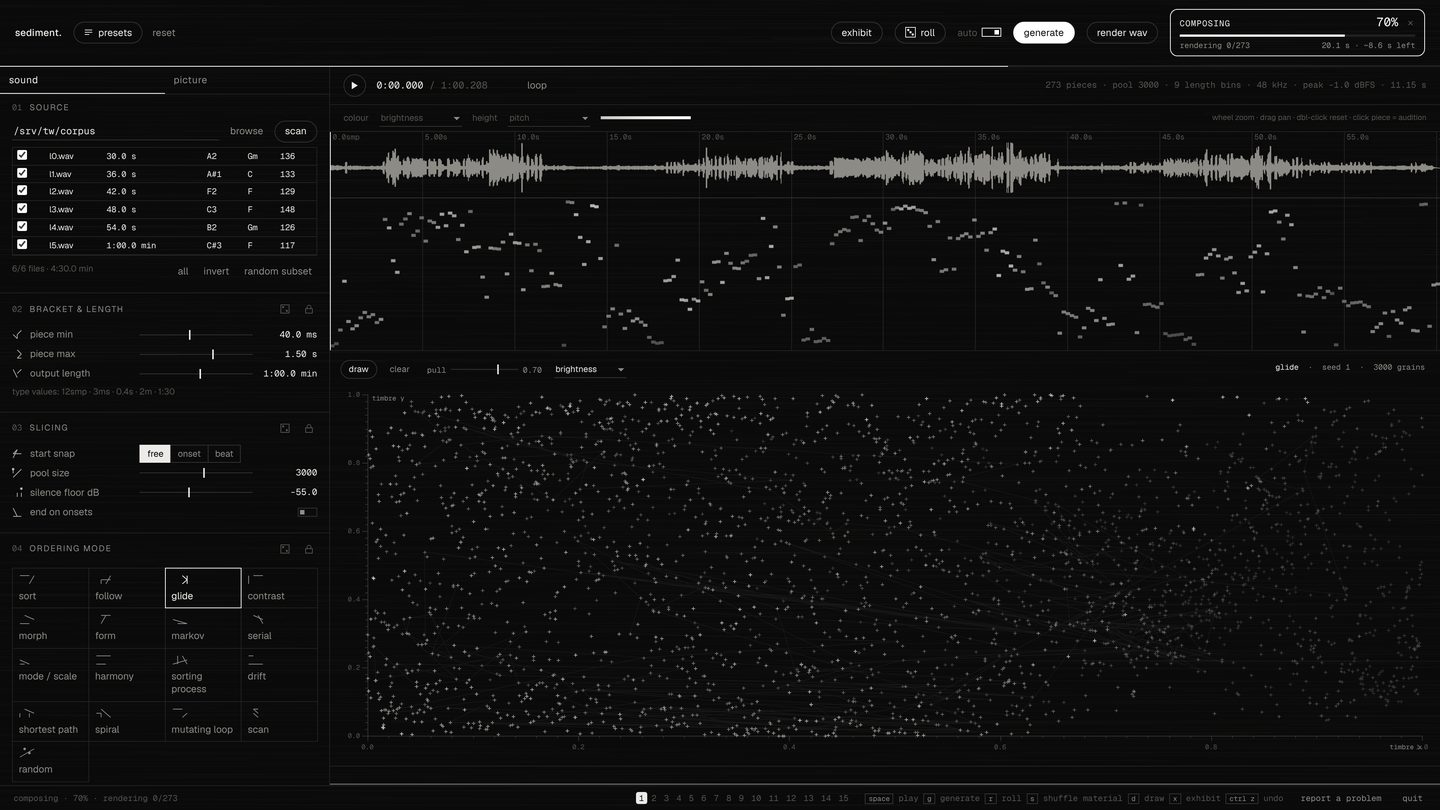
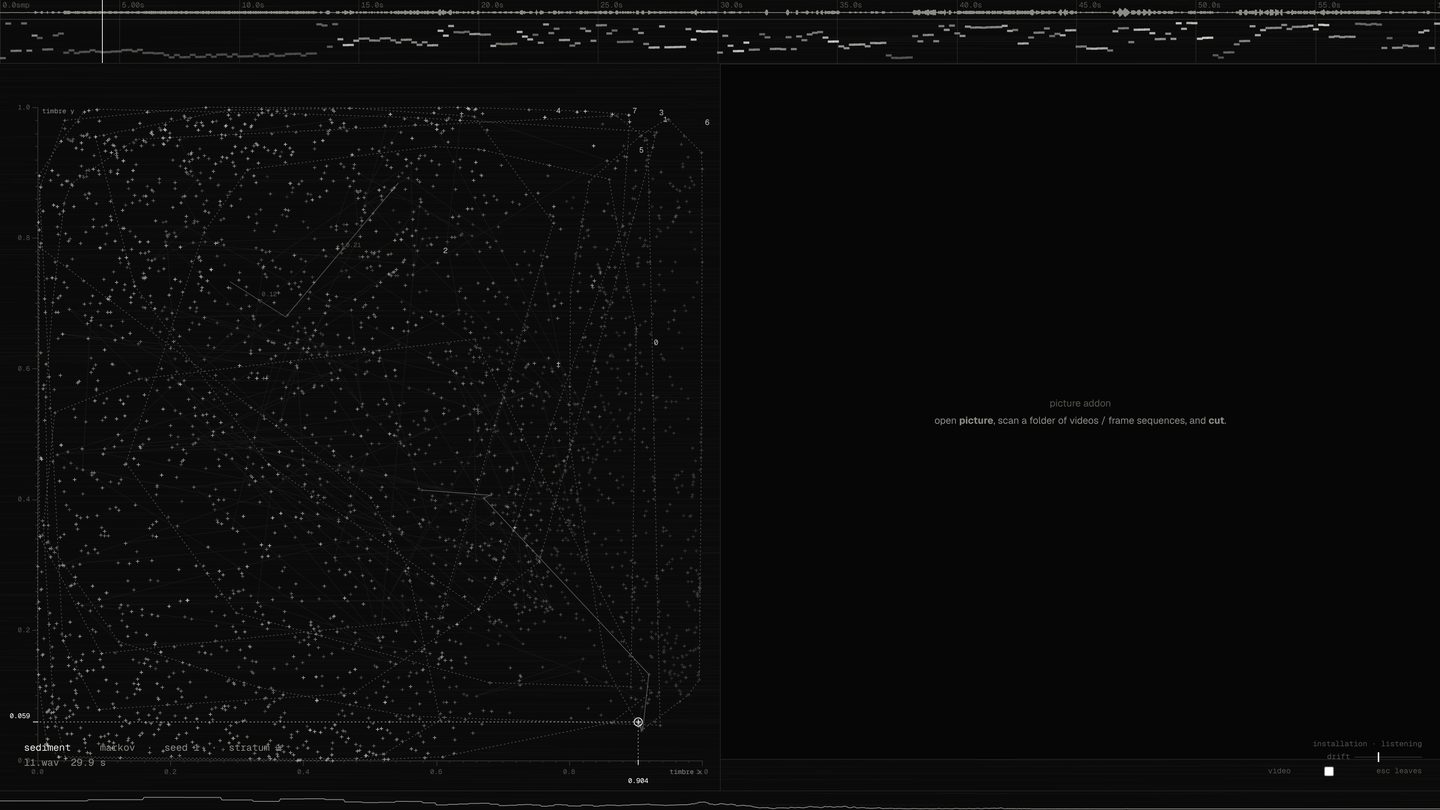
A composition environment that treats a folder of recordings as a corpus. Every file is analysed into frame-level descriptors (loudness, onset density, pitch and pitchedness, spectral shape, chroma and key, stereo width, an MFCC-derived timbre space); pieces of arbitrary length are then re-ordered according to explicit ordering principles — sorting, gliding, contrast, morphing, formal clustering, Markov grammars learned from the sources, serial rows, modal and harmonic retuning, audible sorting algorithms — and rendered as high-resolution audio with a full event log. A picture add-on cuts frame-exact video to the resulting sound. The tool makes the ordering itself the compositional material: structure becomes audible as process.
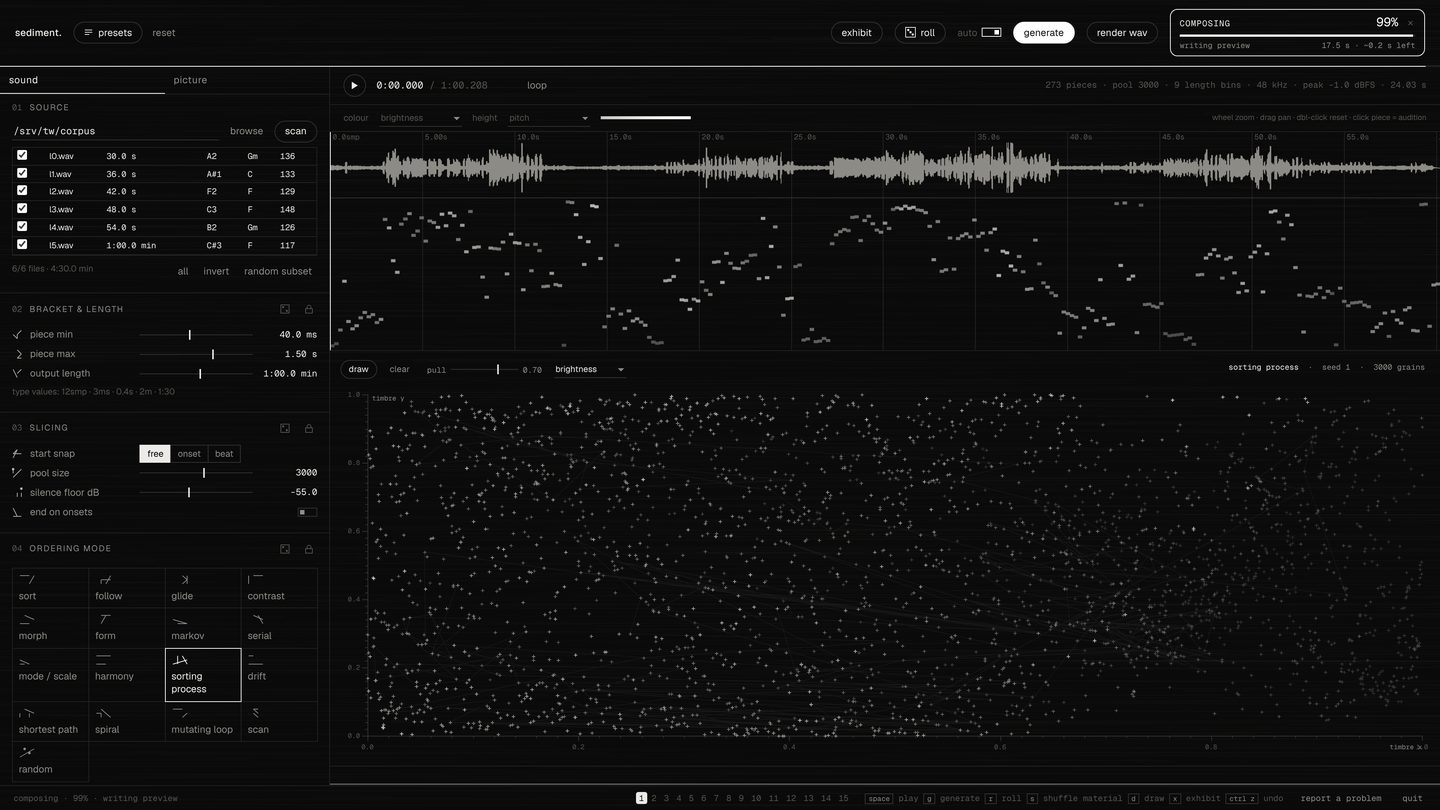
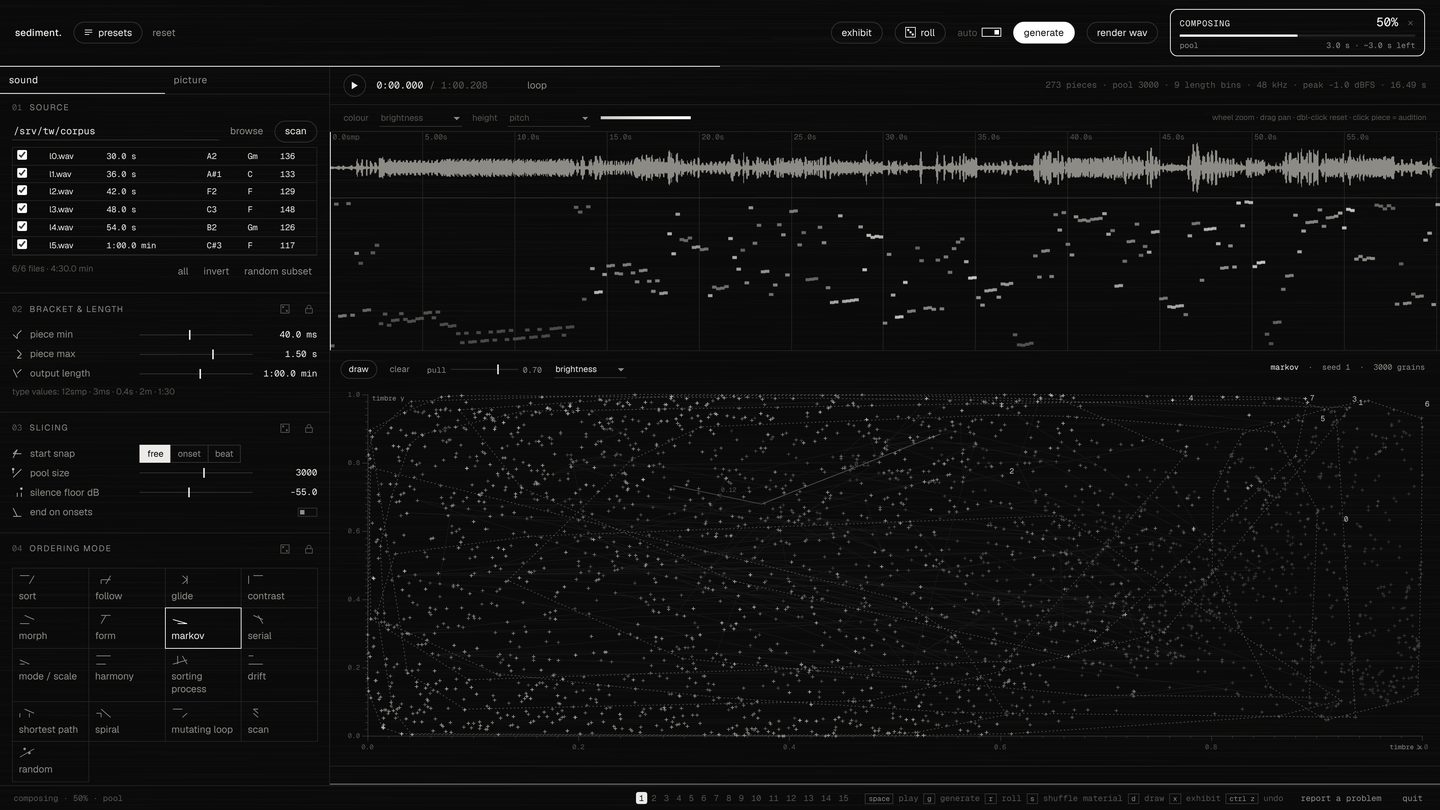
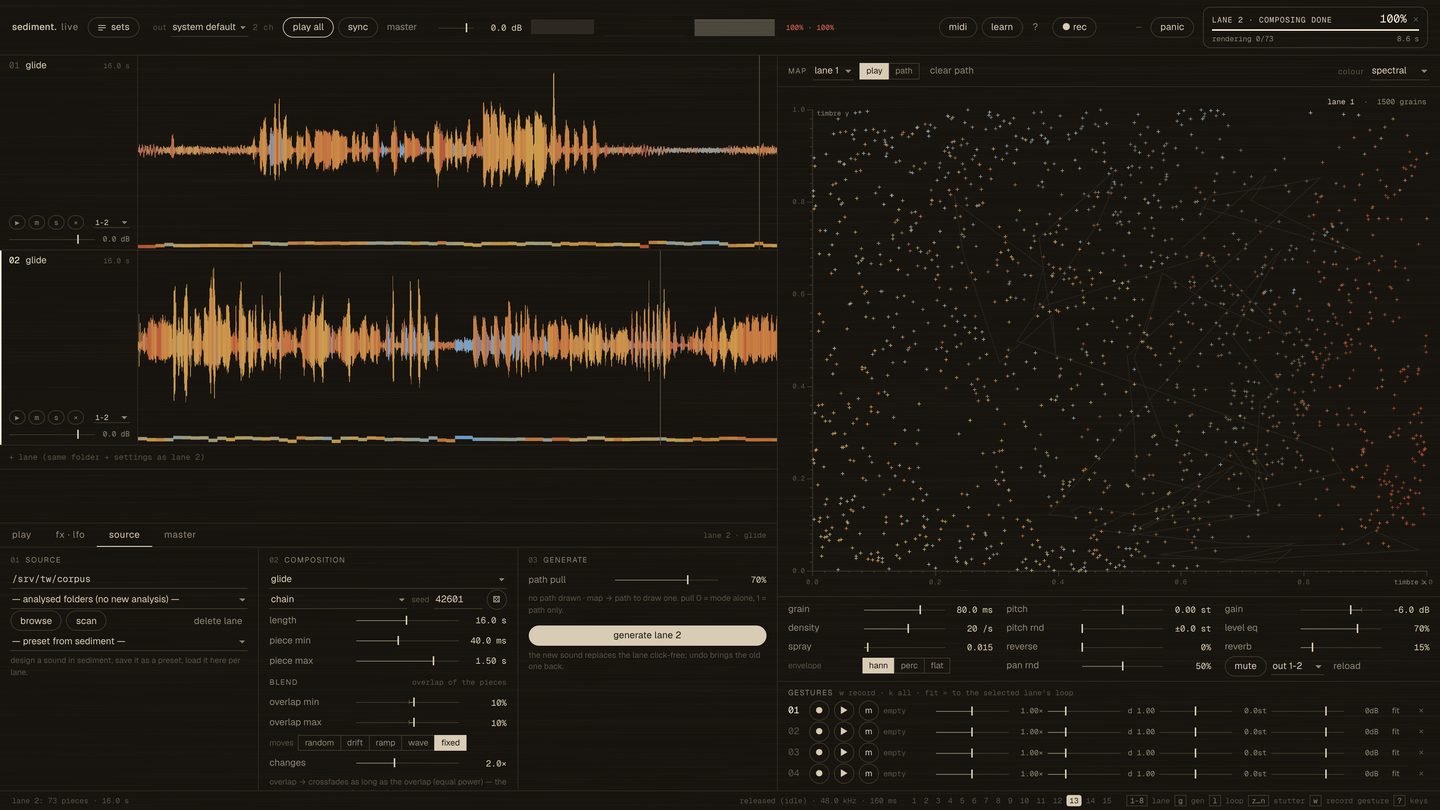
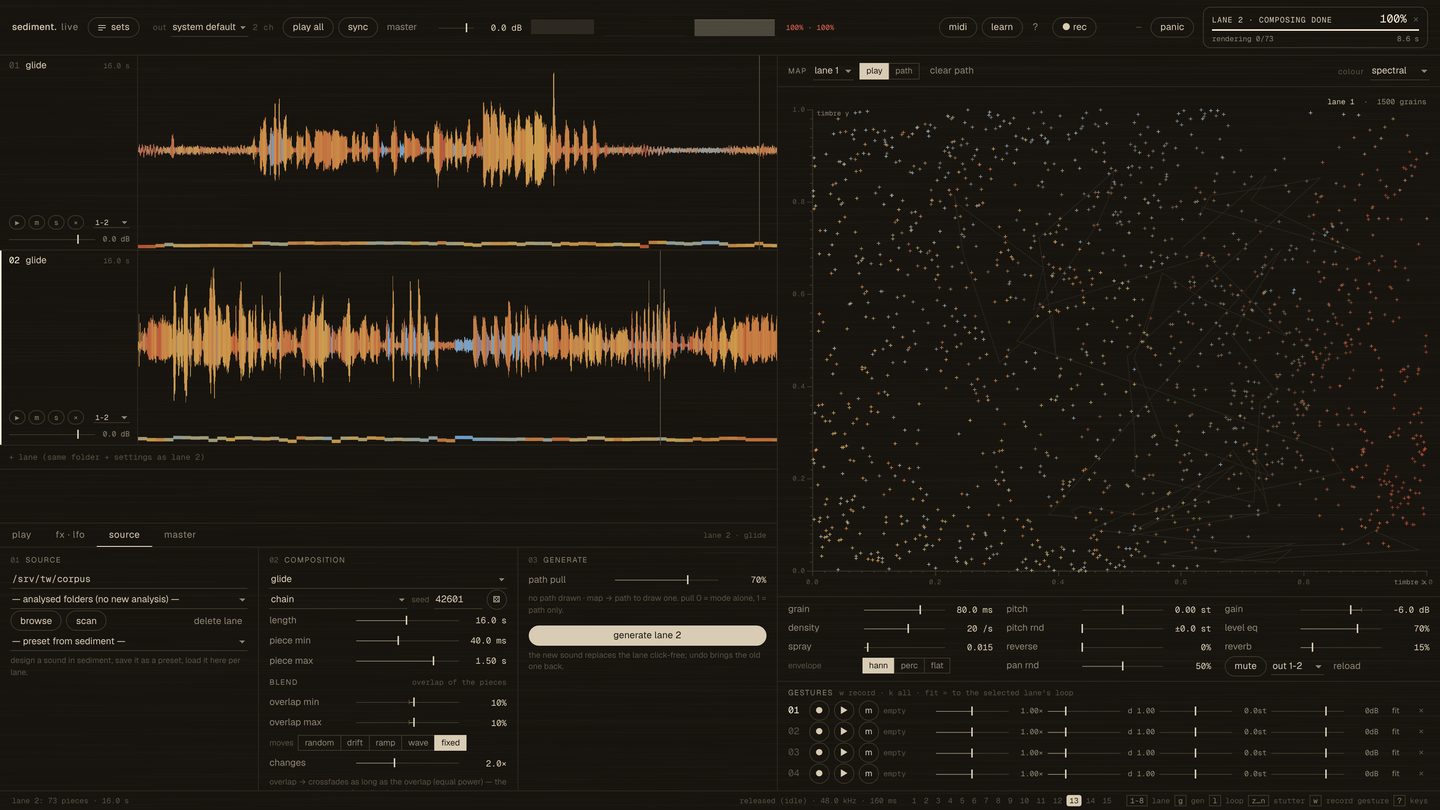
The performance branch of sediment. Up to eight lanes hold composed material that can be looped, stuttered, re-sorted and transformed in real time; the timbre map of each lane becomes a playable surface on which gestures are drawn, recorded and recalled. Sets store audio and state, MIDI learn binds every control. Designed to run alongside a DAW in concert.
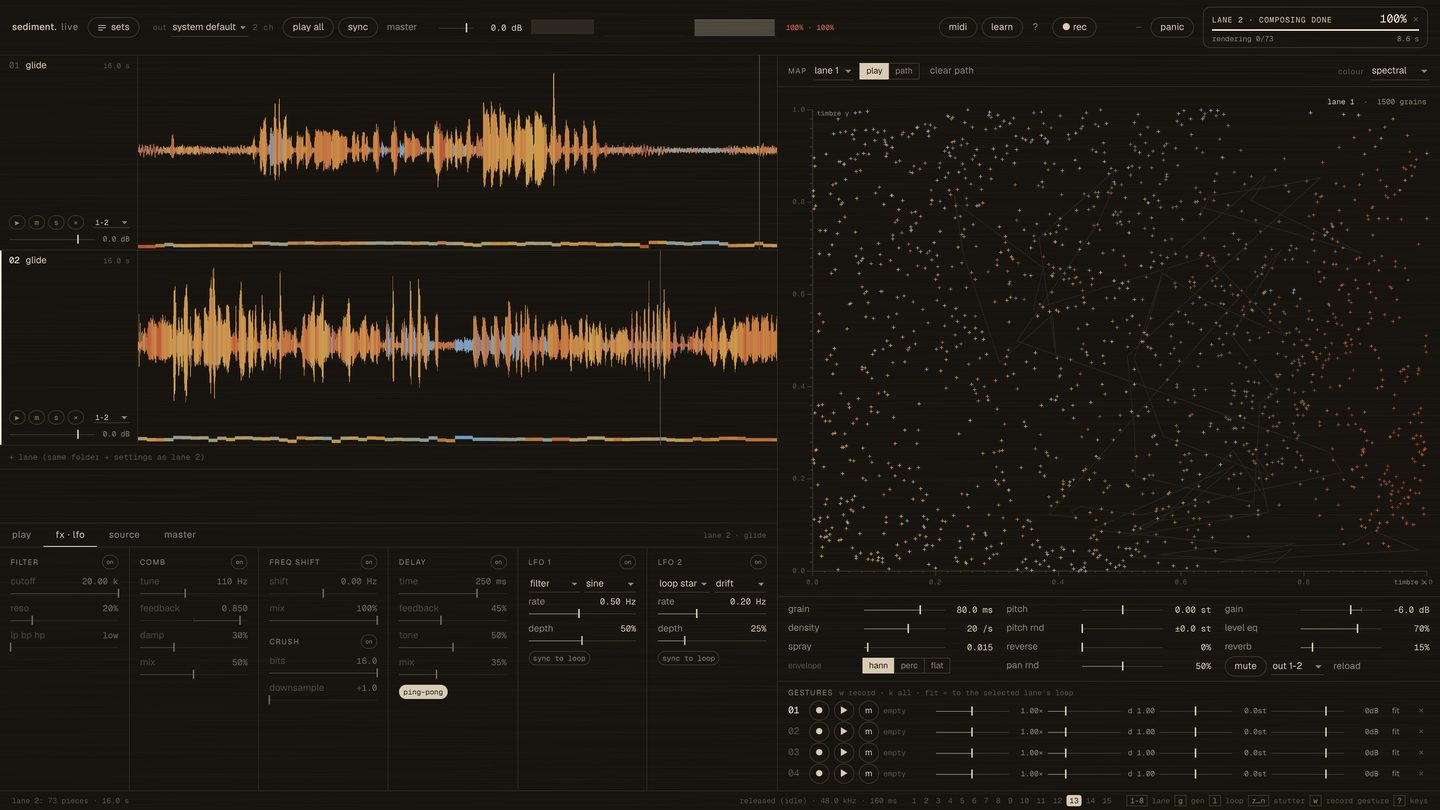
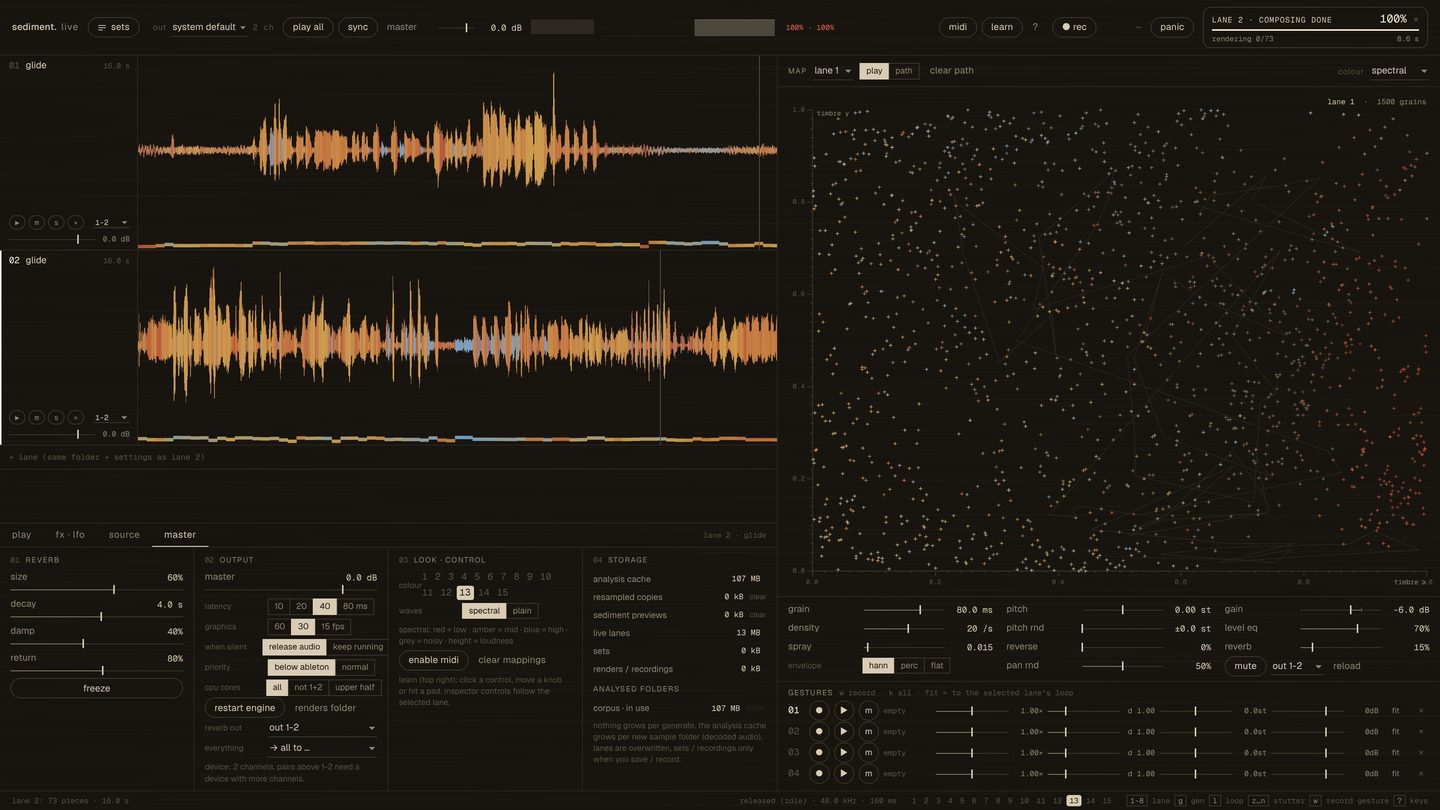
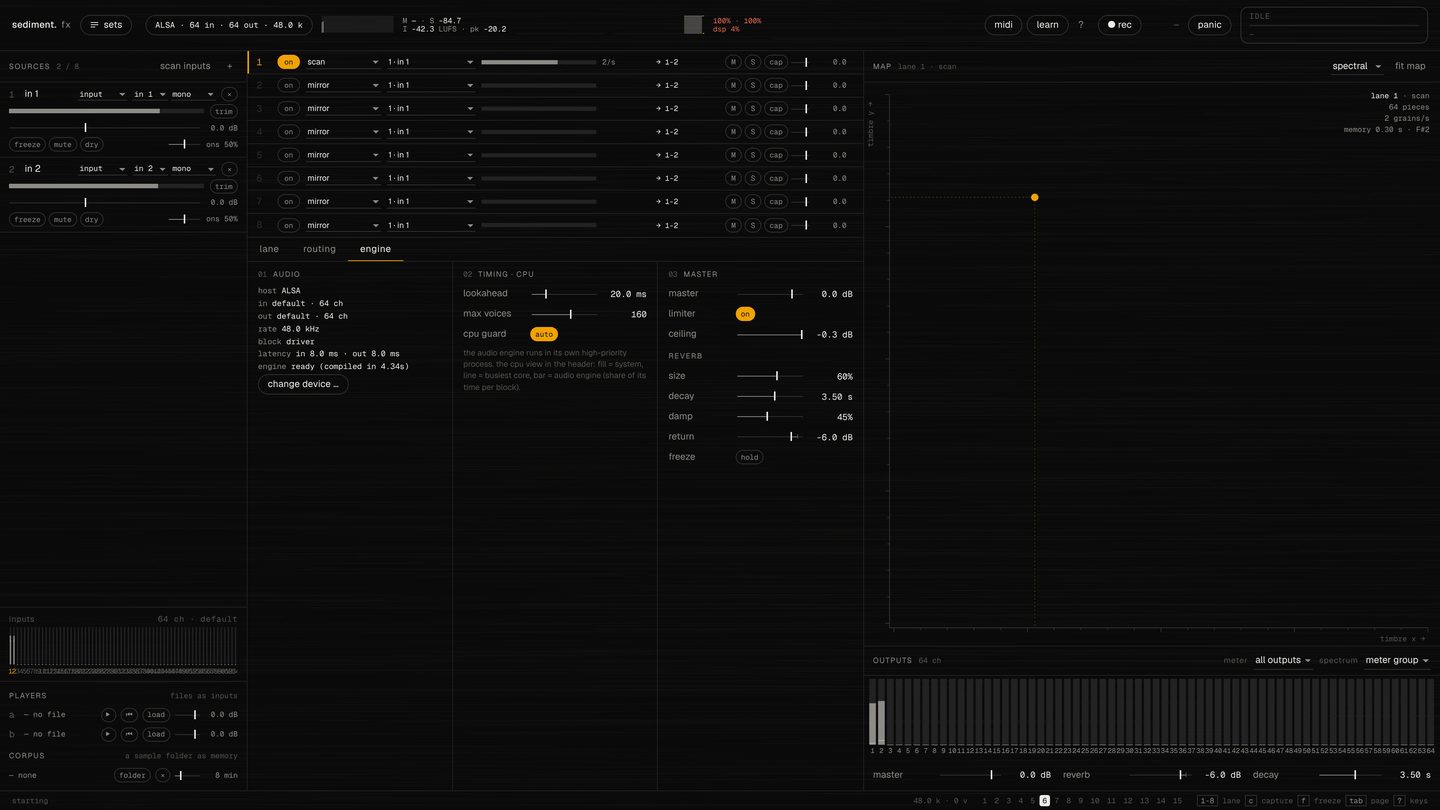
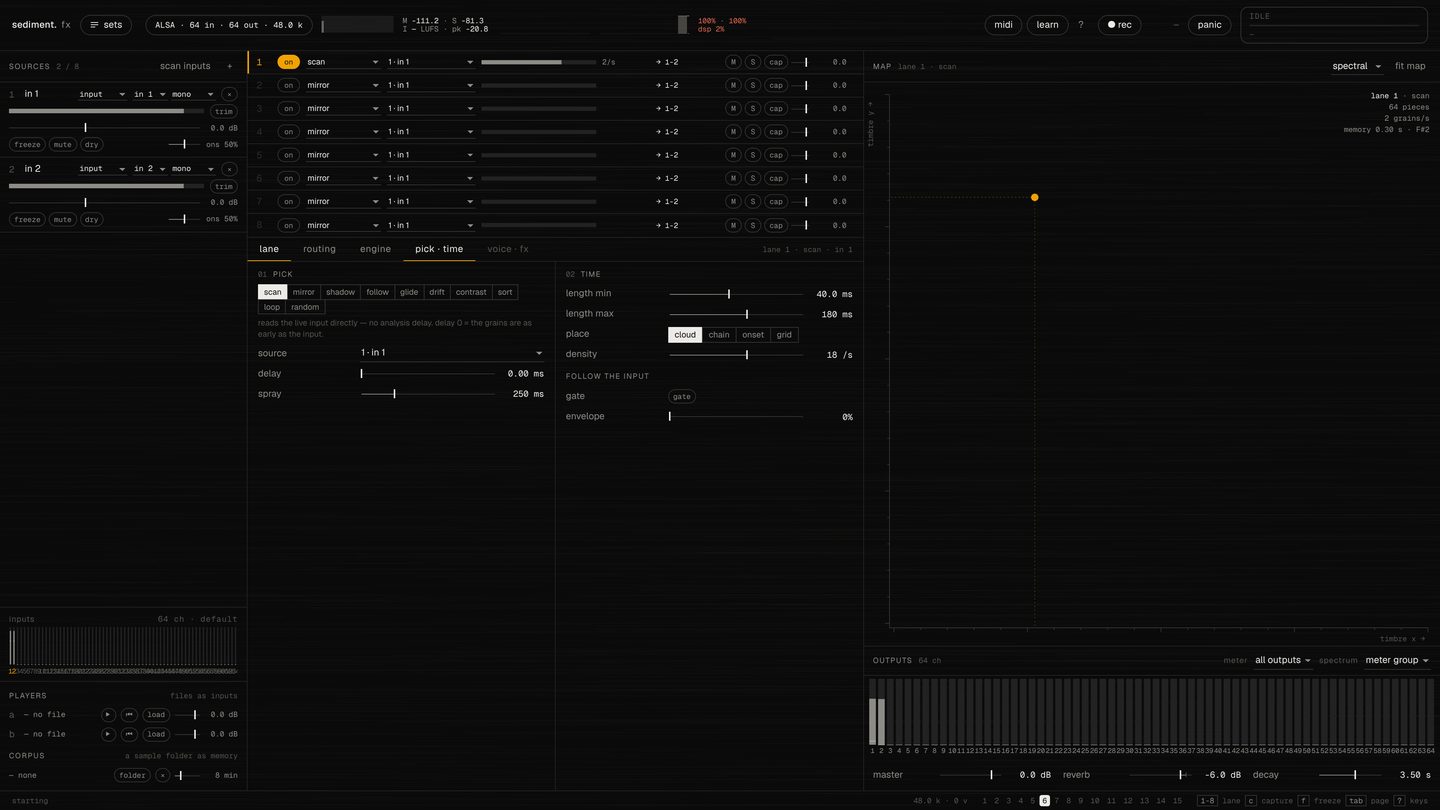
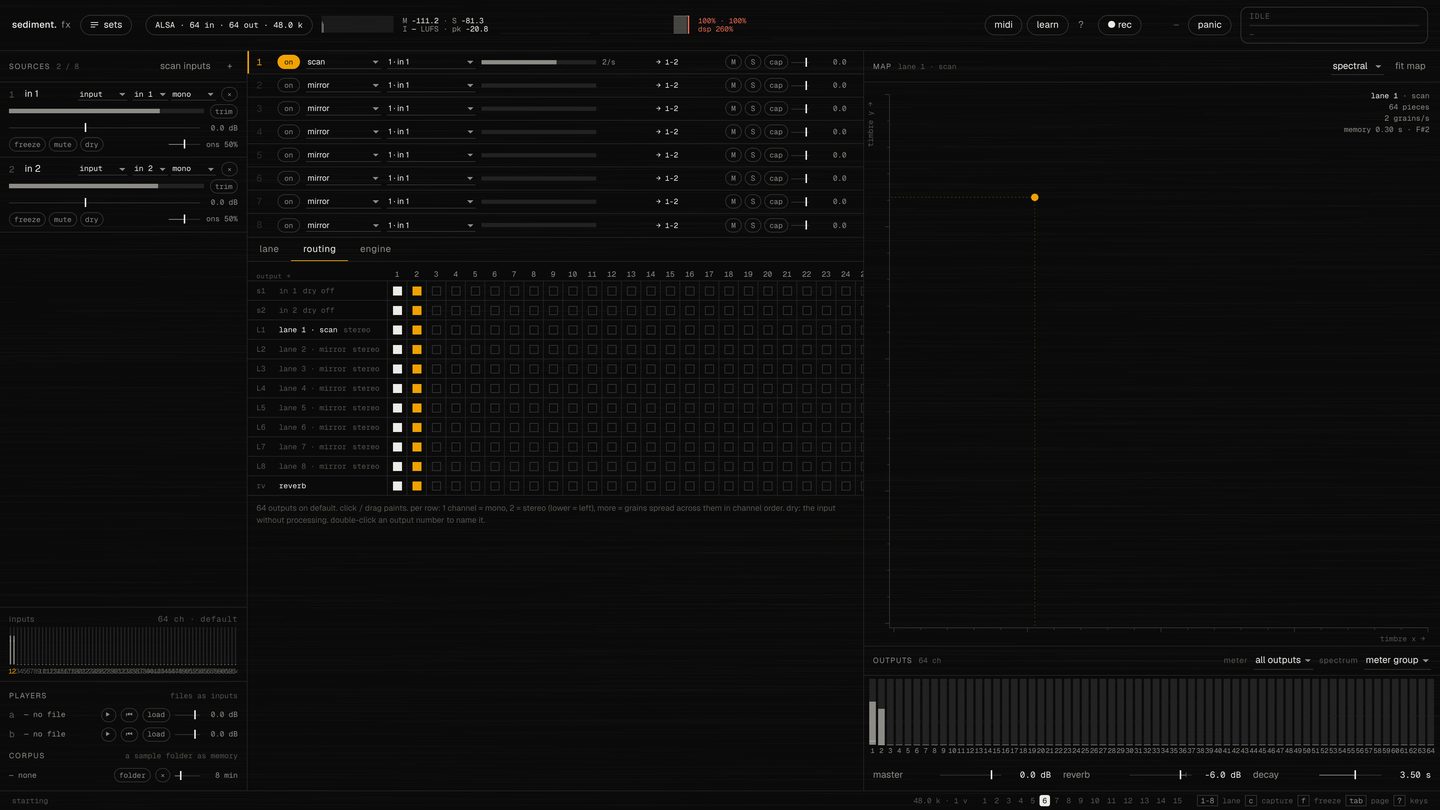
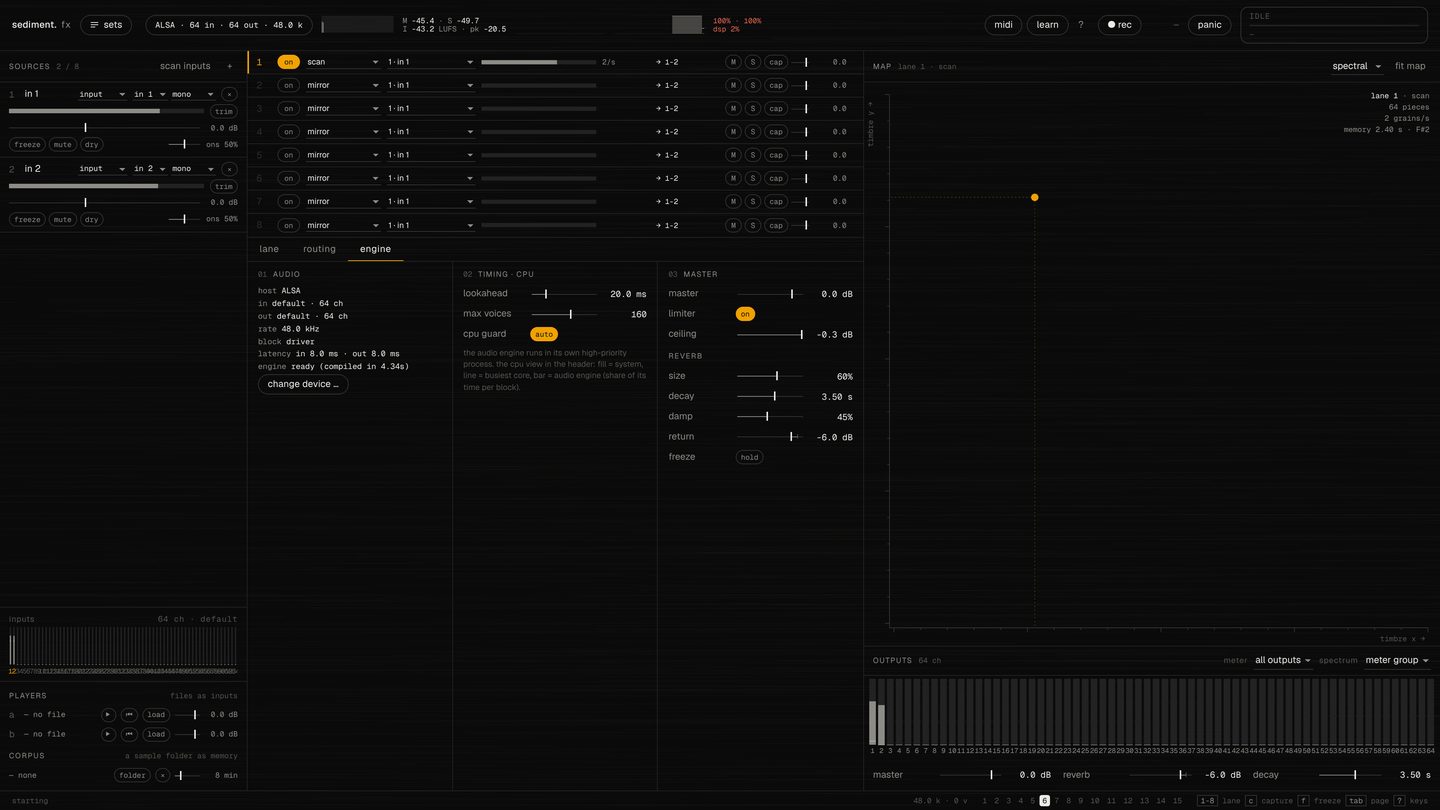
A realtime effect unit applying sediment's ordering modes to live input. Incoming audio is written to memory and analysed as it arrives; up to eight lanes re-order pieces of the immediate past in time and route them to arbitrary discrete outputs. Architecturally it separates a compiled, allocation-free audio body from an analysing ‘brain’ that schedules events ahead, which makes multichannel operation at low latency possible.
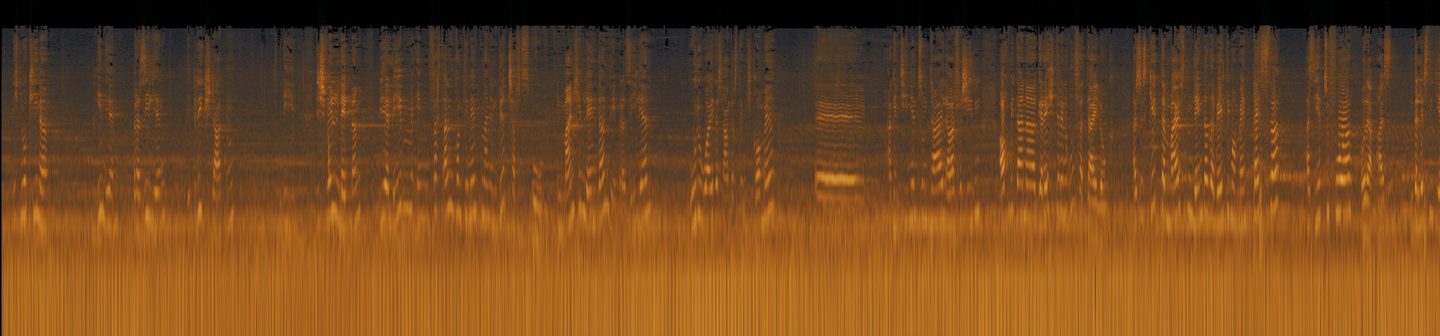
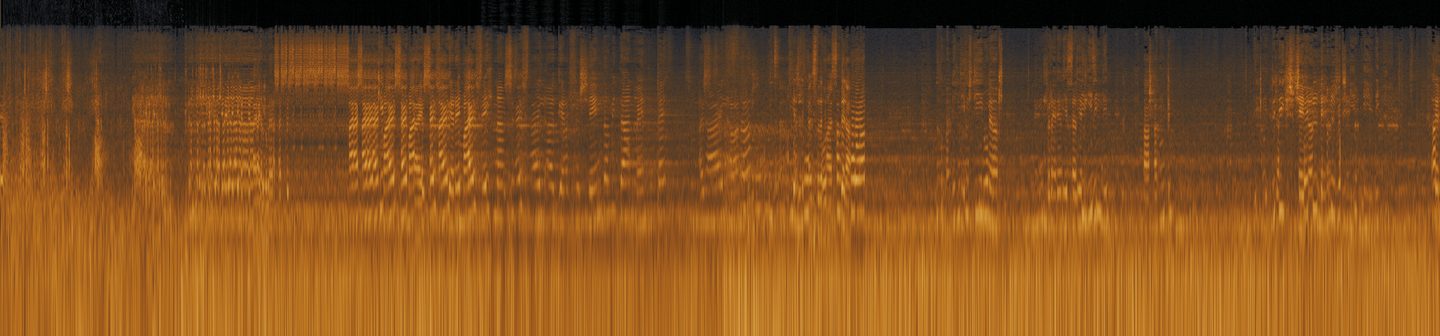
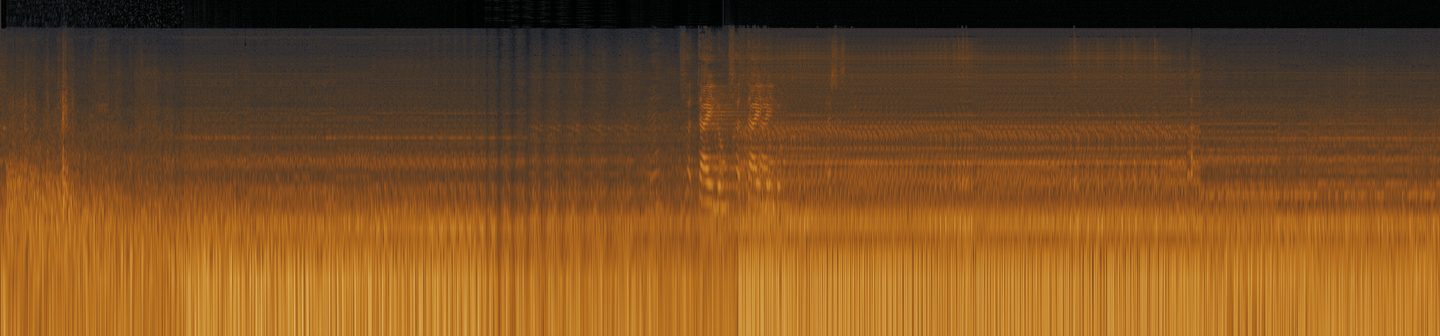
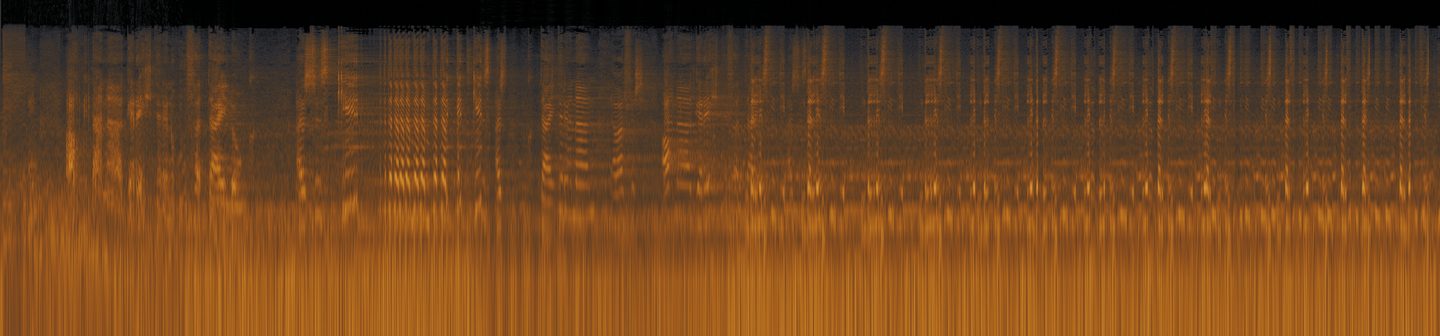
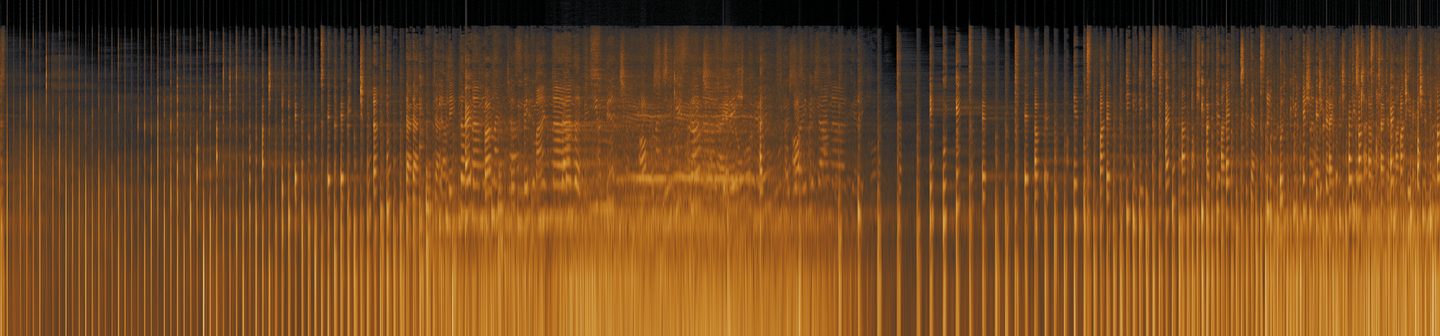
Firmware that ports sediment · fx to the Electrosmith Daisy Pod. Stereo line input is held in 87 s of memory; sixteen ‘moves’ (scan, loop, sorts by loudness, brightness, pitch, noise and flux, mirror, shadow, glide, contrast, drift, onset, grid) re-order pieces of it. One knob spans the grain continuum from 2 ms buzz to 2.5 s wash, the other controls the move. Plate: spectrograms rendered offline from the firmware's own engine on a radio recording.
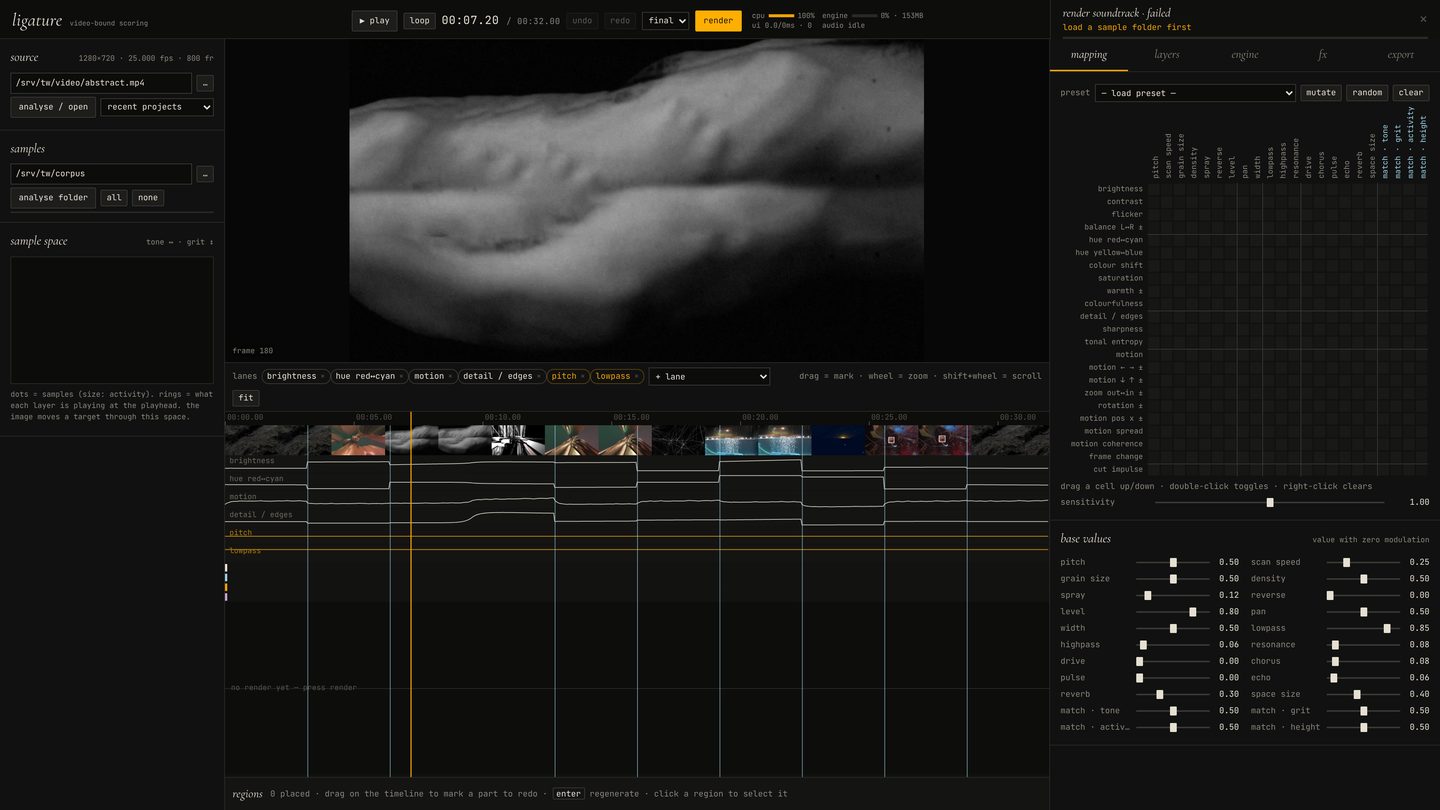
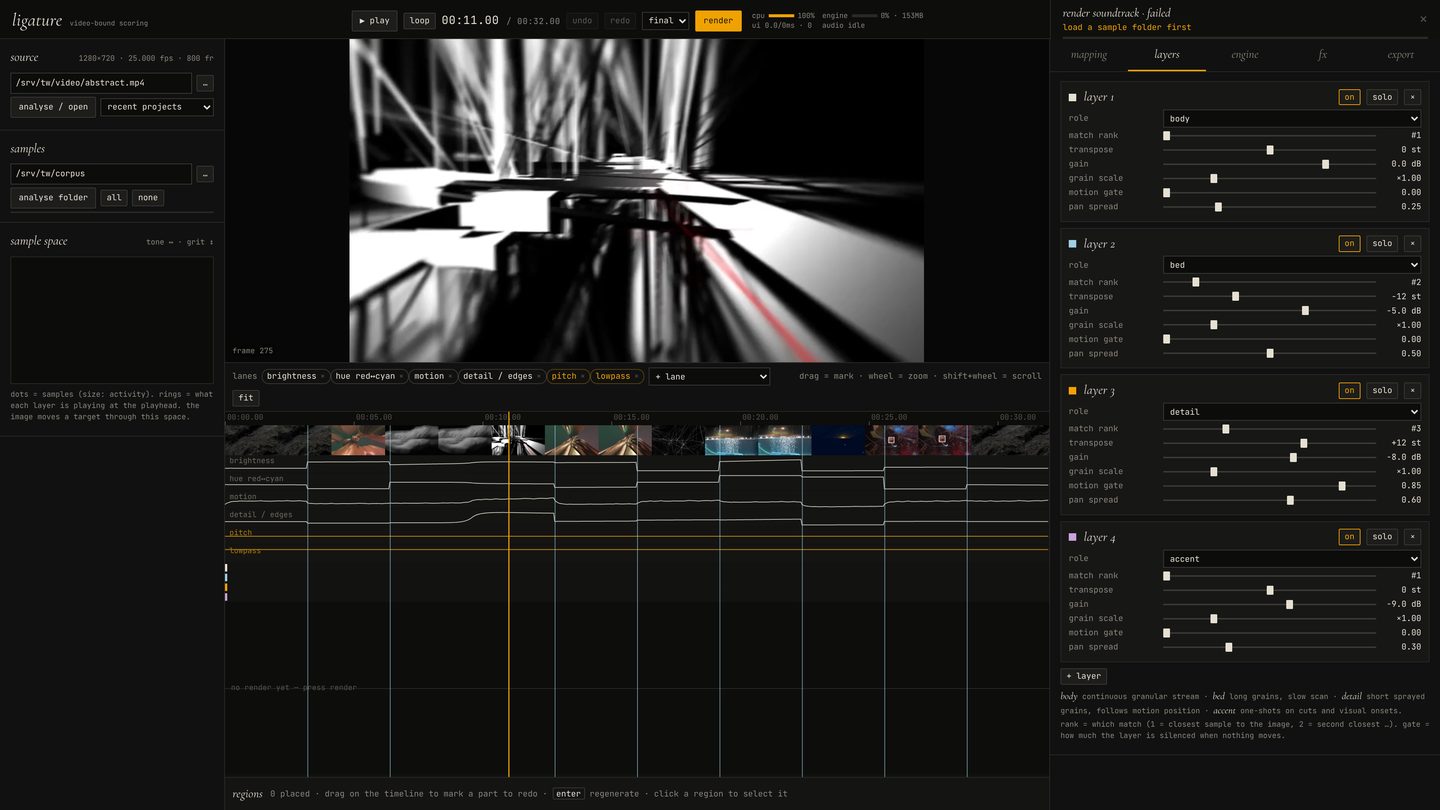
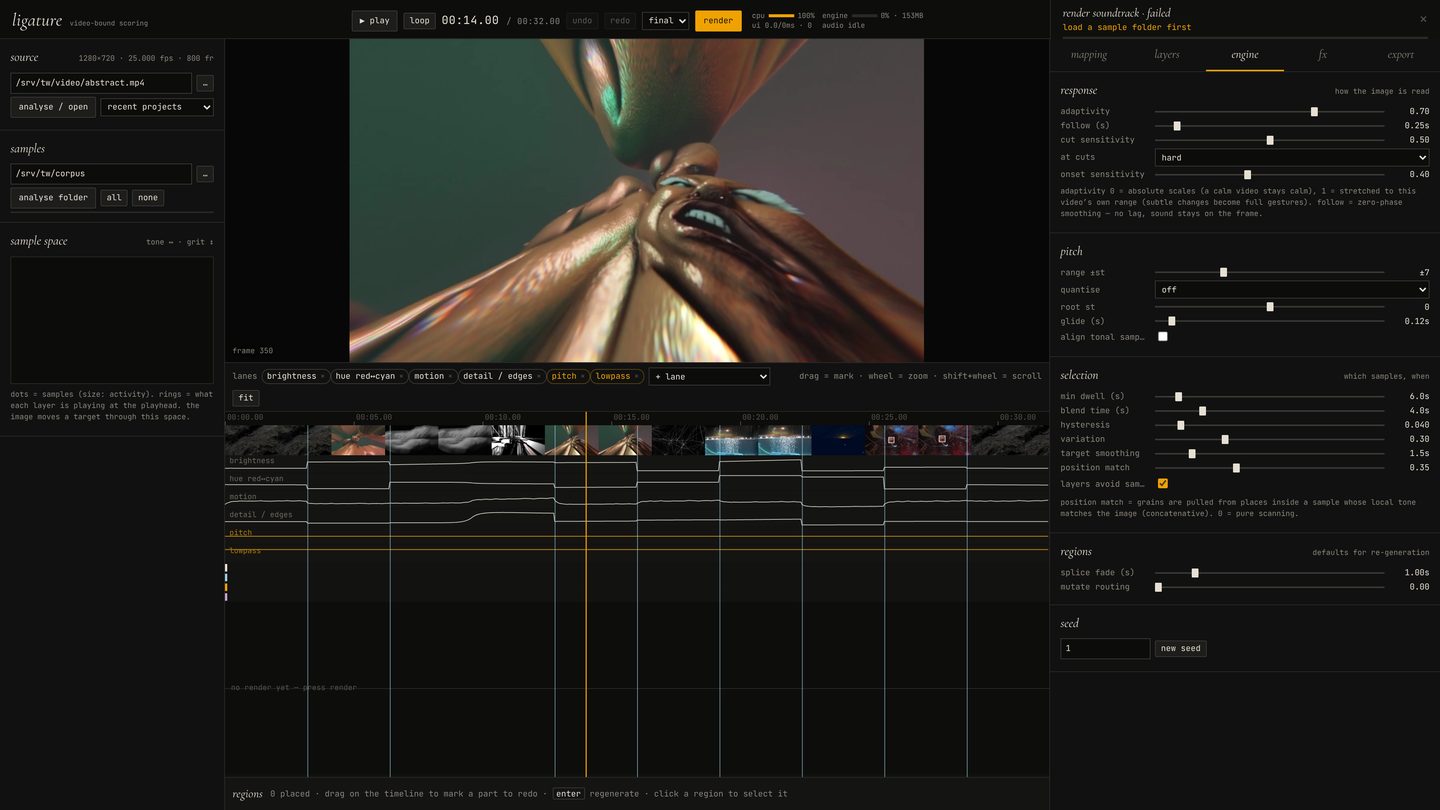
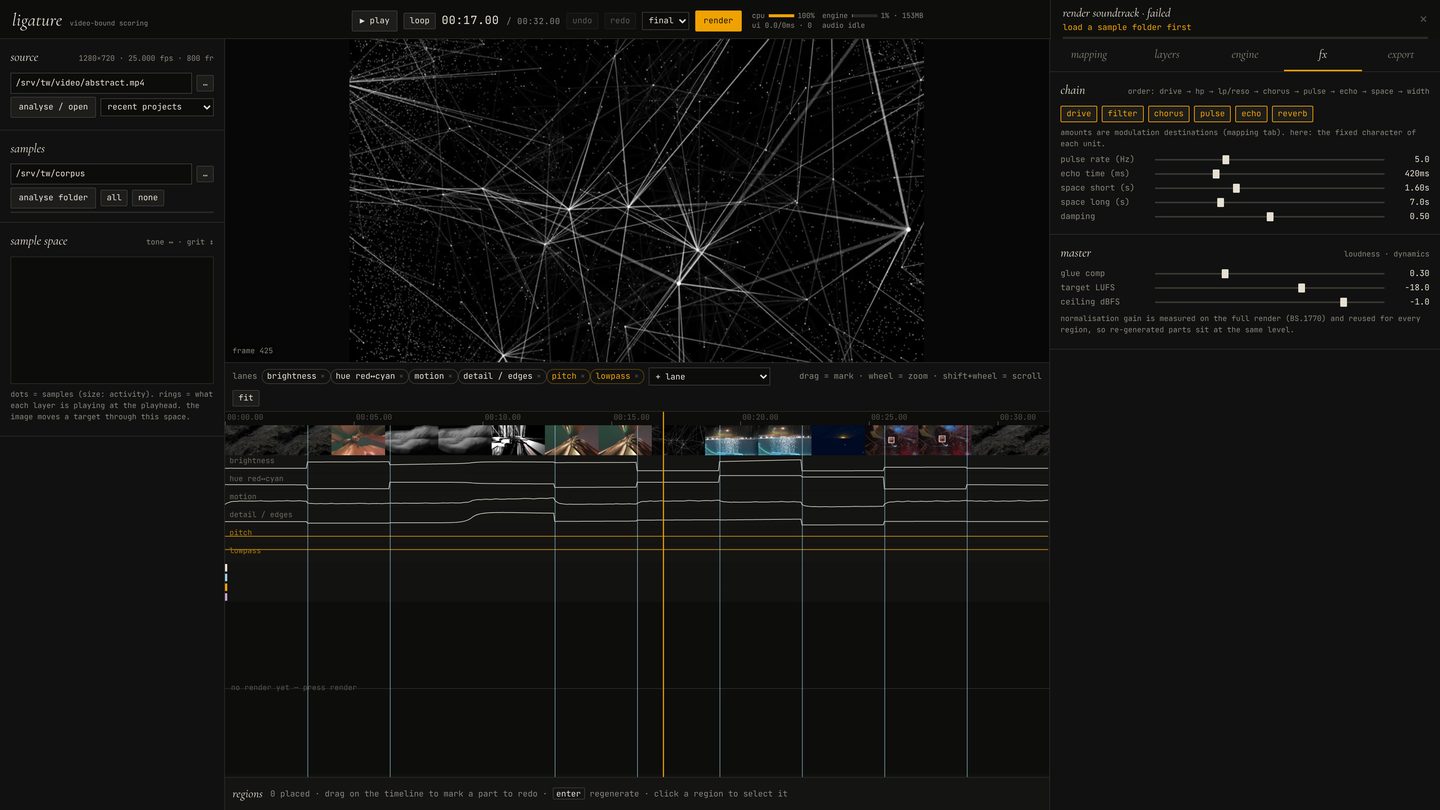
Reads a video frame by frame and builds a soundtrack from a sample folder. Image descriptors — brightness, hue axes, motion and its direction, edge density, cut impulses — are routed through a modulation matrix to granular parameters: which sample sounds, where in it grains are read, pitch, grain size, scan speed, filtering, space and stereo position. Picture and sound are bound sample-accurately; regions can be re-rendered locally.
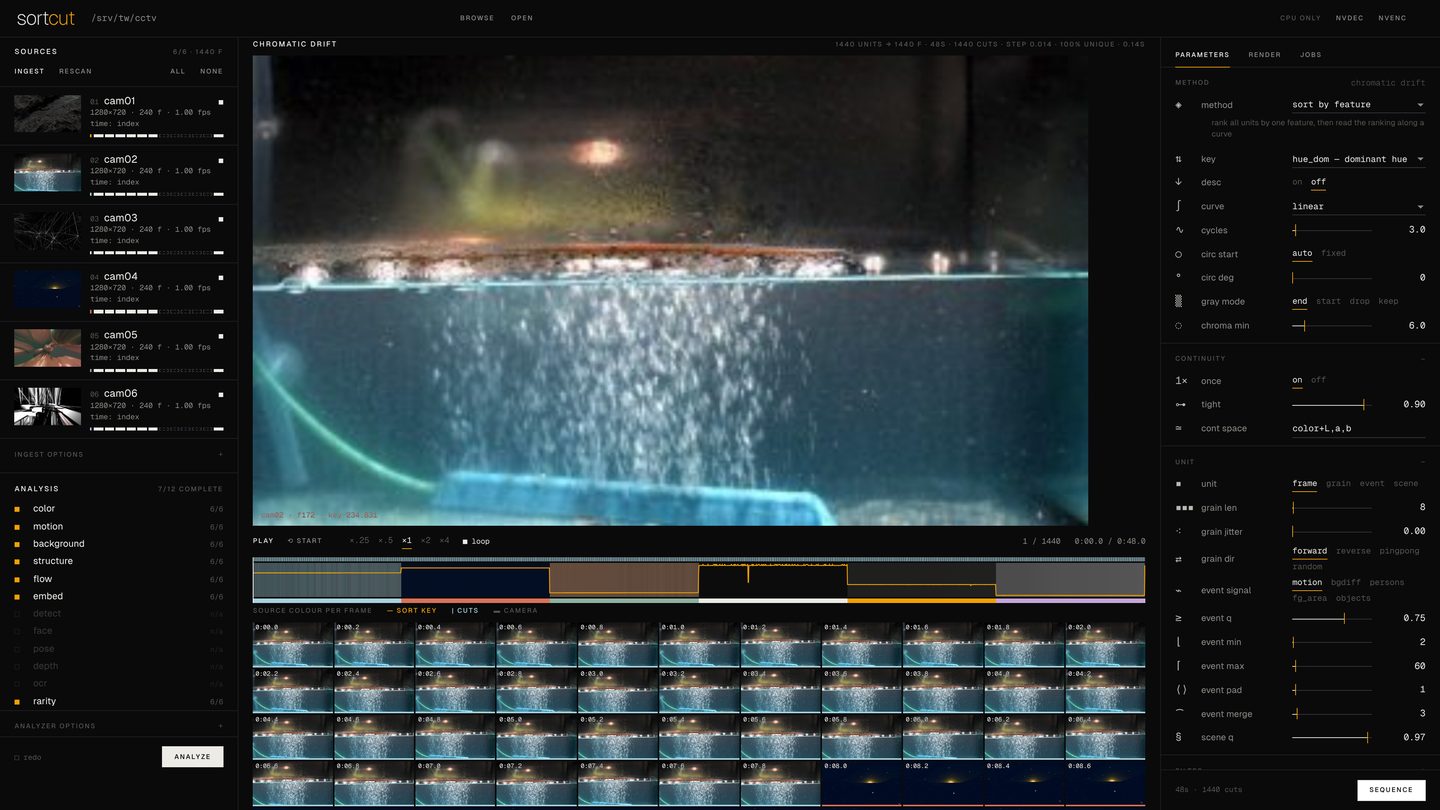
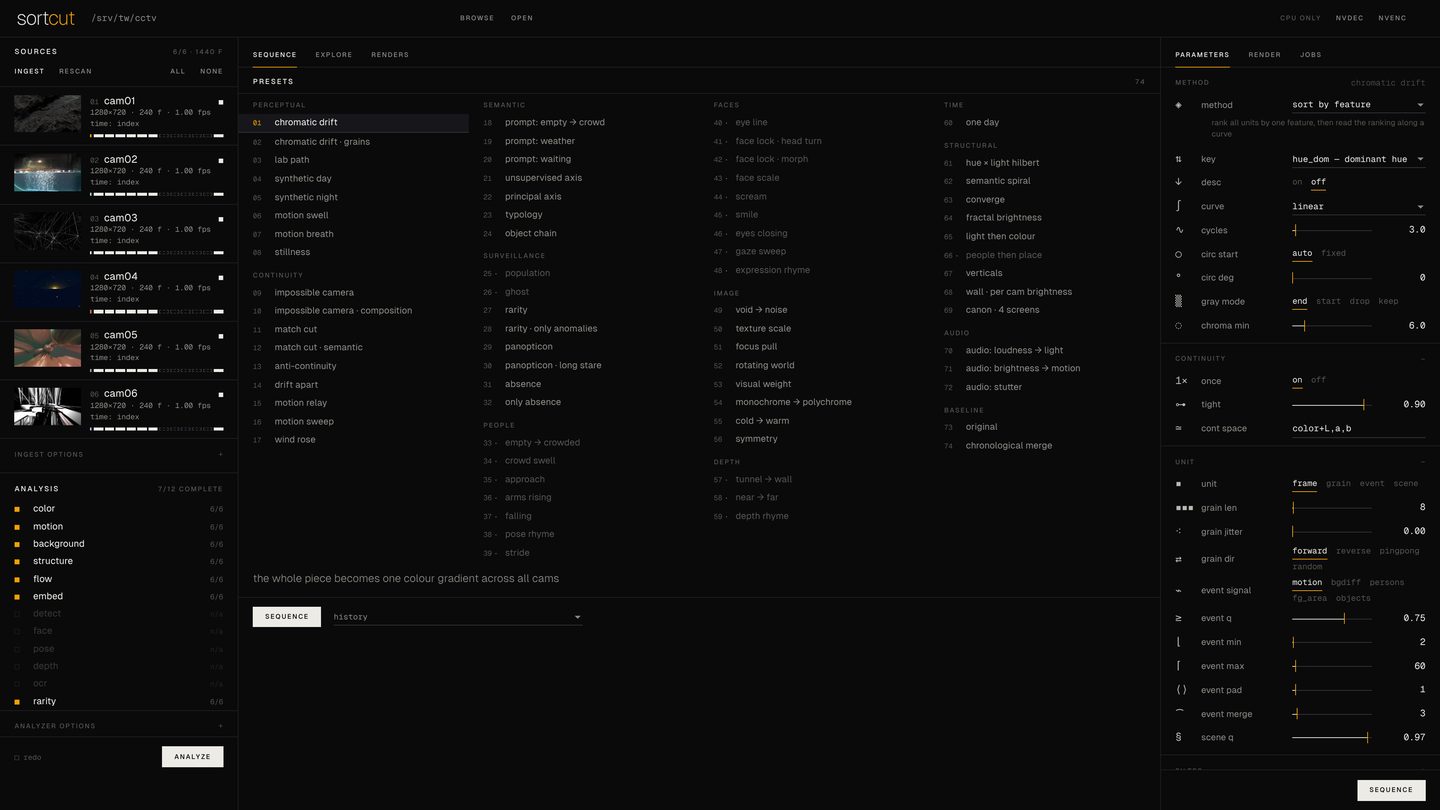
A generative montage system for surveillance footage. Every frame of every camera is described once — colour, light, motion and optical flow, presence, composition, CLIP semantics, detections, faces, pose, depth and real clock time — and the material is then cut by sorting rather than by chance: 74 presets in families such as perceptual, continuity, semantic, surveillance, people, faces, image, depth, time, structure and audio. Continuity constraints, curve readings of every ranking and a use-once rule turn sorting into editing; each render is reproducible from its sidecar (CSV, OTIO, JSON) and can be streamed as OSC for sonification.
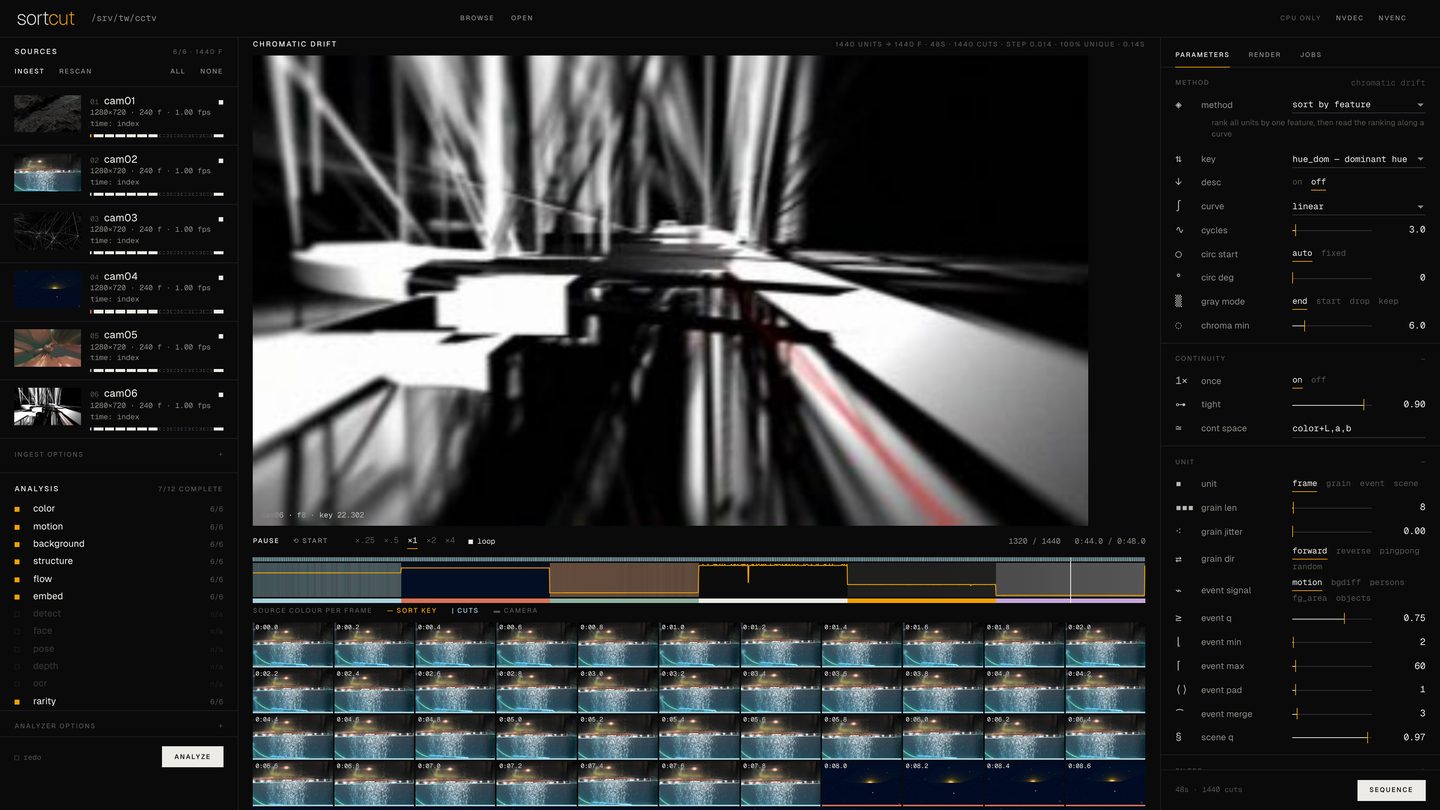
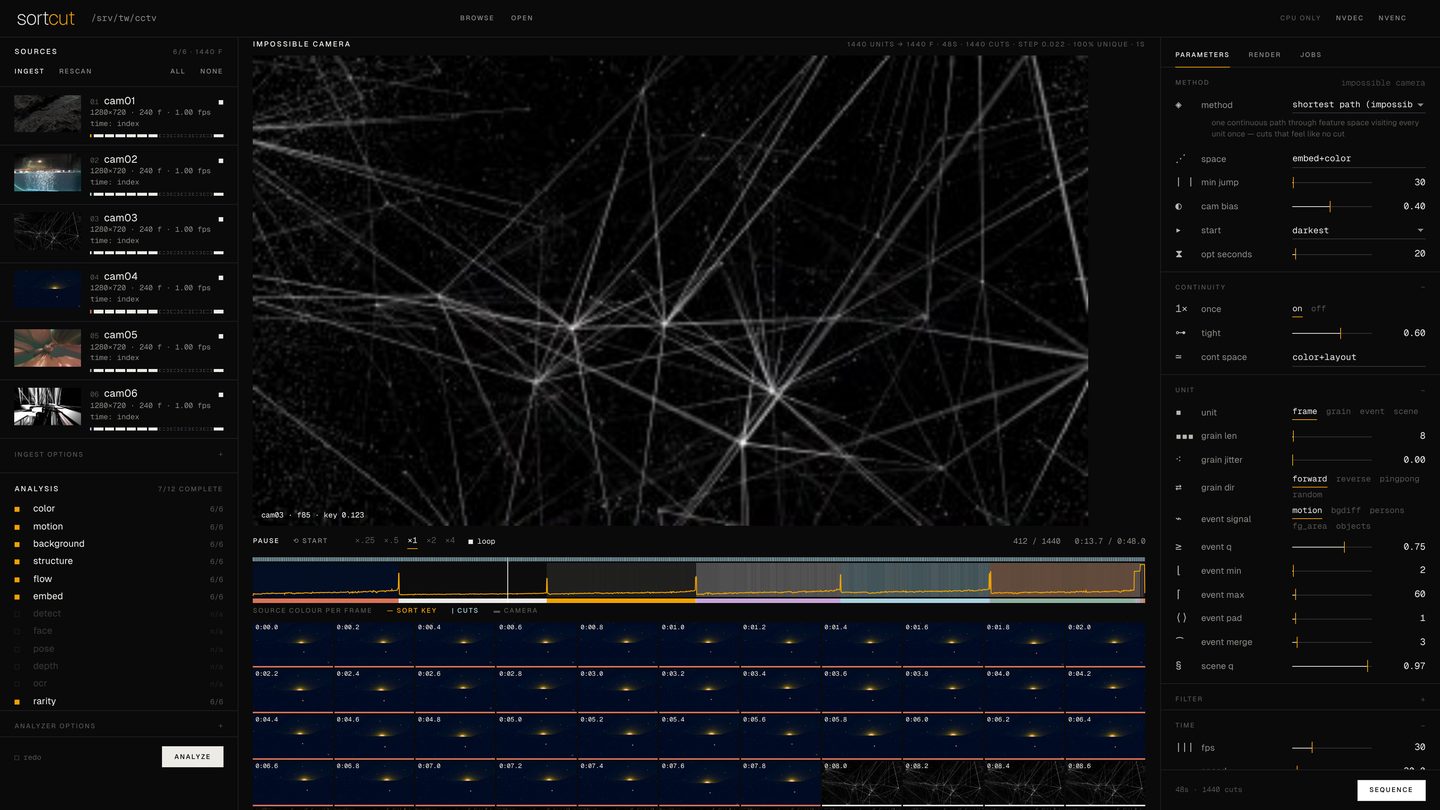
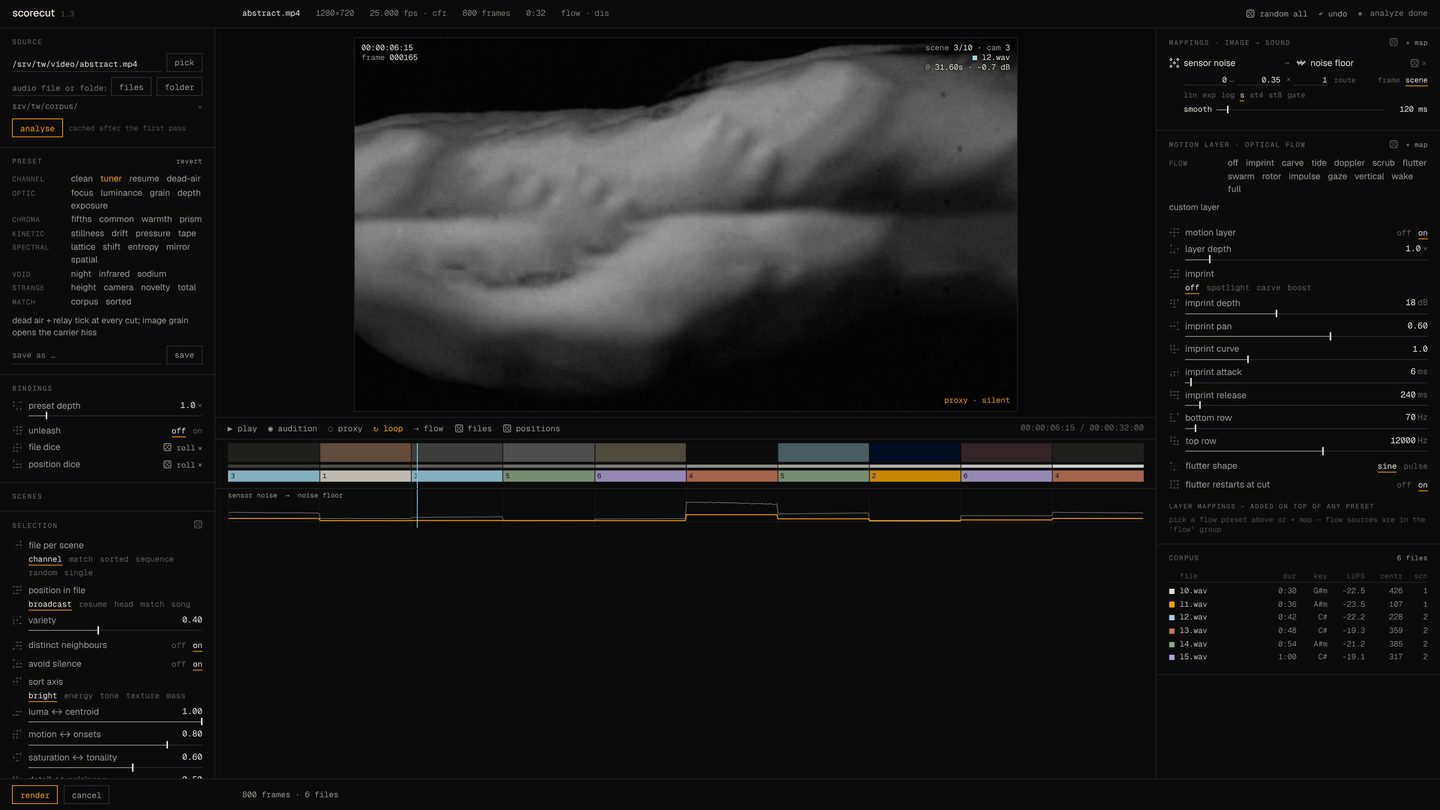
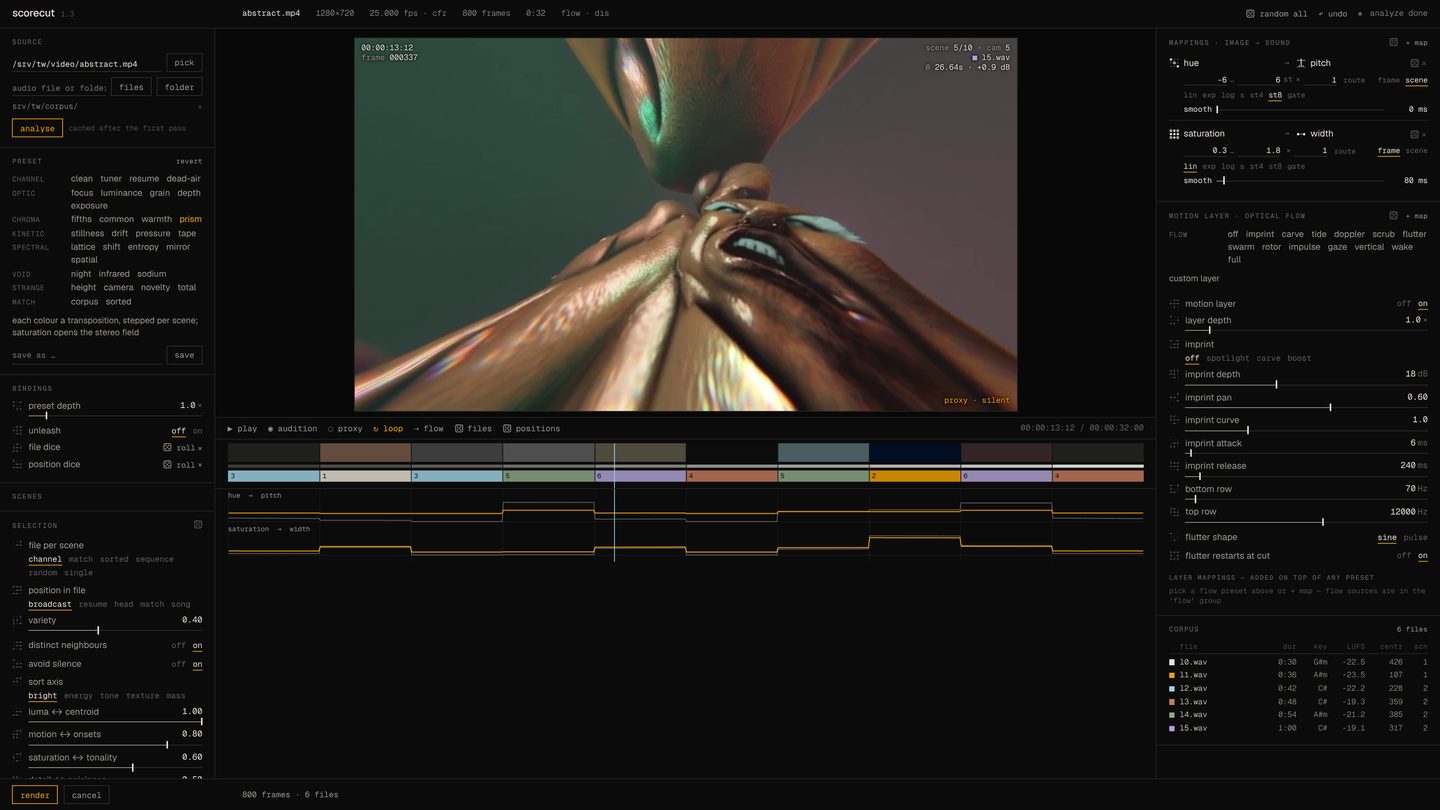
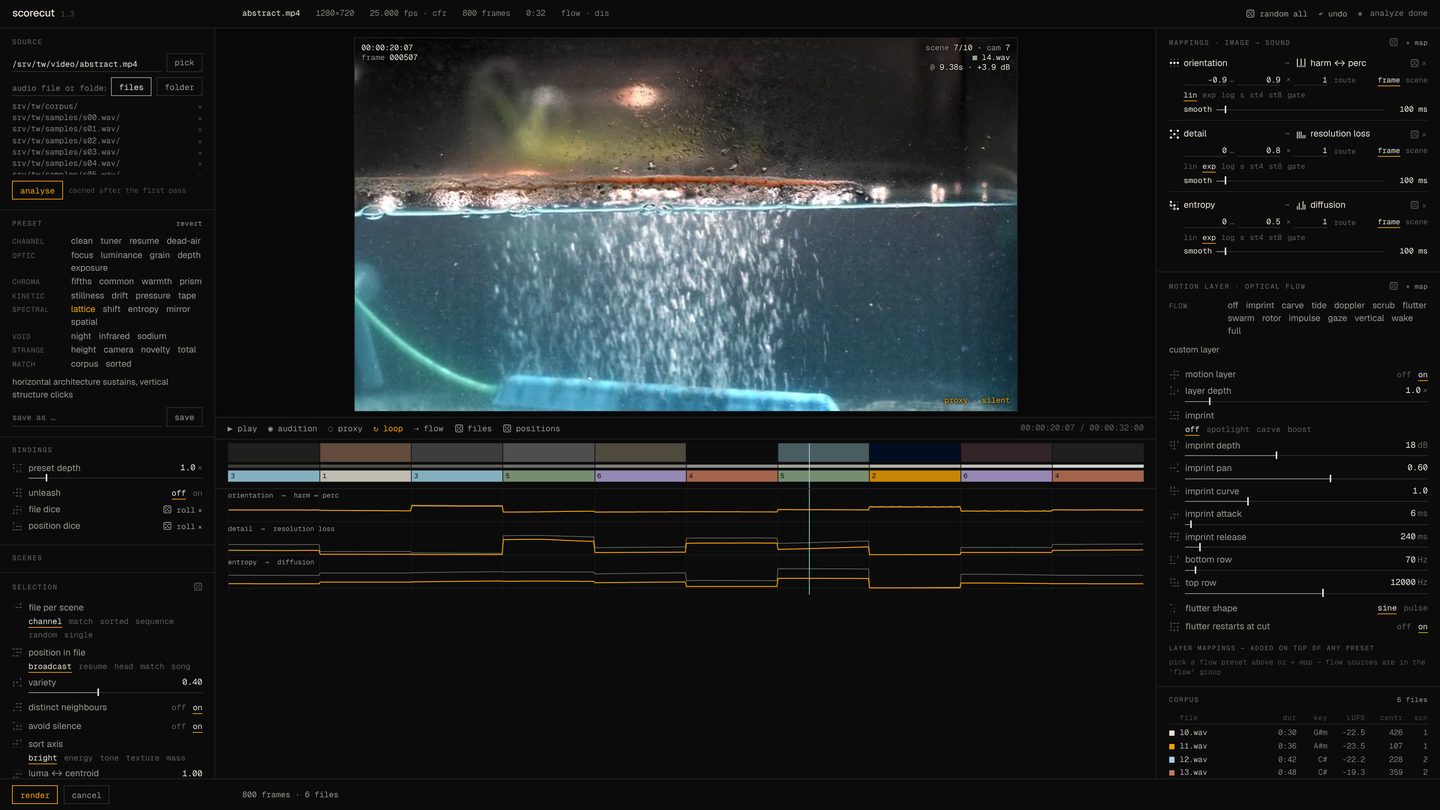
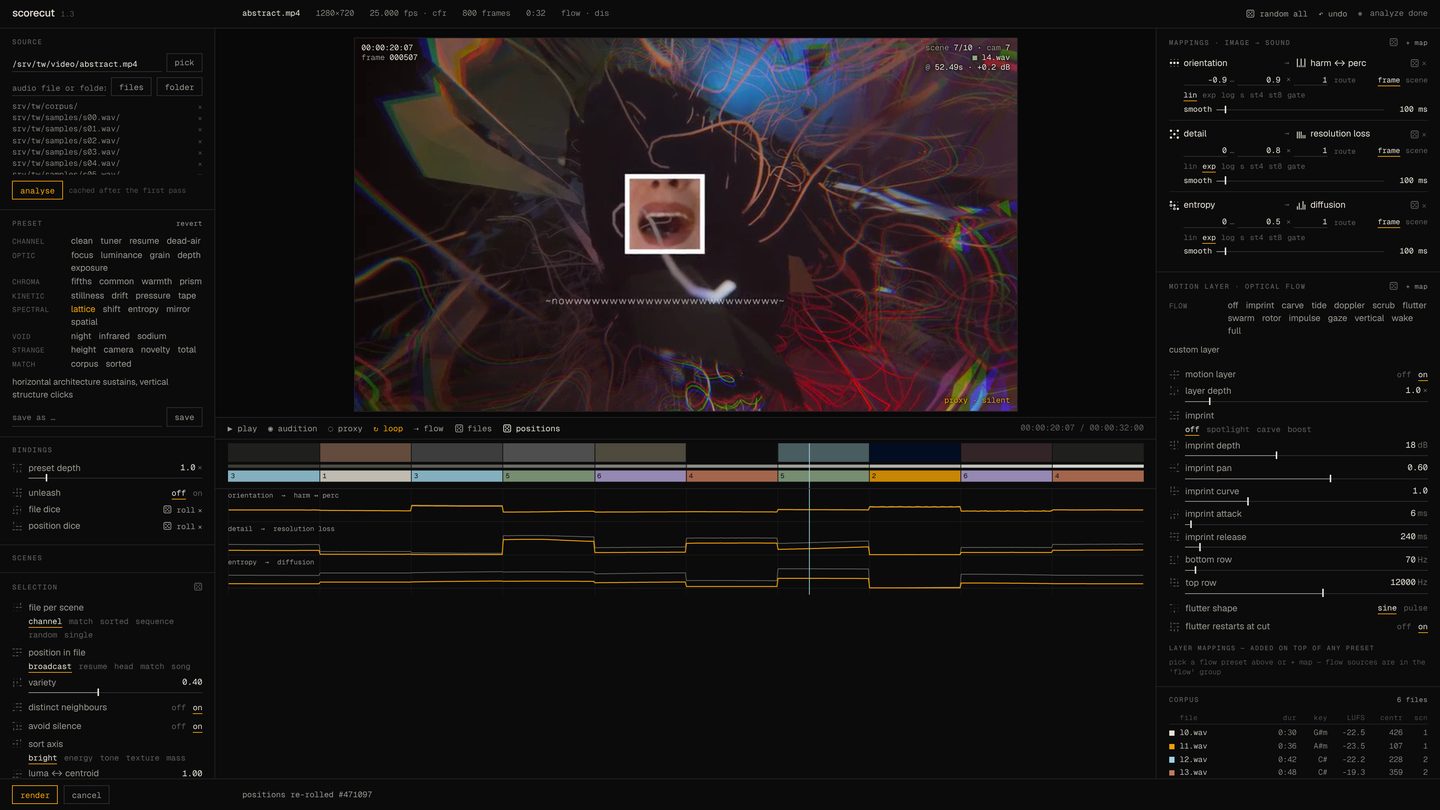
Companion to sortcut (T06): sortcut makes the cut, scorecut makes it sound. The cut video is decomposed into scenes and cameras; each camera becomes a ‘station’ of an audio corpus, switched at the exact frame of the cut, while image features drive a spectral and spatial treatment of the sound. Thirty presets in eight families; cut-aware smoothing guarantees that every change lands on its frame. Output: high-resolution audio, the stream-copied picture with new sound, and a cue list.
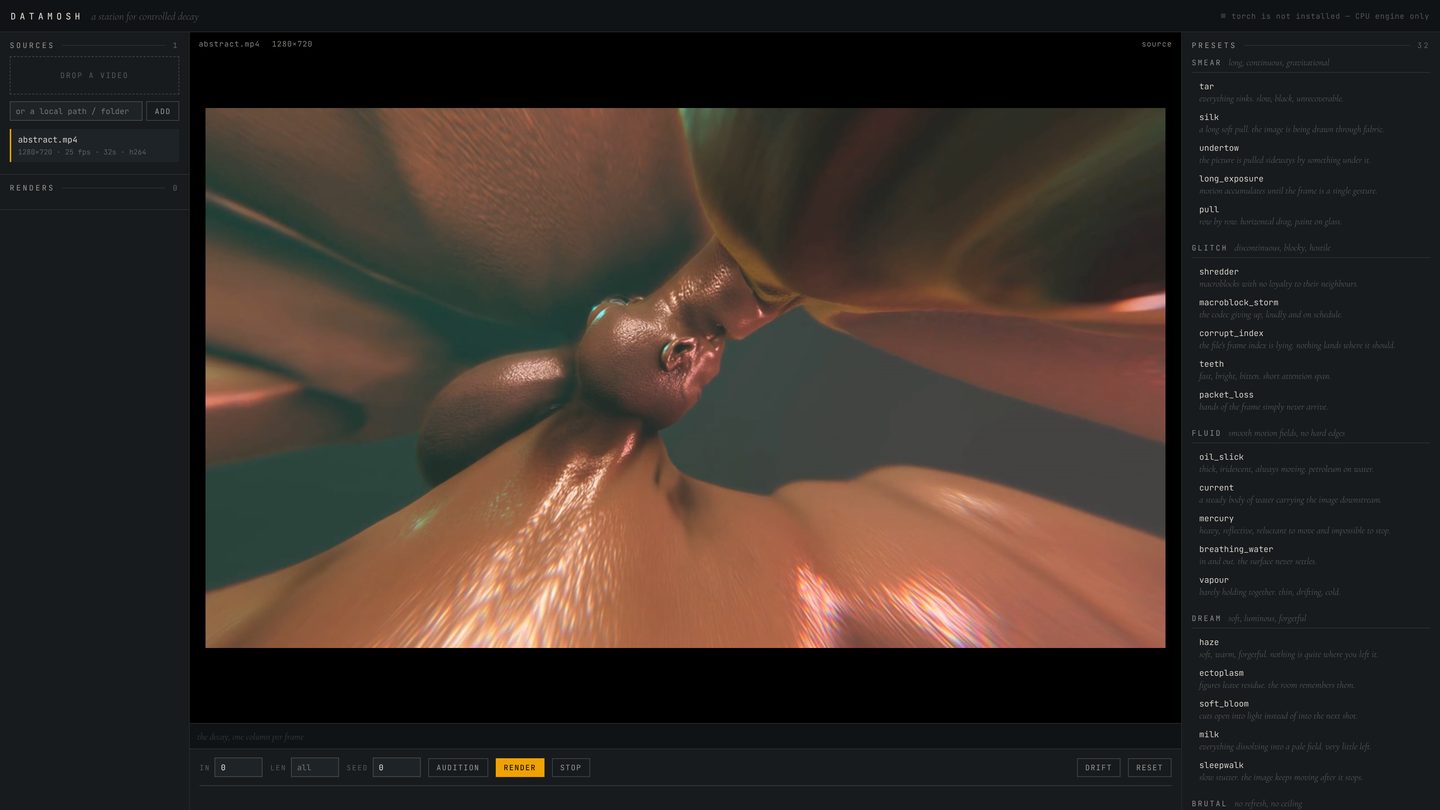
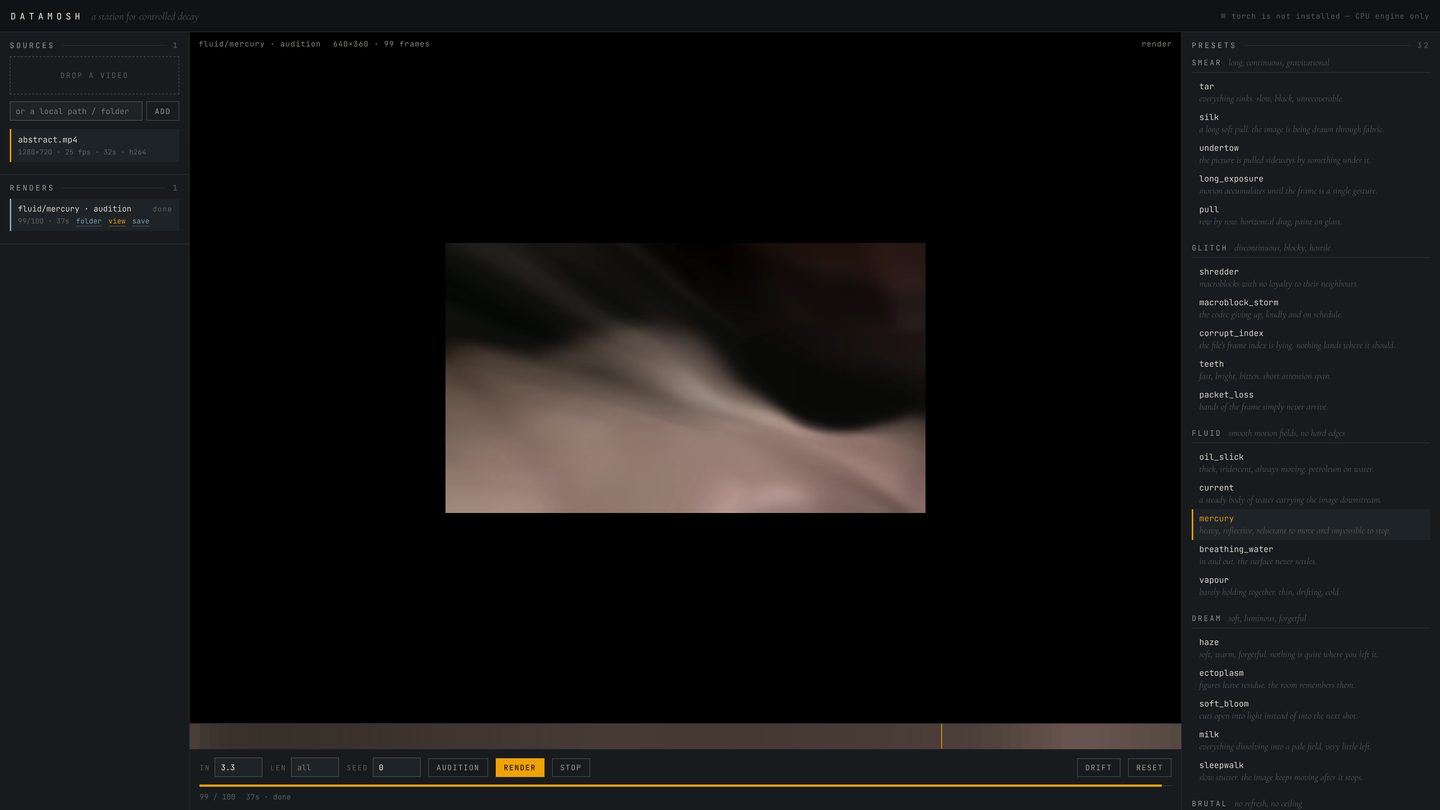
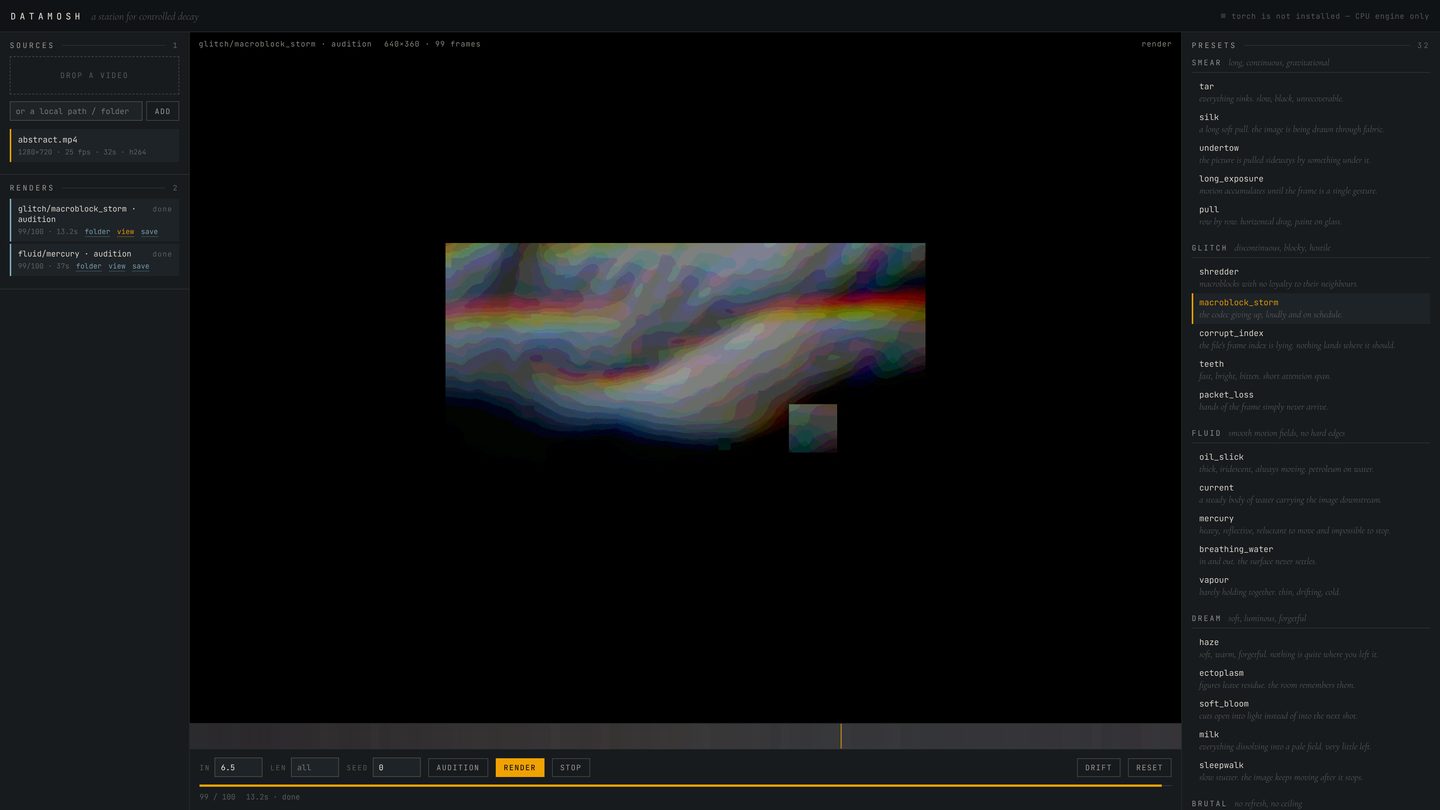
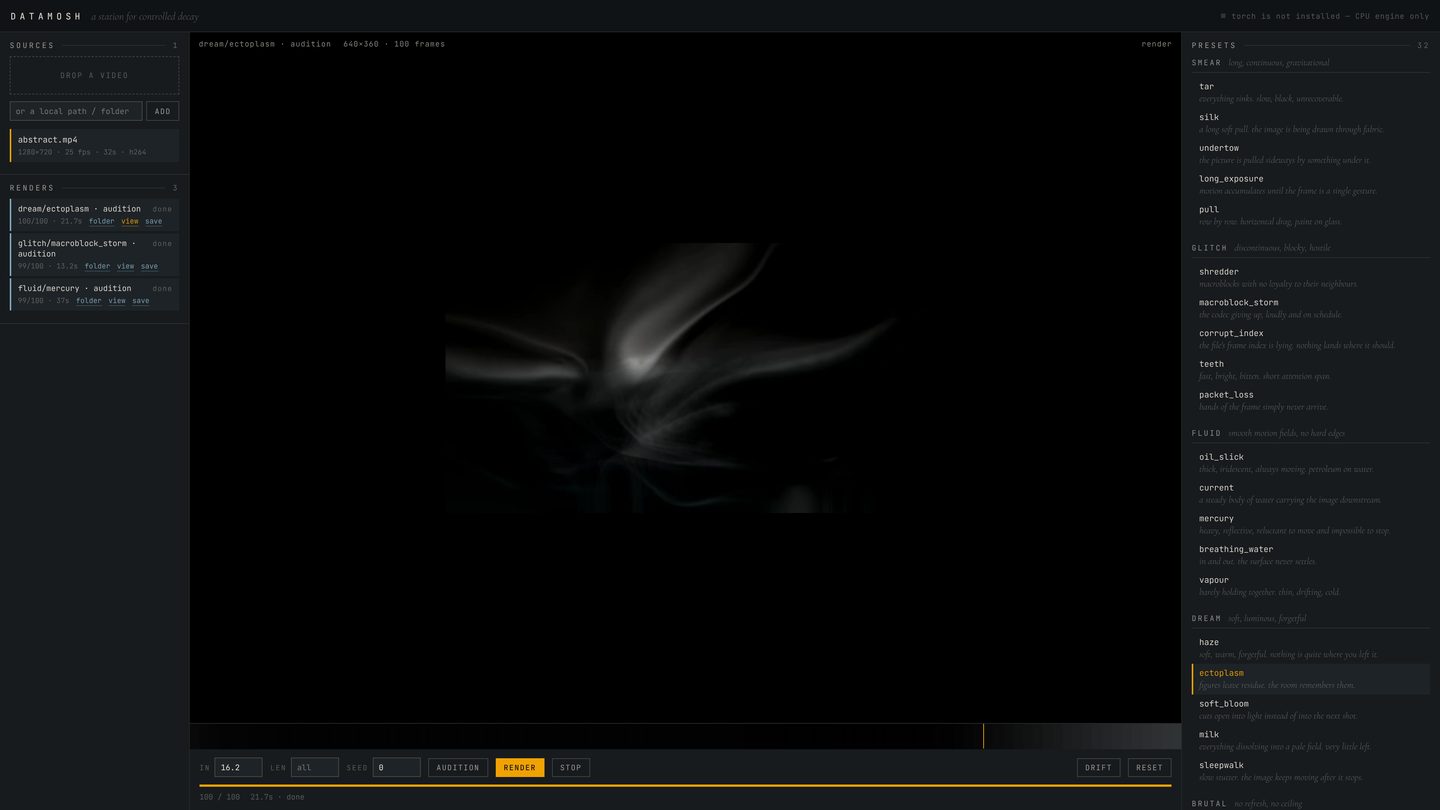
A standalone tool for controlled image decay. Two chainable engines: a flow engine in which measured motion is reshaped through 45 parameters and applied to a canvas that is never refreshed — repeatable at any resolution — and a bitstream engine that deletes I-frames and duplicates P-frames in real MPEG-4 data, leaving the damage to the decoder. Thirty-two presets in five families (smear, glitch, fluid, dream, brutal); identical results on CUDA and CPU back-ends.
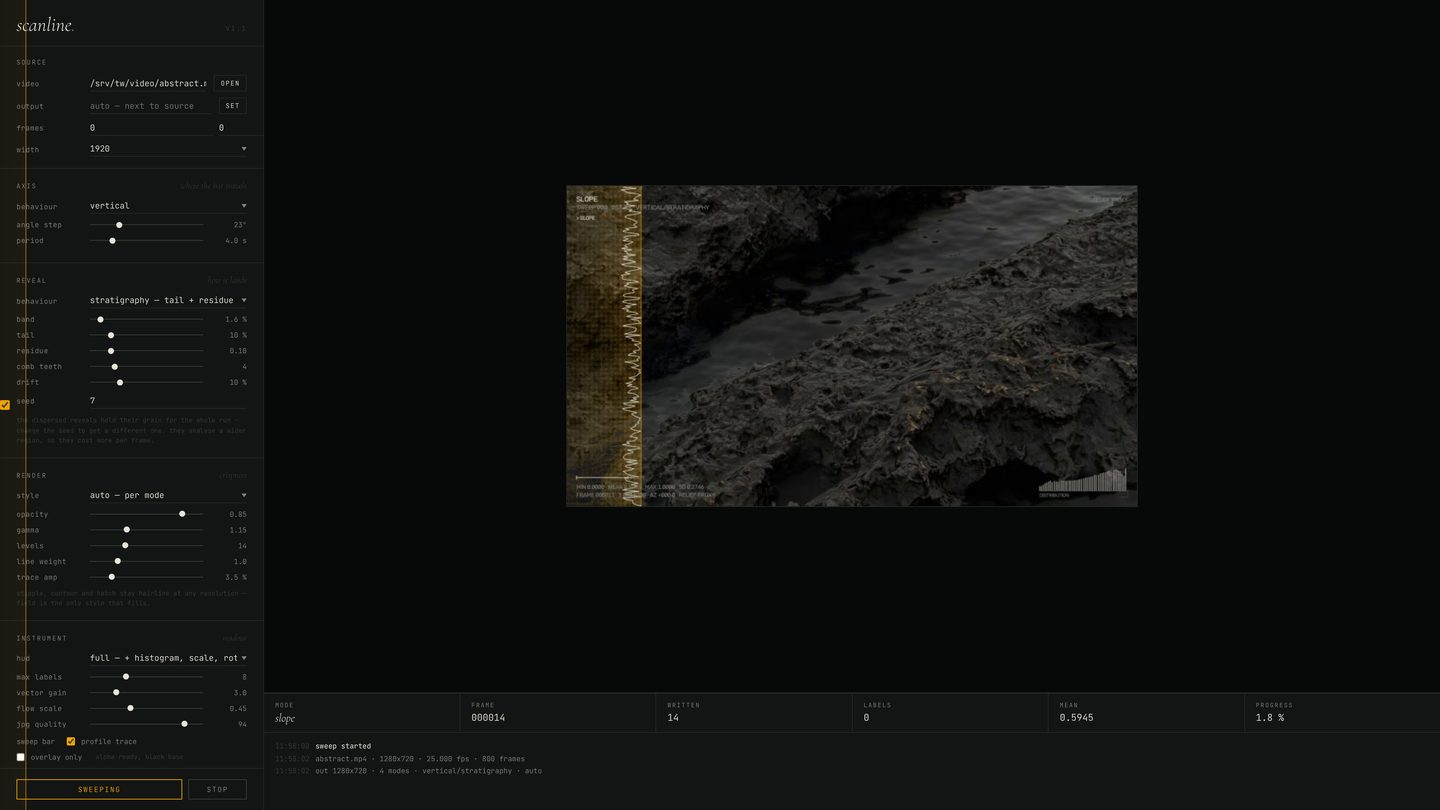
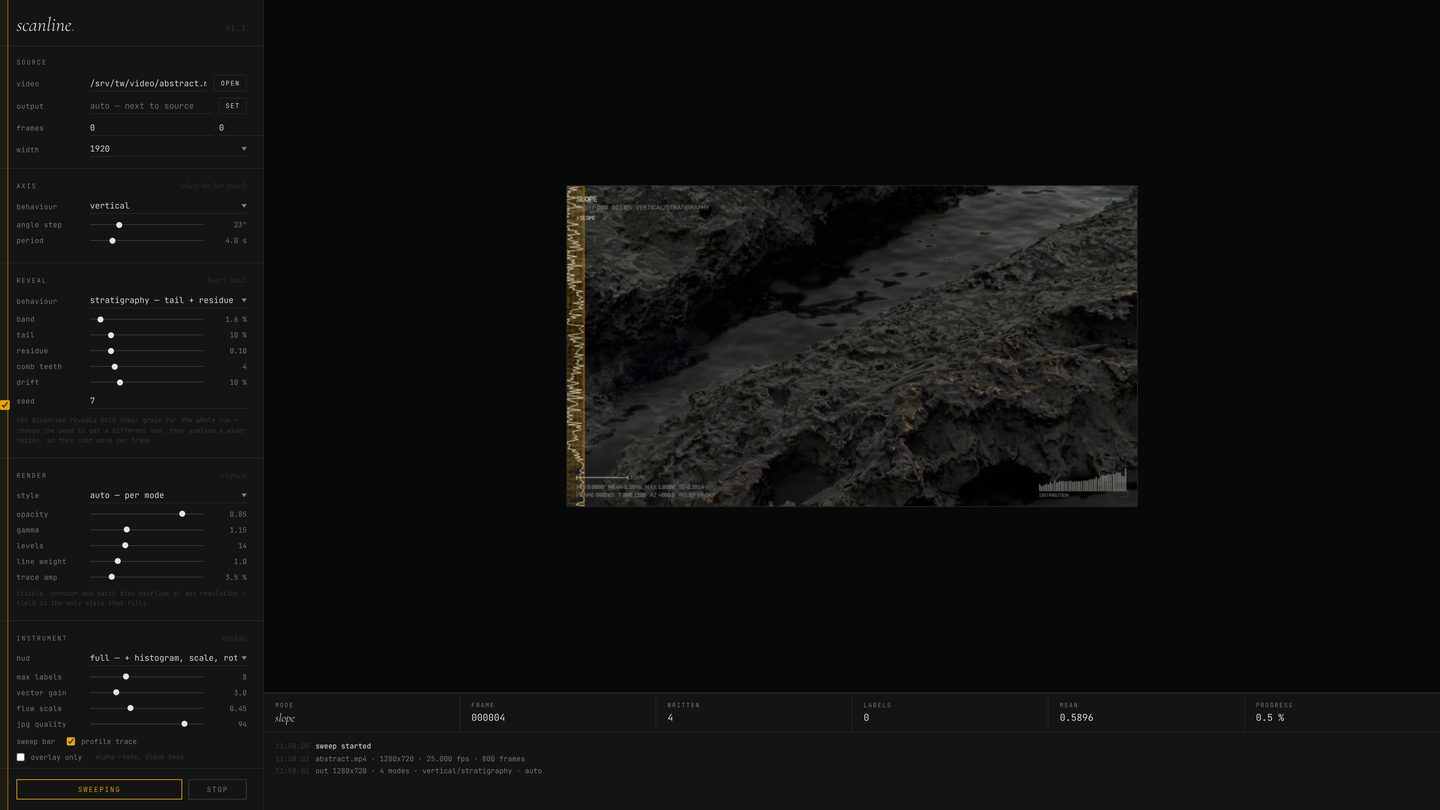
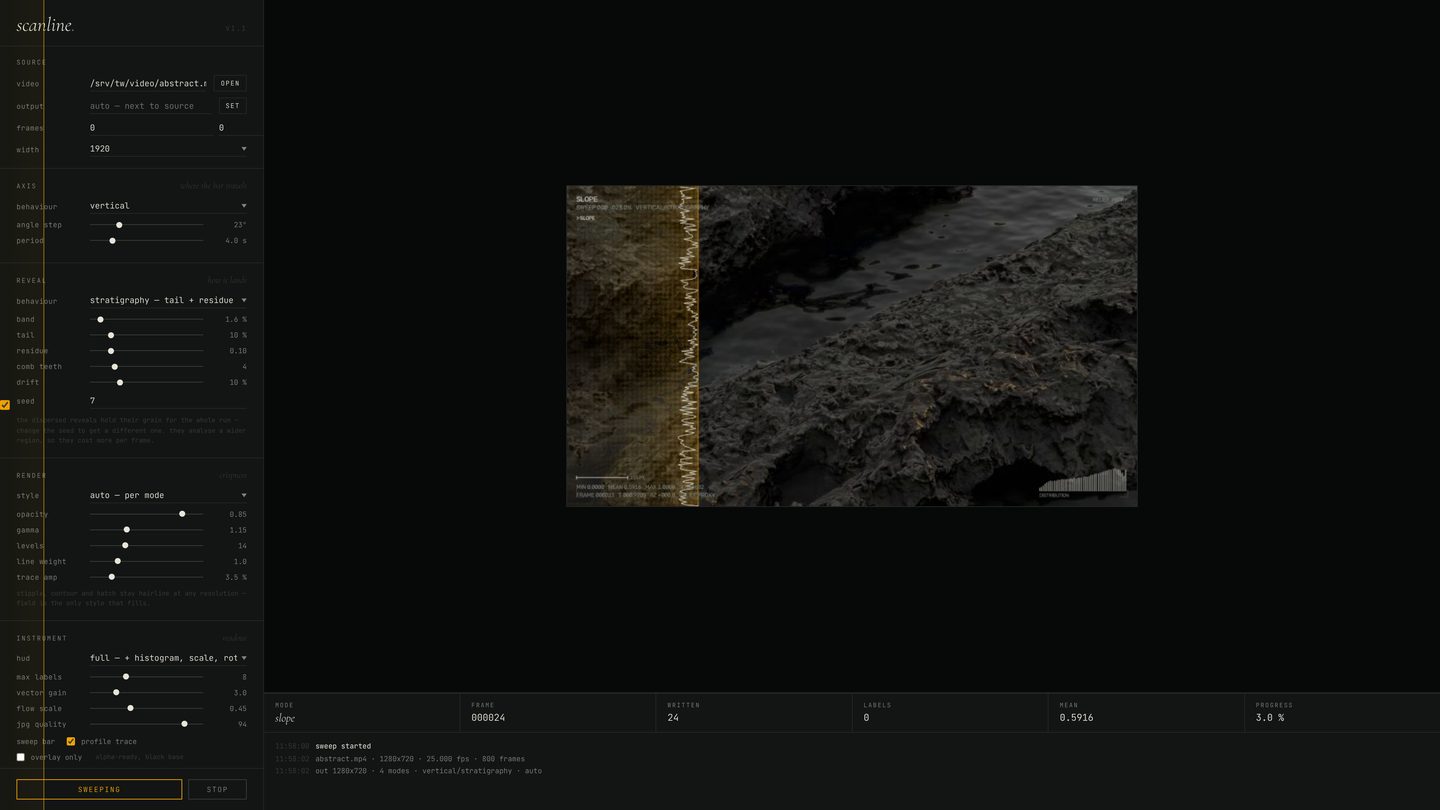
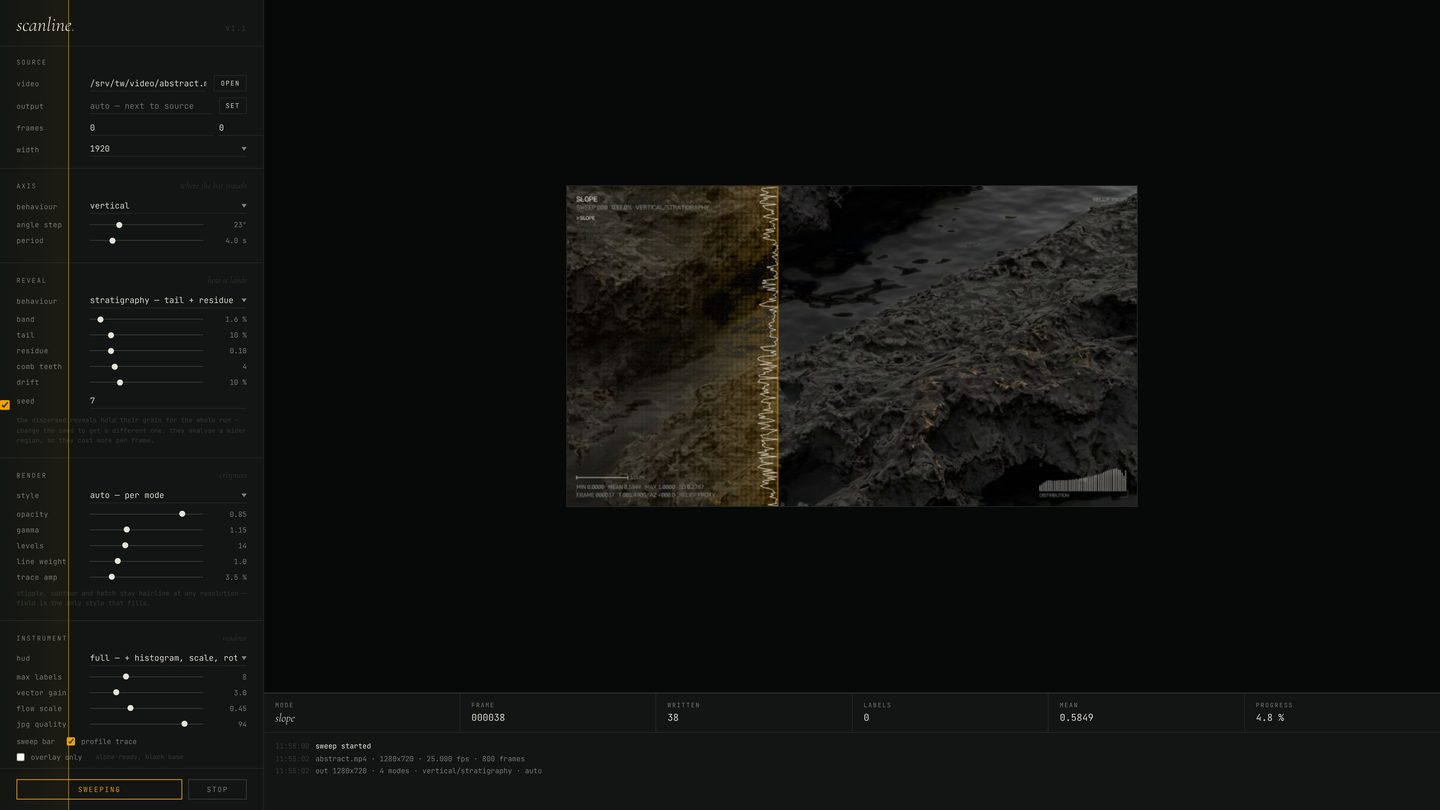
A sweeping bar crosses the moving image and reveals, behind it, one of 35 analytical readings — terrain (slope, curvature, ruggedness), photometric (glint, water index, haze), motion (flow, divergence, vorticity, time-to-contact), detection (landmass, horizon, rectilinear anomalies) and depth. The frame is thus never fully in one epistemology. Output: an image sequence, a preview film and a per-frame scan log.
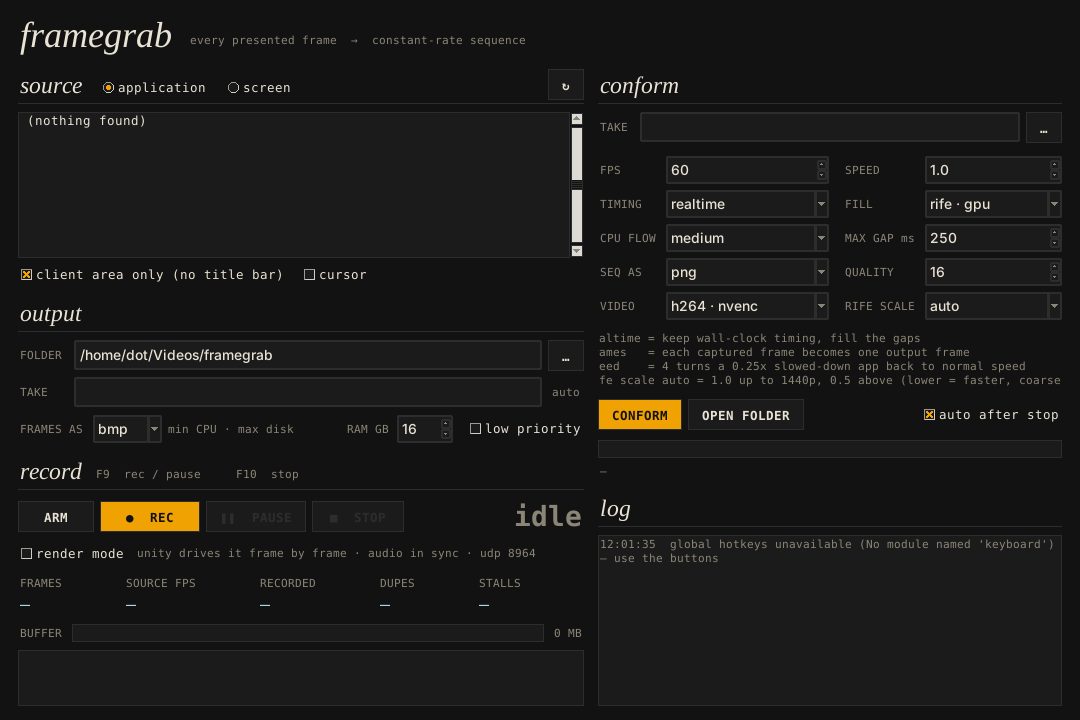
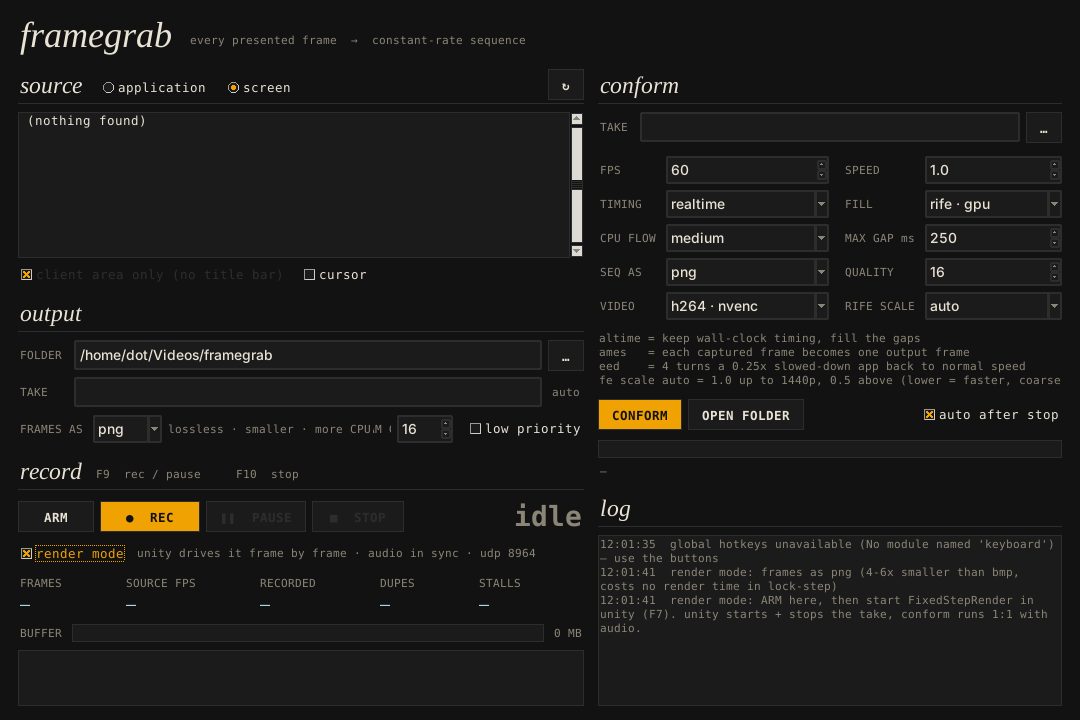
Captures every frame an application actually presents — including irregular, frame-generated or lagging sources — with high-resolution timestamps, and conforms them to an even timeline (hold, blend, optical flow or RIFE interpolation). A render mode lets Unity drive capture frame by frame with synchronised audio over UDP, turning real-time engines into deterministic offline renderers.
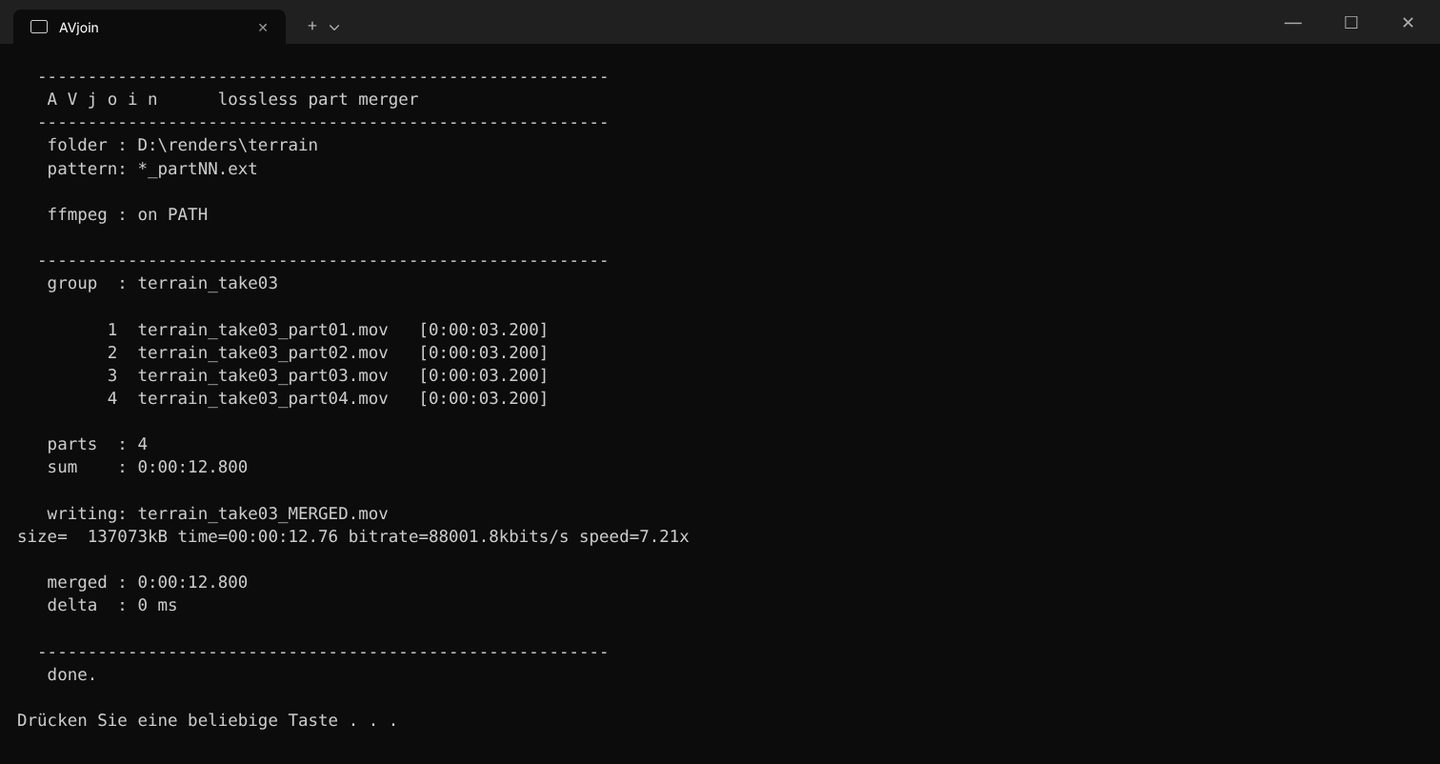
Lossless concatenation of numbered video parts (name_partNN) by stream copy: groups by base name, sorts numerically, verifies identical stream parameters across parts and checks the merged duration against the sum of the parts. Counterpart to AVsplitter.
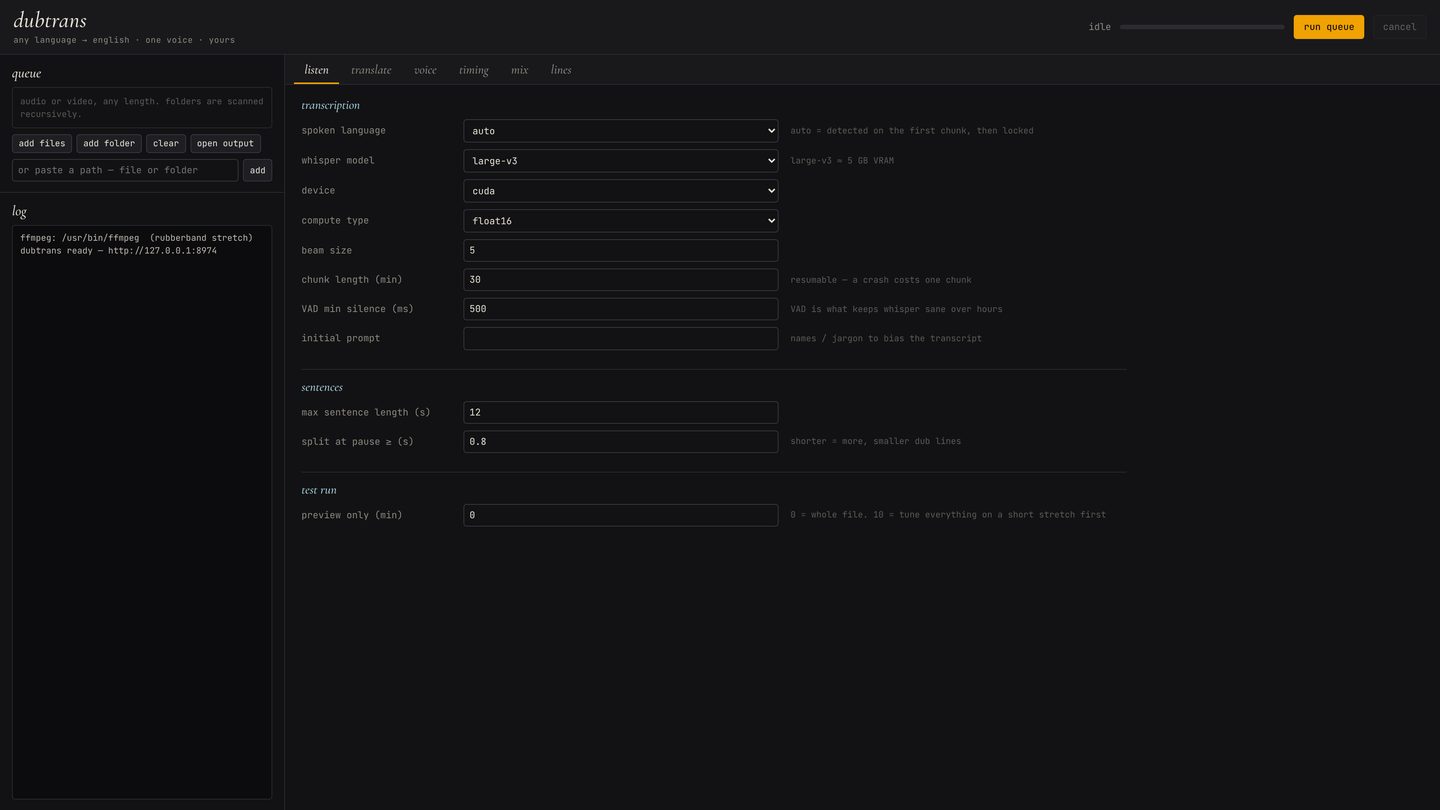
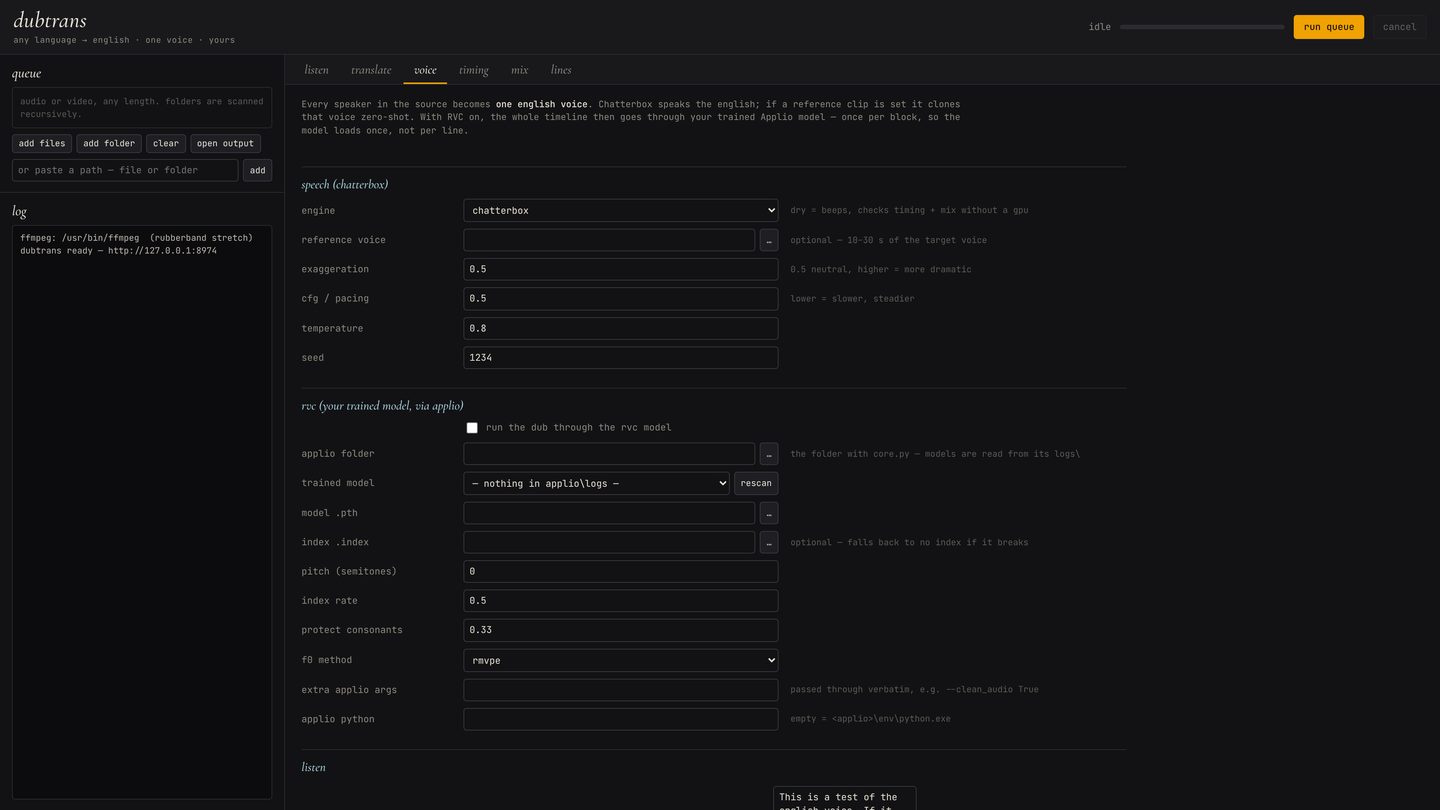
Fully local translation dubbing for long recordings. Speech is transcribed (Whisper, language locked after detection), translated by a local language model that is told each line's duration, synthesised, fitted into the original timing by condensation and time-stretching, converted through a trained RVC voice model and mixed over the original or a separated background. Output: video with English dub and original track plus subtitles.
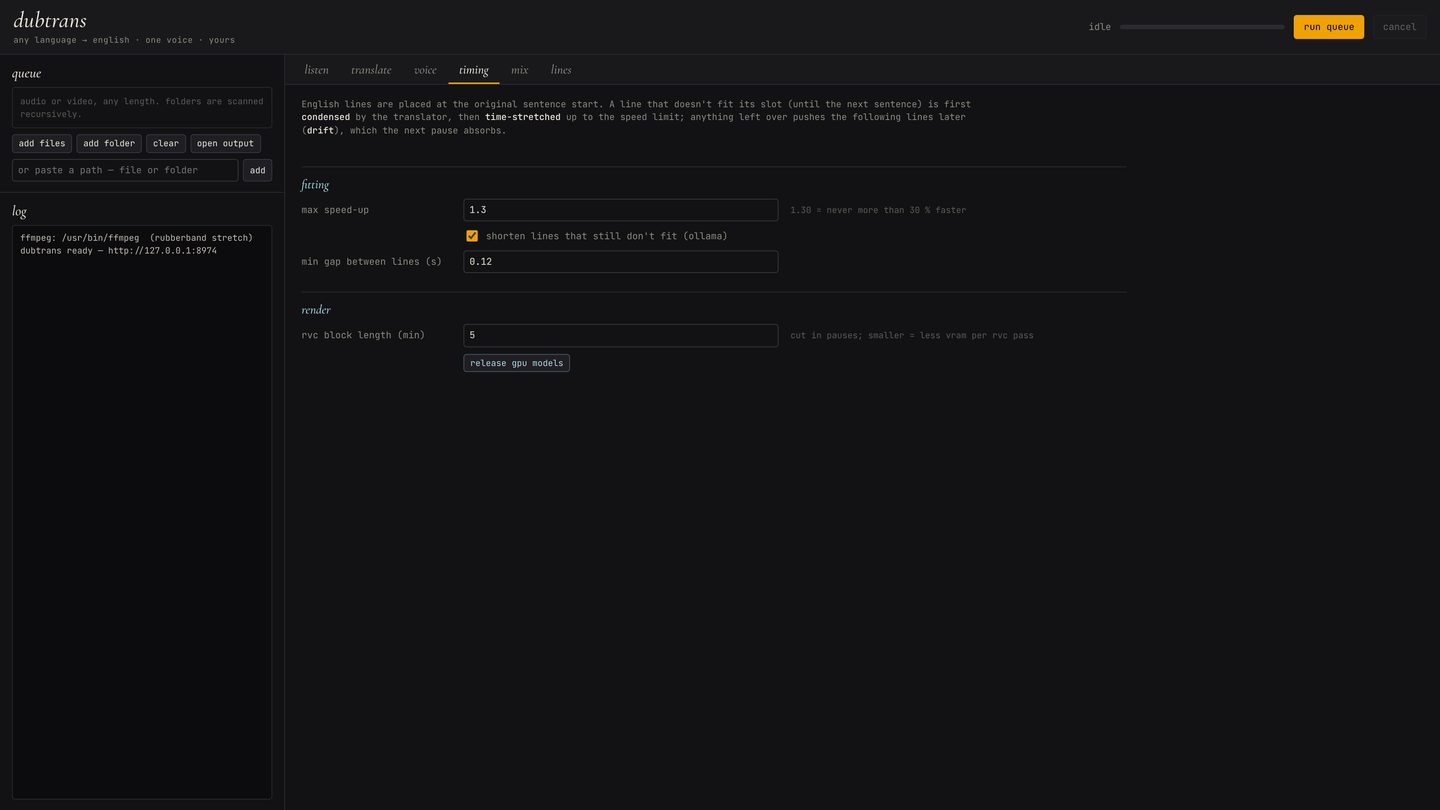
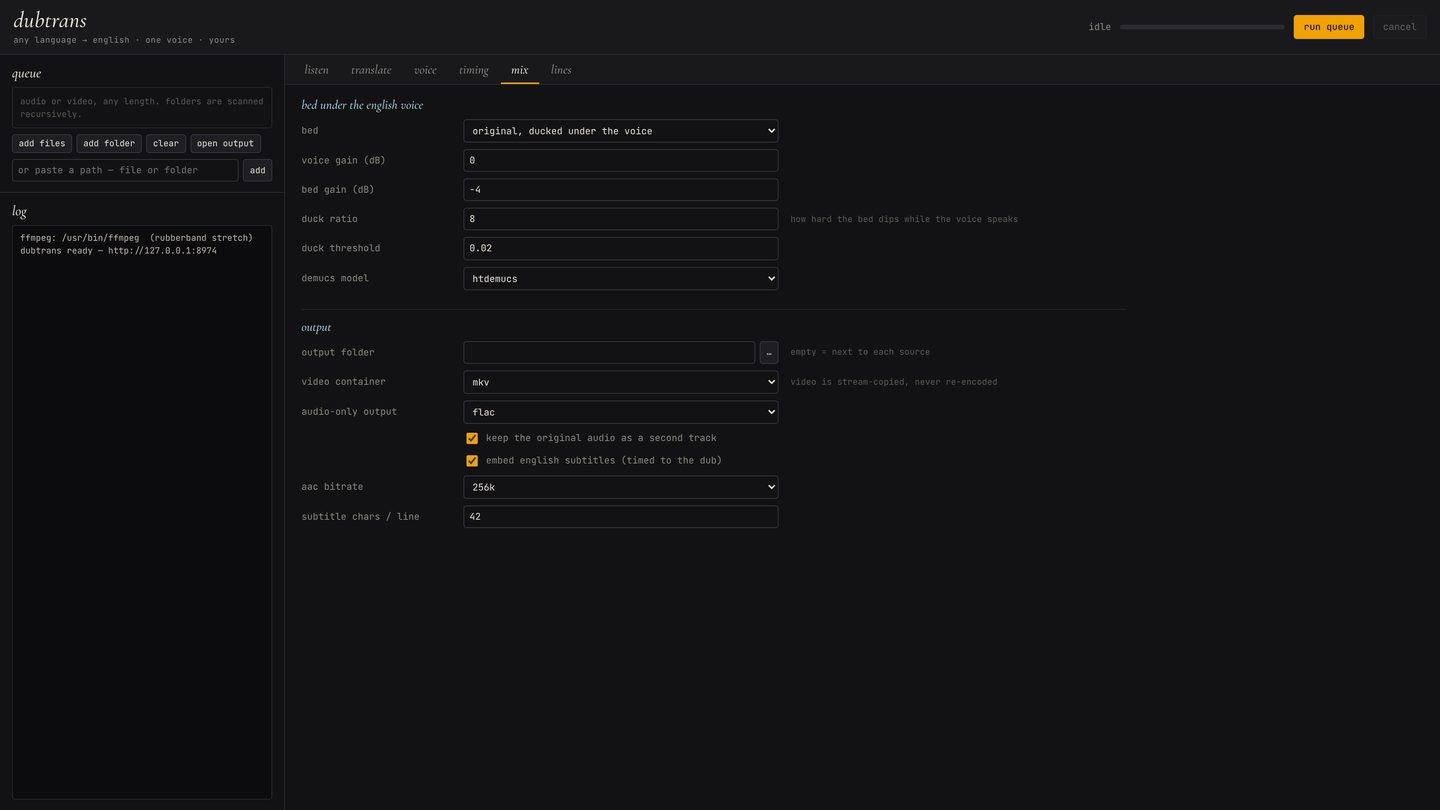
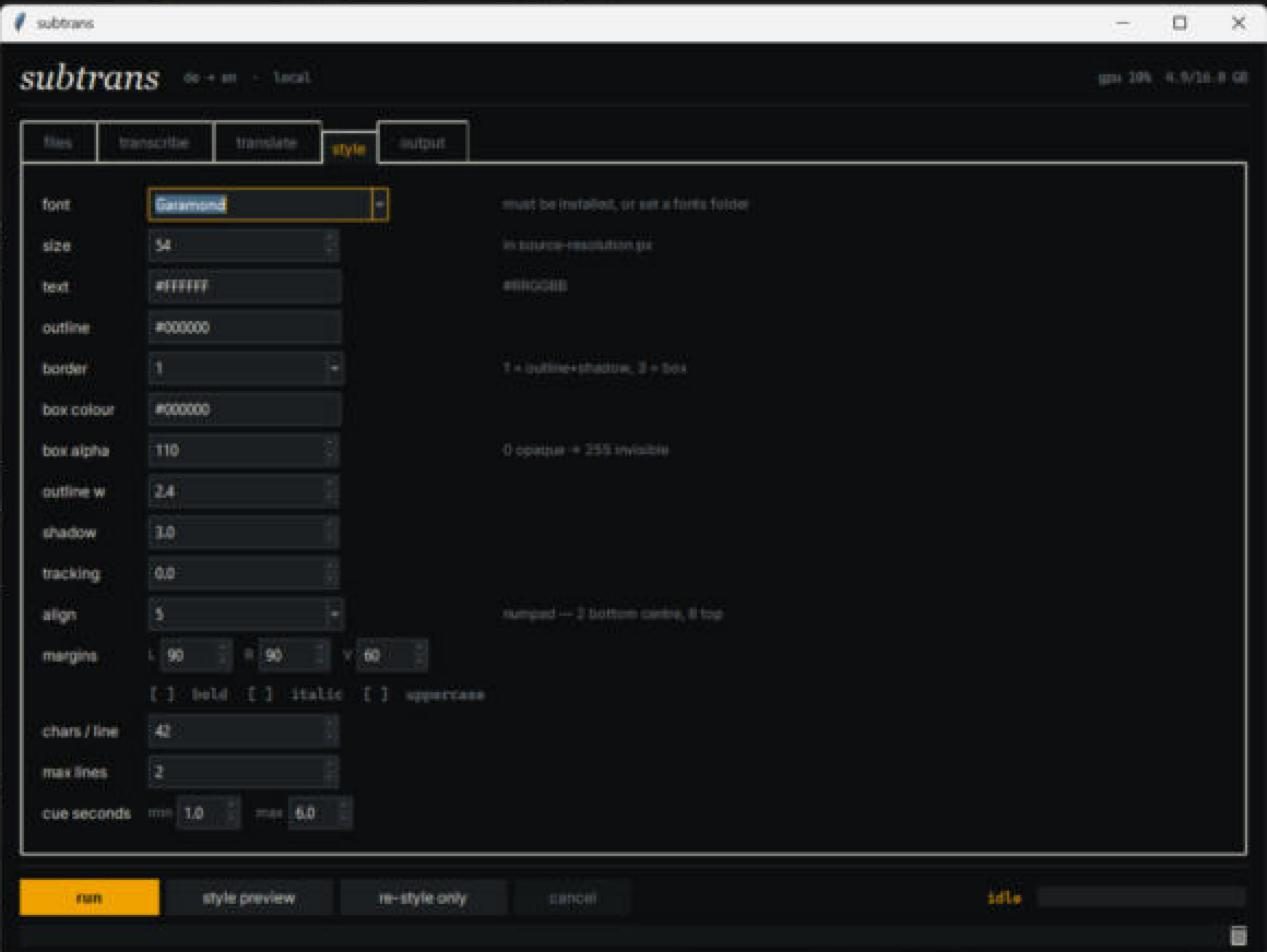
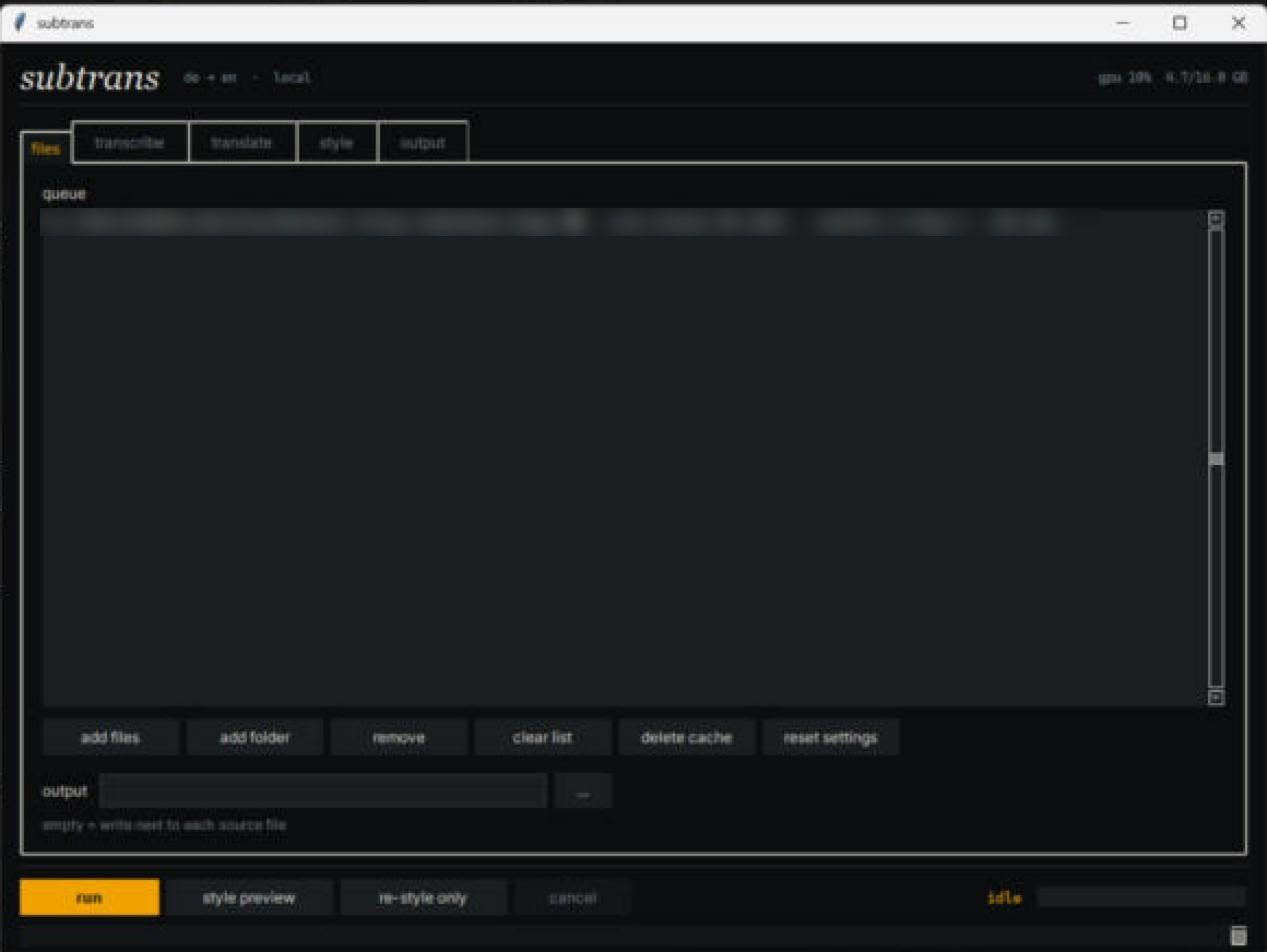
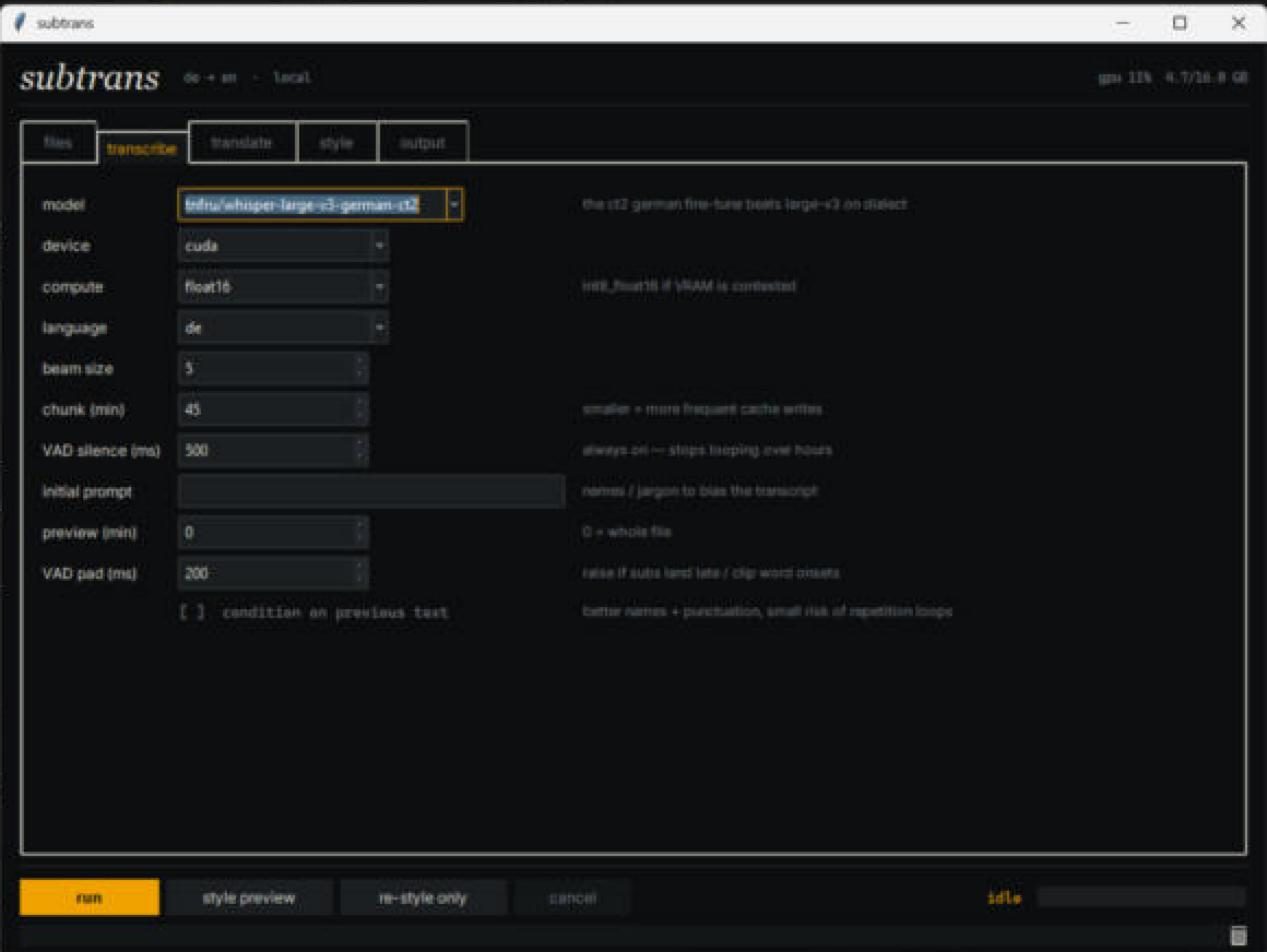
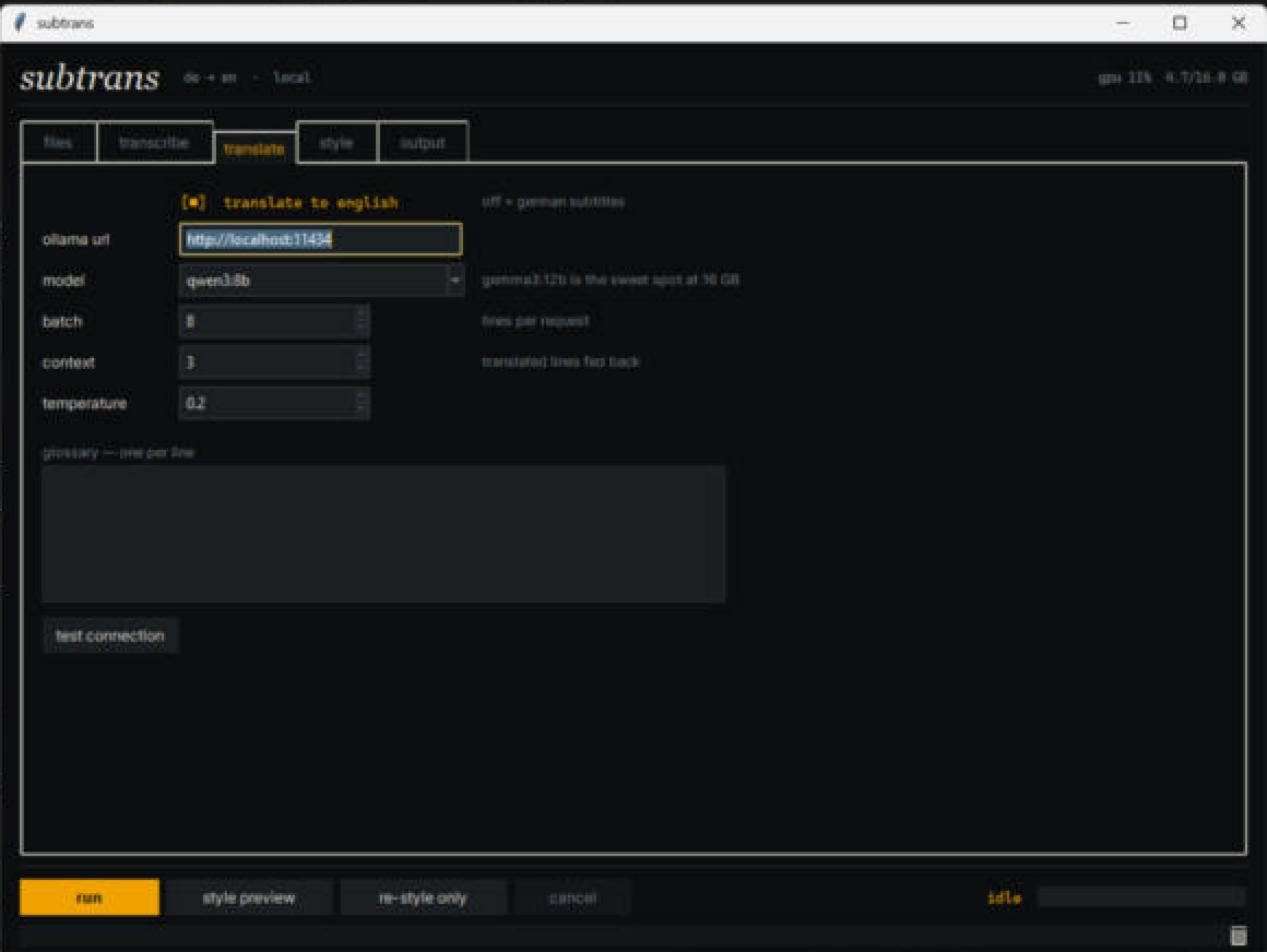
Local subtitling pipeline for recordings of three to seven hours: chunked transcription with voice-activity detection and word timestamps, translation through a local language model, typographic styling as ASS, and either soft muxing or hardware-encoded burn-in. Batch-capable; shares its listening and translation core with dubtrans.
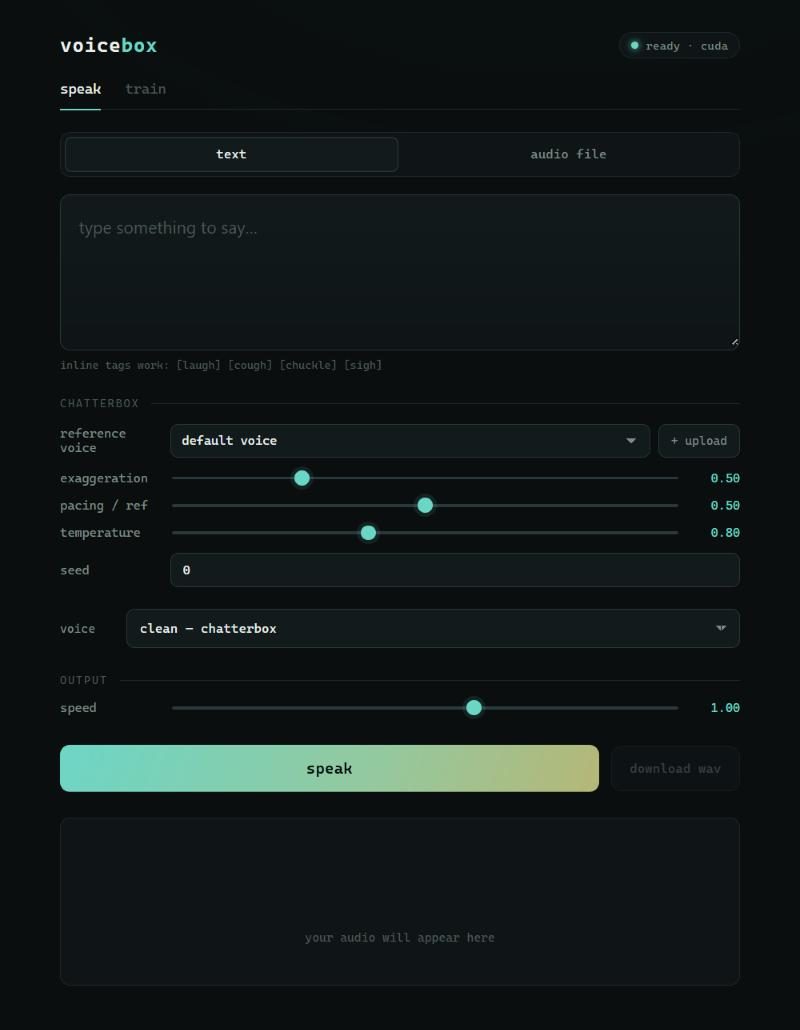
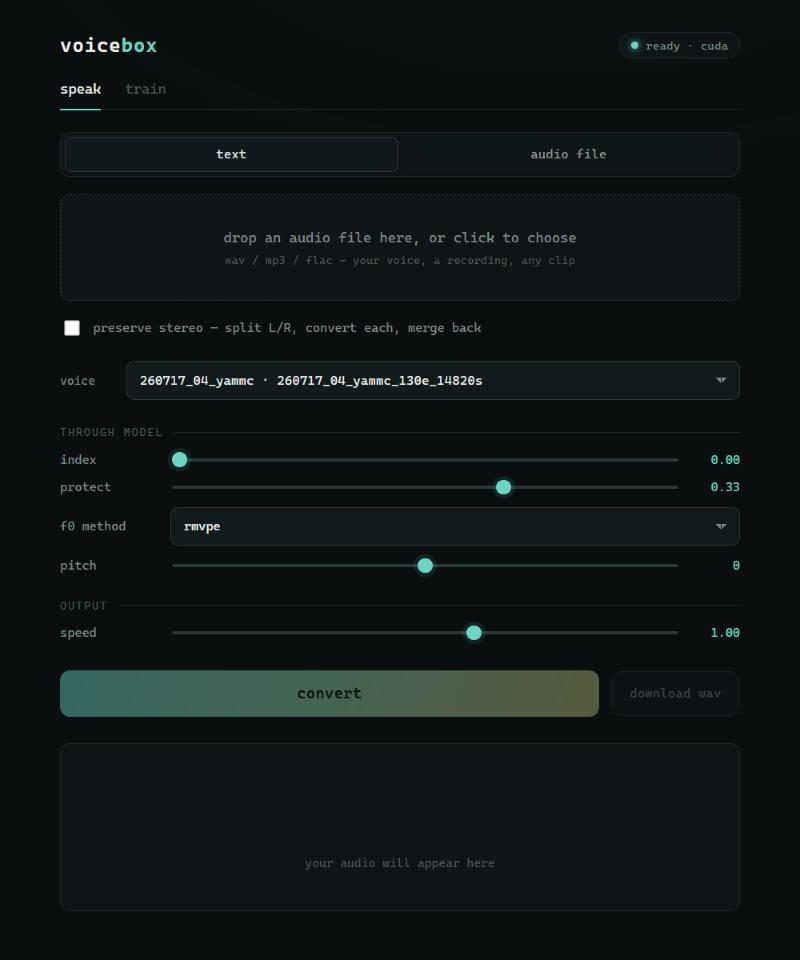
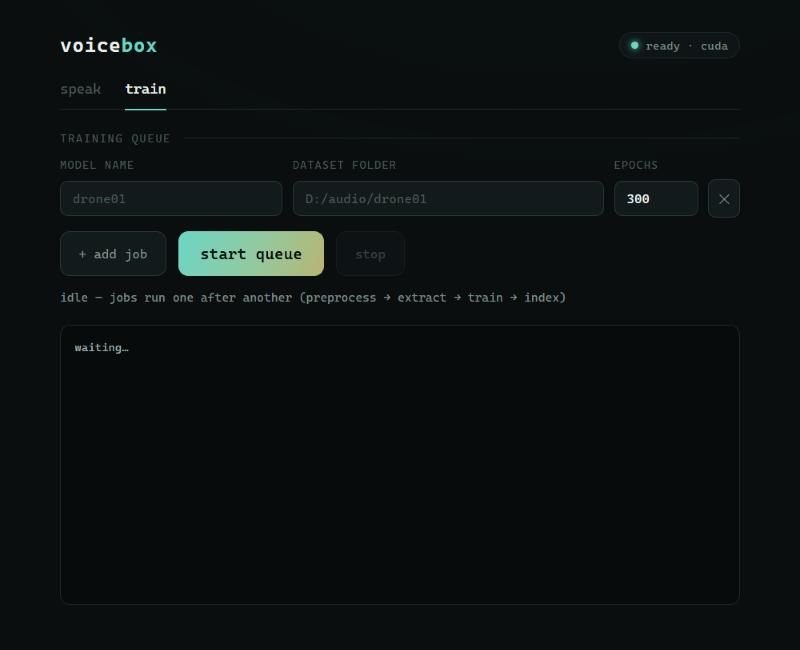
A local text-to-speech environment whose voice can be a model trained on arbitrary, including non-vocal, audio. Typed text or any input file is synthesised and passed through a trained RVC model; reference voices, expressive tags, extreme slow-down and stereo-preserving conversion are available, and training jobs can be queued from the same interface.
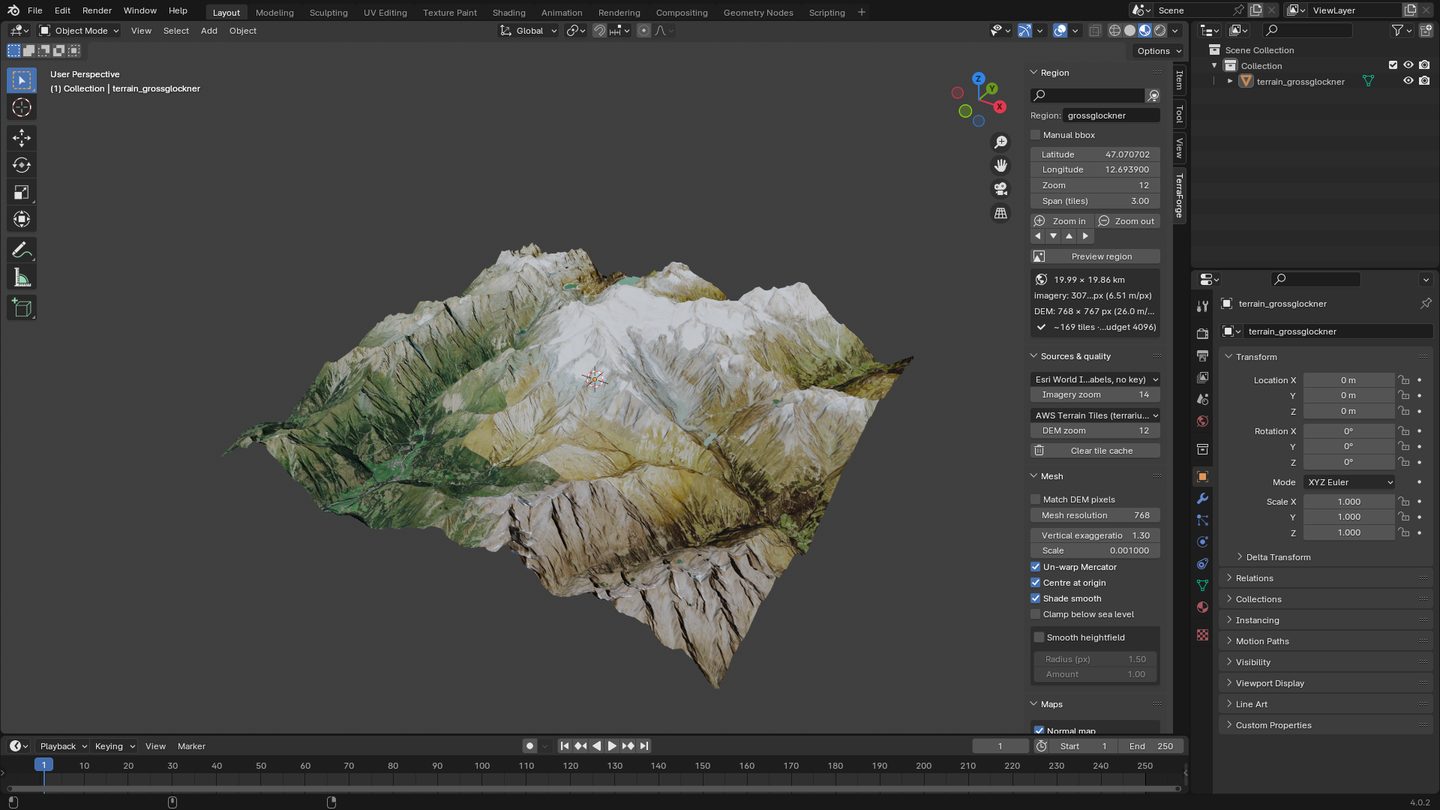
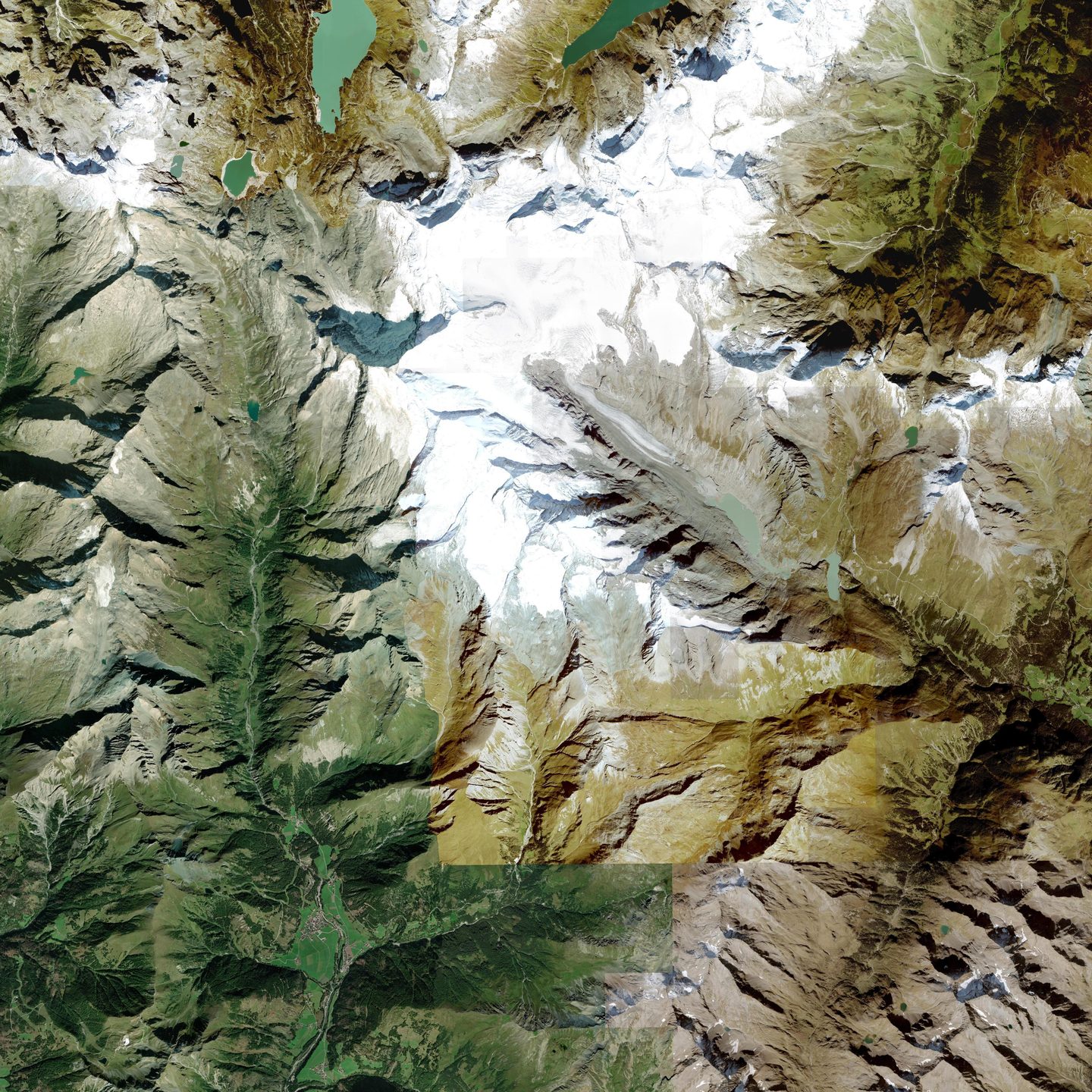
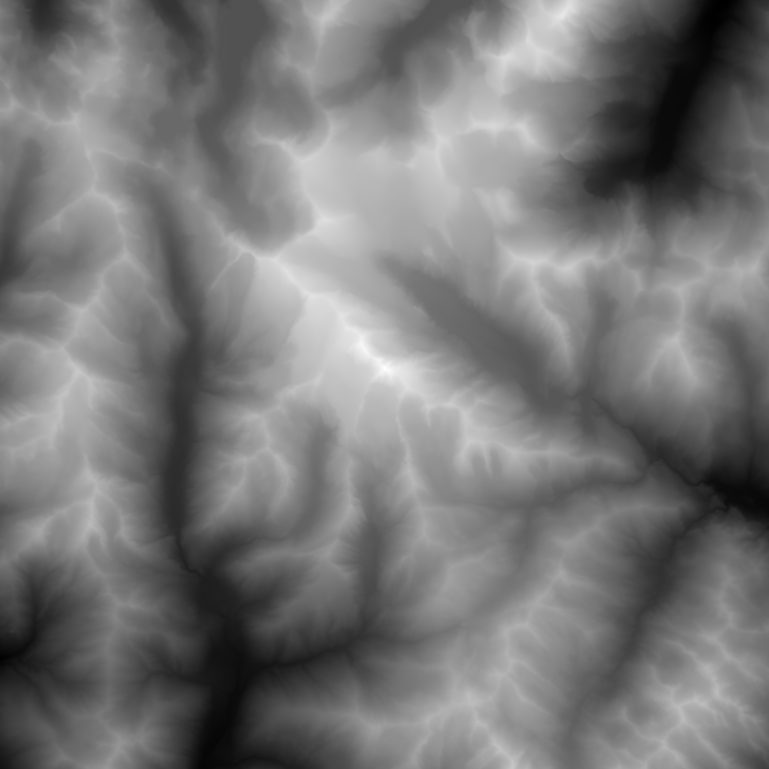
A Blender add-on that fetches elevation and satellite imagery for any region on earth, builds a metrically correct (un-warped Mercator) terrain mesh and derives normal, 16-bit height and ambient-occlusion maps, exported with dated textures as FBX/OBJ for game engines. Plate: Großglockner, 20 × 20 km.

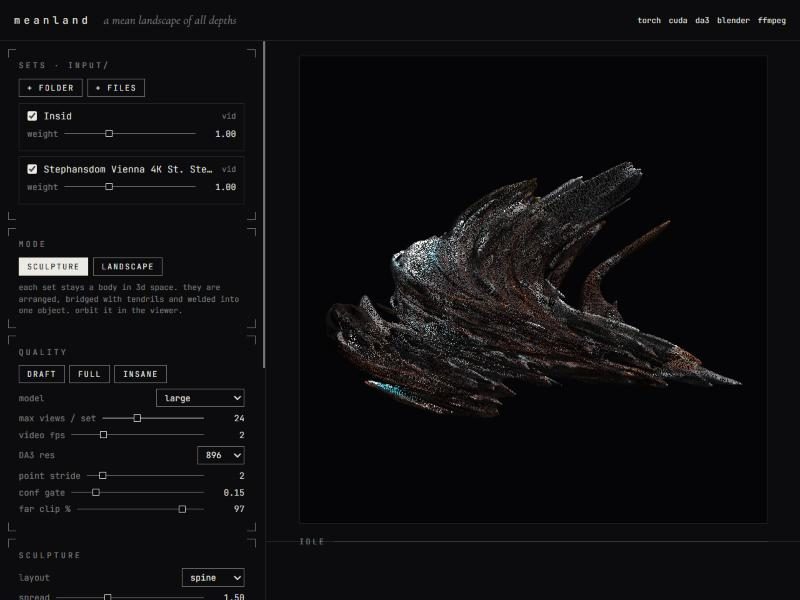
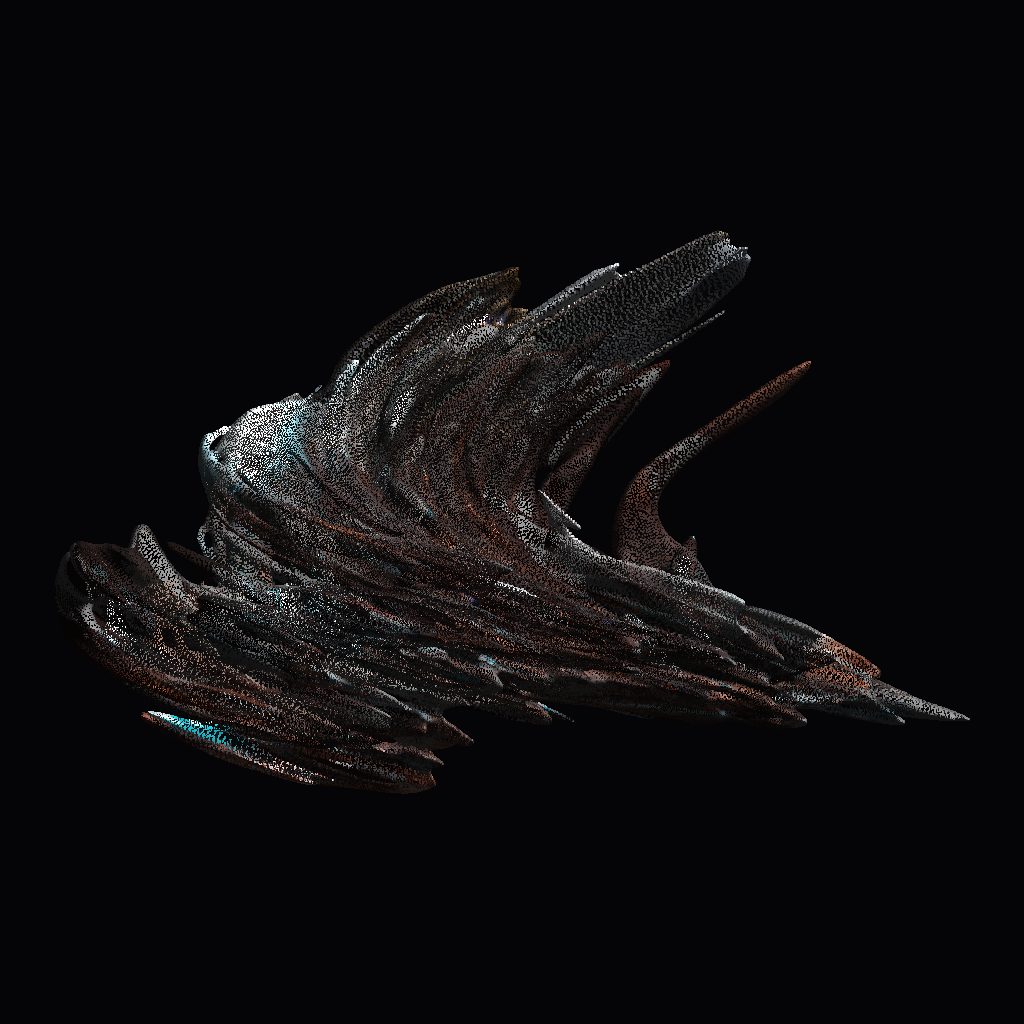
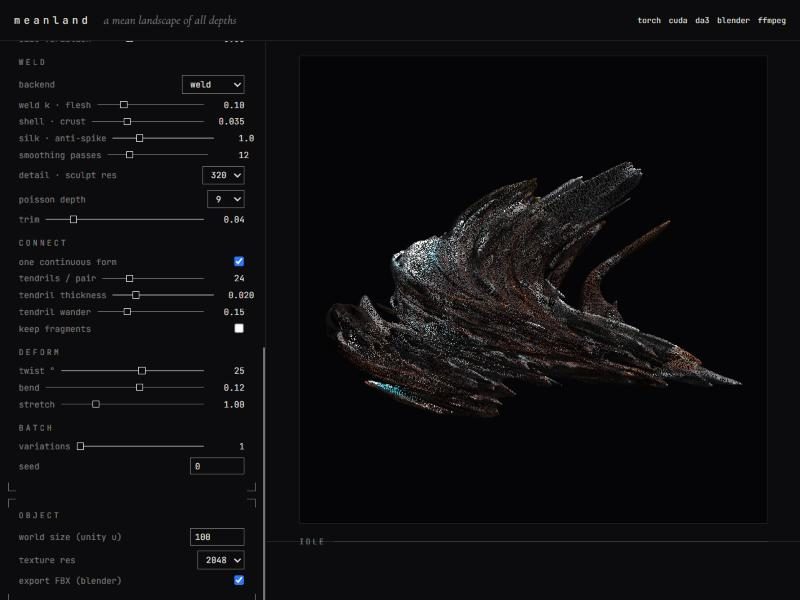
Fuses several image sets or videos through Depth Anything 3 (depth and camera pose) into an averaged landscape heightfield or a free-standing sculpture, exported as textured FBX for Unity, and as per-frame point clouds for 4D sequences.
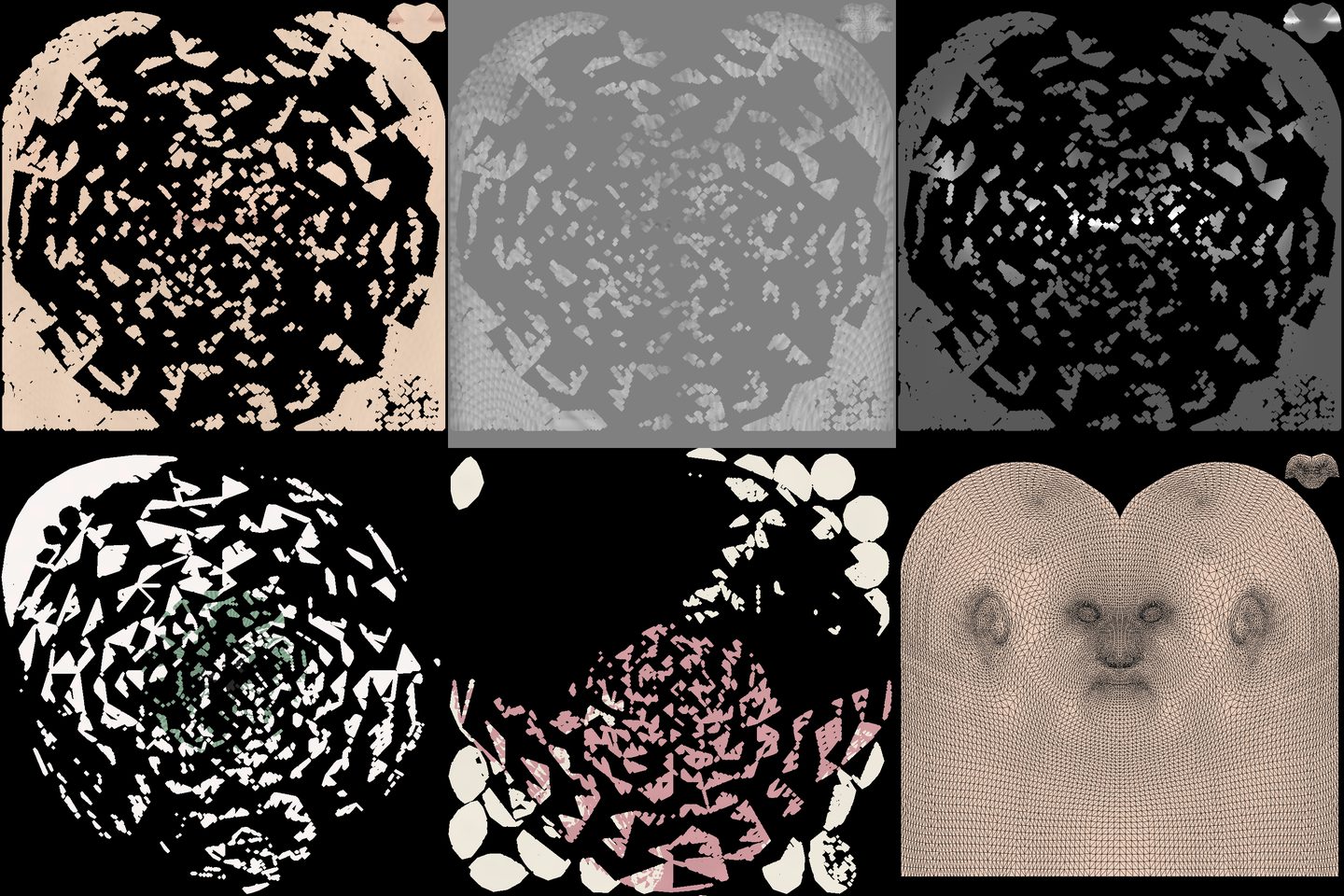
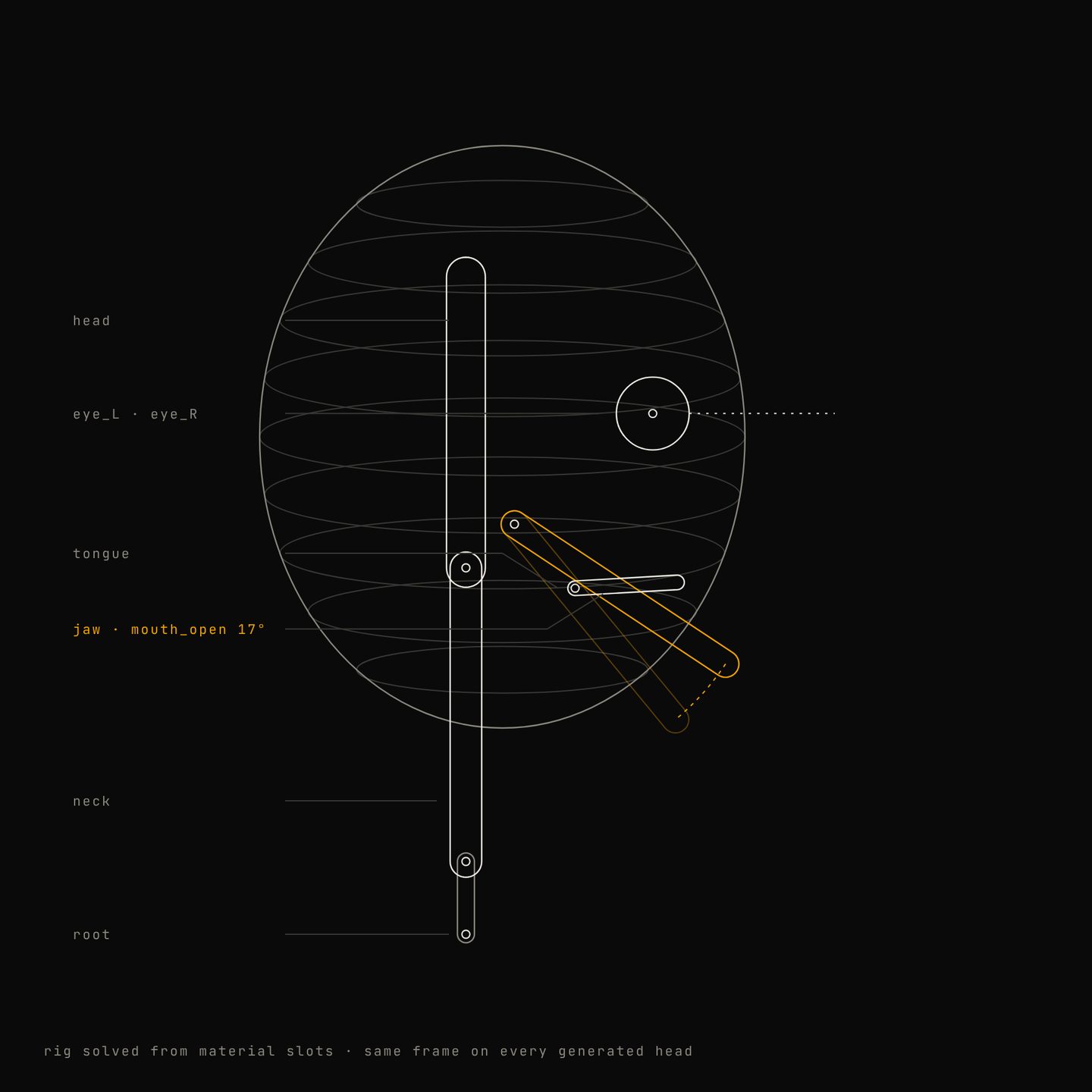
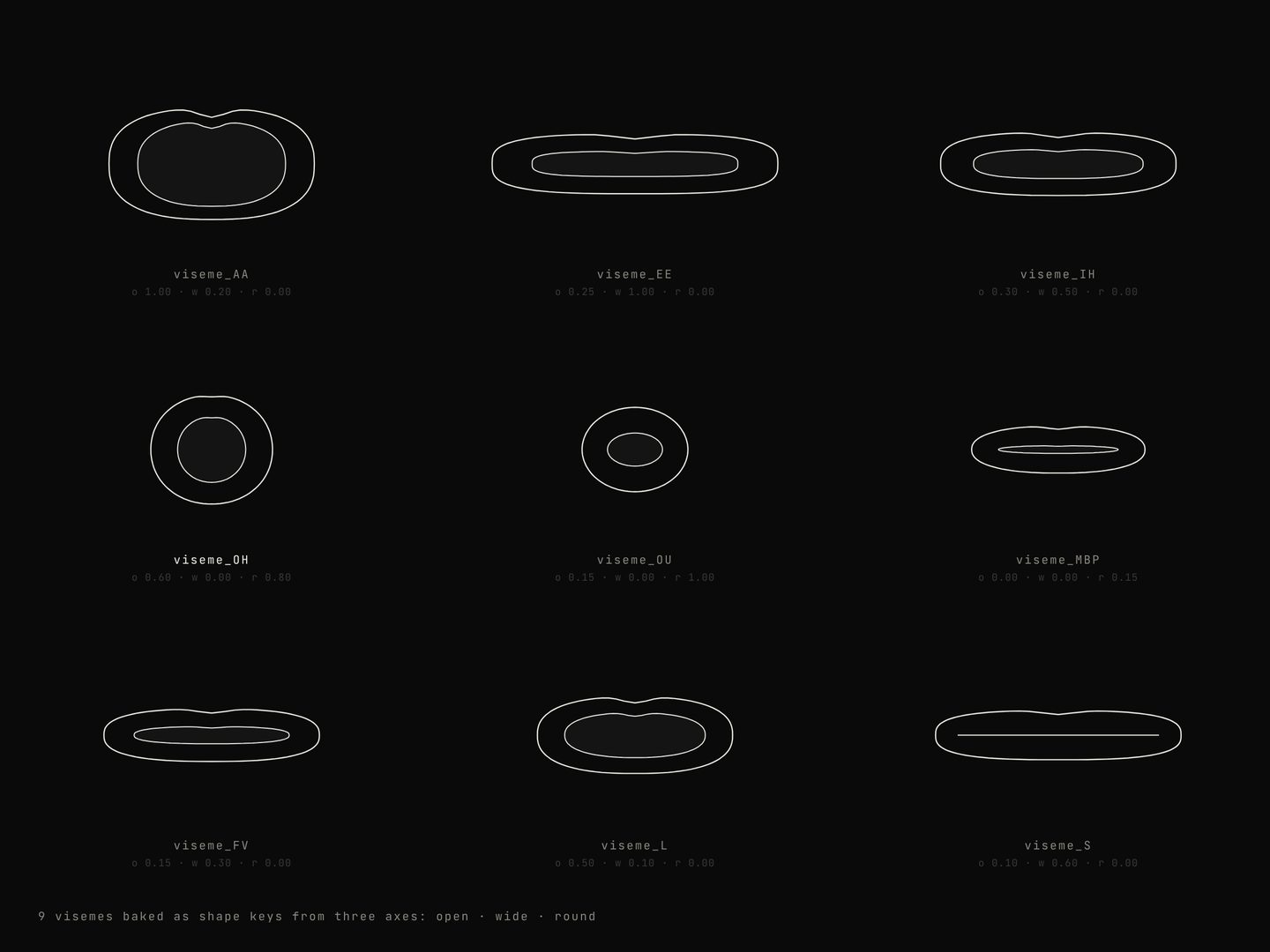
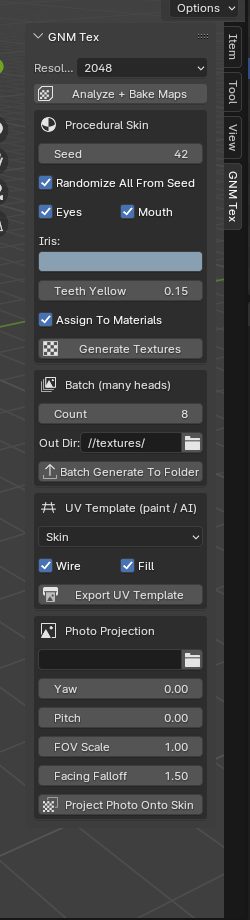
A pipeline for neural-generated (GNM) heads. The rig add-on classifies regions from material slots, solves the anatomical frame from eye and teeth centroids and builds a reproducible Root/Neck/Head/Jaw/Tongue/Eye rig with baked viseme and blink shape keys for Unity. The texture kit bakes position and normal maps per UV region and synthesises seed-driven skin, eyes and mouth; the projector conforms any frontal (e.g. AI-generated) face photo onto the head via landmark alignment and thin-plate-spline warping.
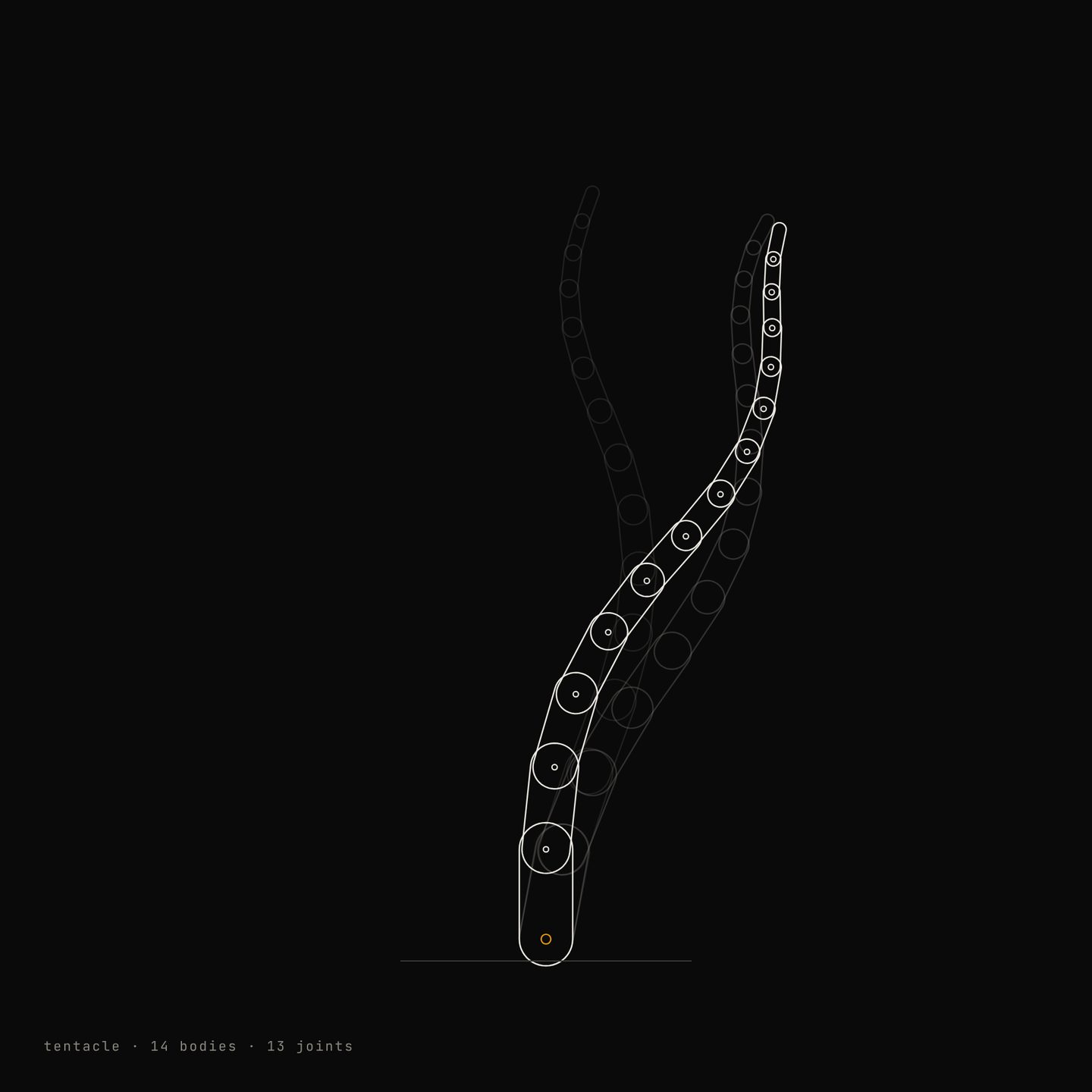
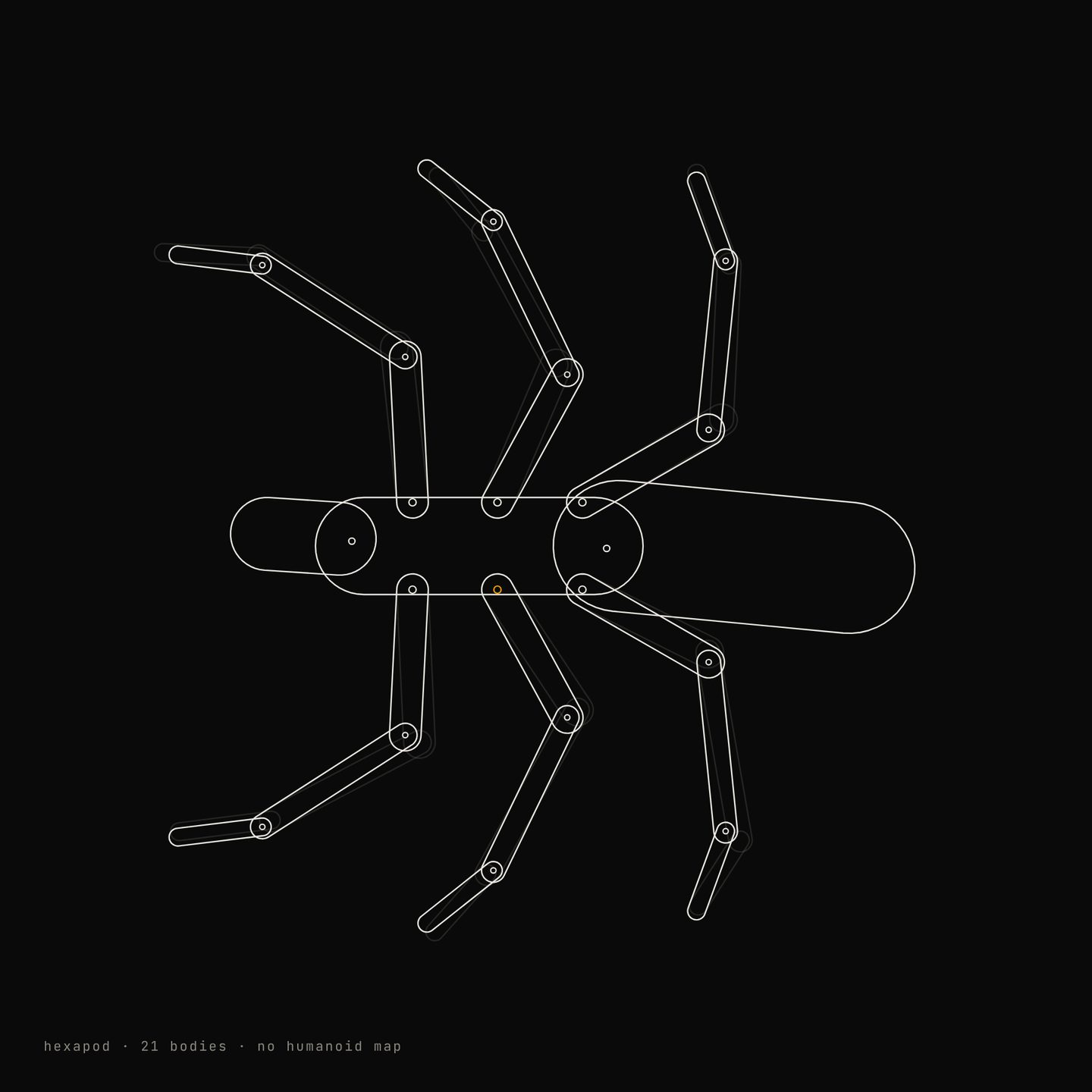
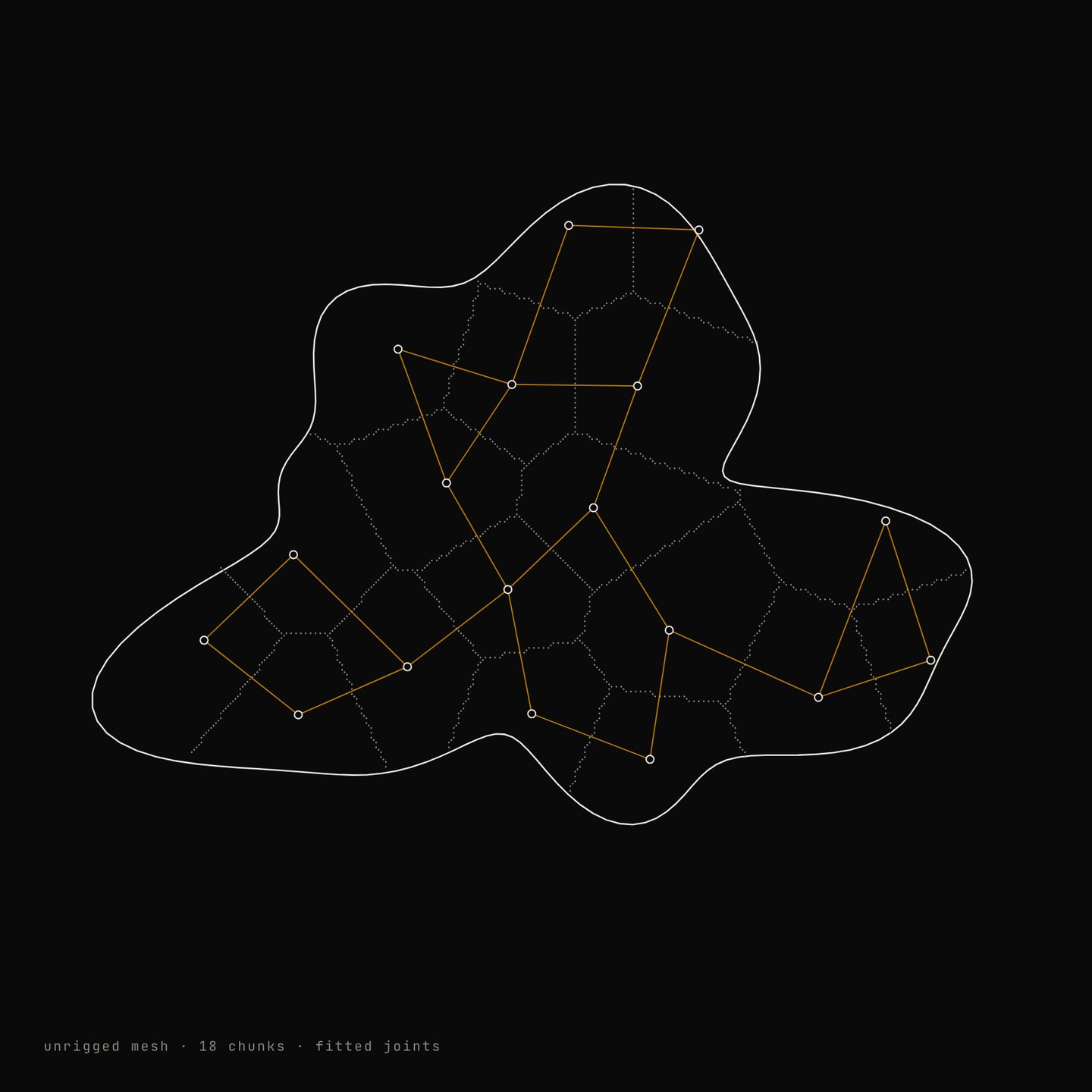
A rig-agnostic ragdoll generator for Unity: colliders and joints are fitted from skin weights through the bind pose, so bipeds, quadrupeds, insects, tentacles and mechanical rigs work without humanoid mapping; unrigged meshes are chunked into bodies. A driver adds eight motion layers, 26 presets and audio input.
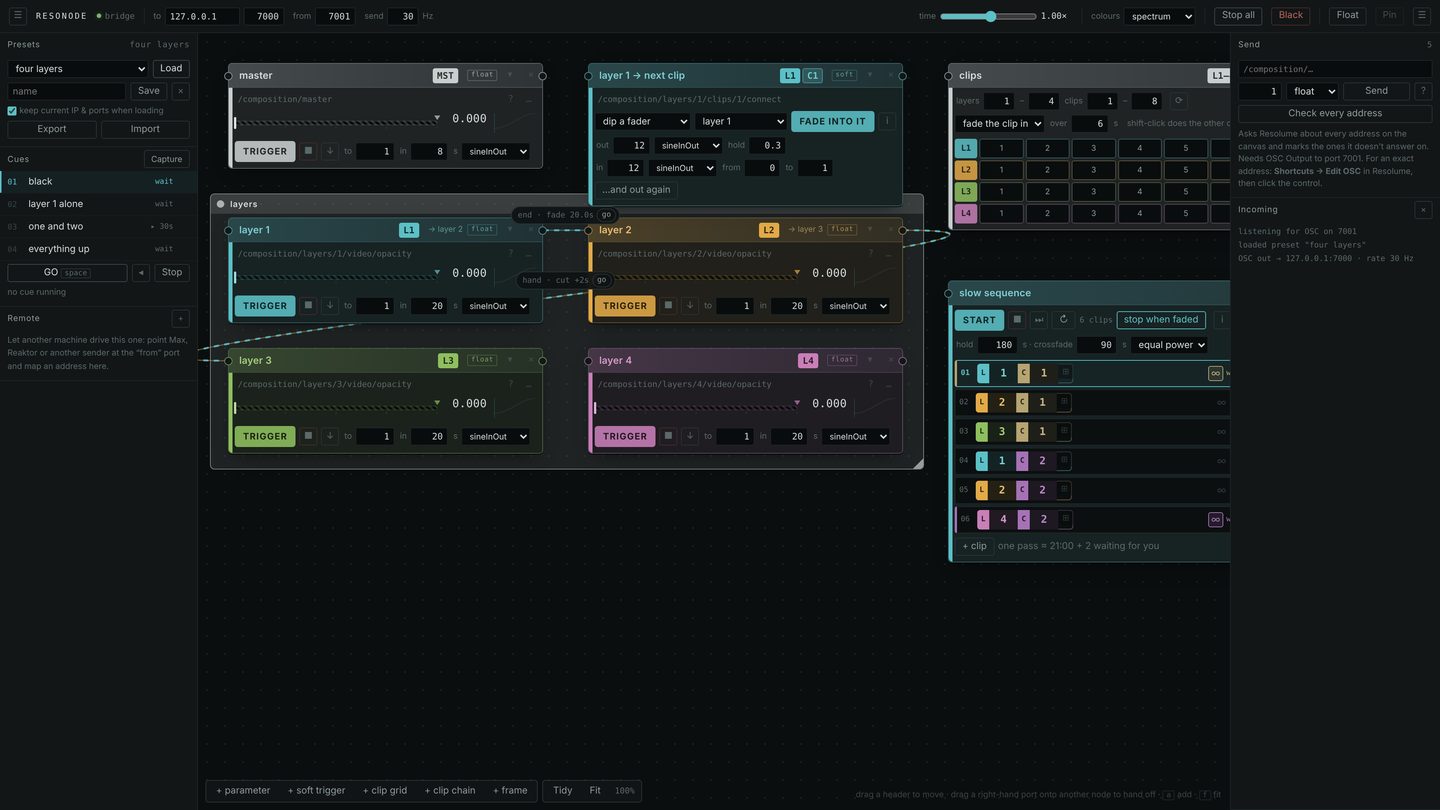
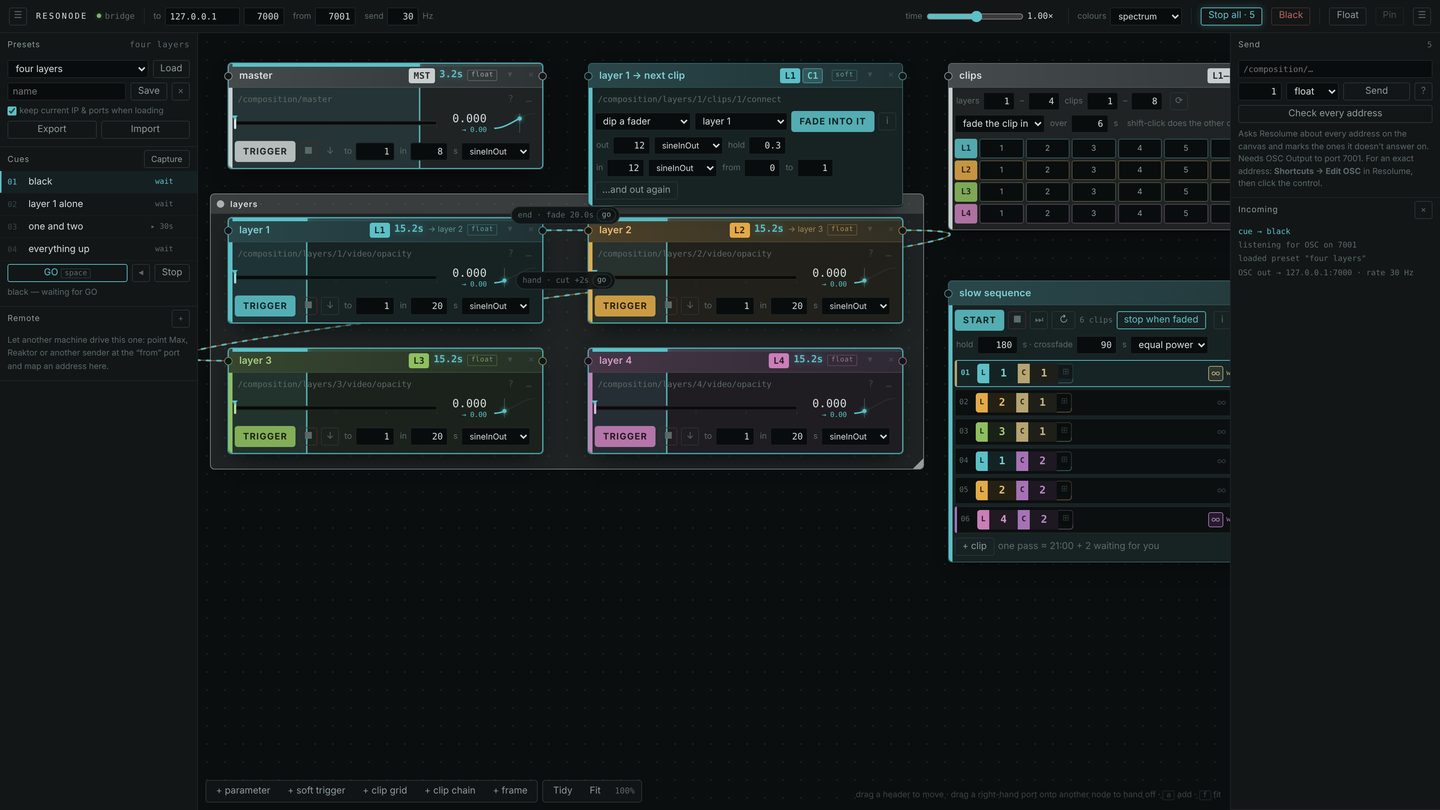
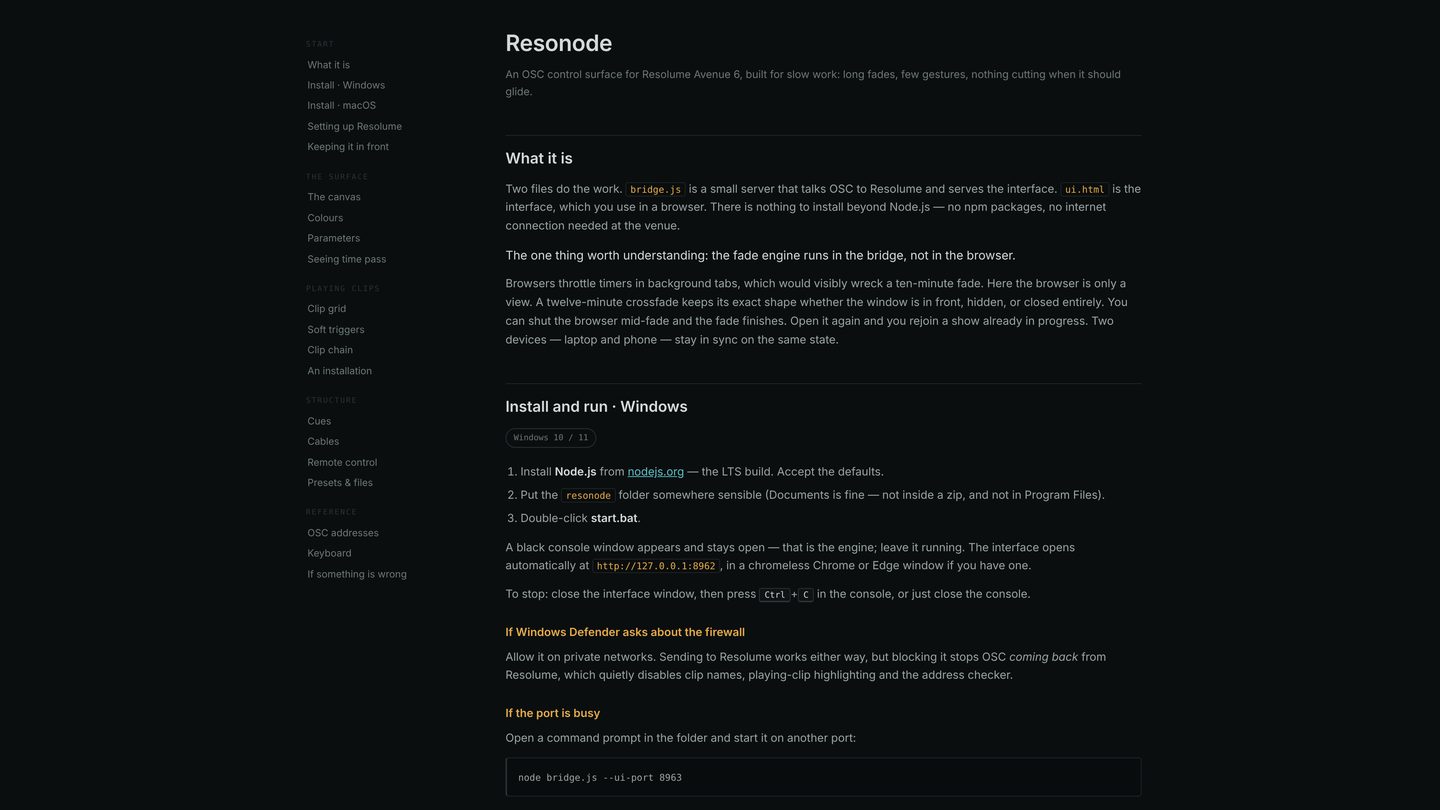
An OSC control surface for Resolume built for slow performance: long fades, few gestures, nothing cutting that should glide. The fade engine runs in the bridge rather than the browser, so a twelve-minute crossfade keeps its exact curve even if the interface is closed; parameters, soft triggers, clip grids and slow sequences are arranged as nodes, with cues and remote control.
Thomas Wagensommerer